Ring II · Discipline · Chamber 12
Mapping Consciousness
About 14 minutes to read
Quantum. Such an evocative word; from the Latin “quantus,” meaning “how much.” In physics, quantum is used to describe the smallest discrete unit or packet of any physical property, often referring to energy where a particle represents a quantum of light, or other electromagnetic radiation. The key thing to note here is that a photon carries energy proportional to the radiation frequency but has zero reset mass.
Examining further, a photon is a massless particle of light which has no electric charge, and yet it carries mass and momentum. To be a photon is to exist beyond time and space, and yet it moves through time and space at the speed of light in a vacuum. In this way, a photon is eternity.
From the photons perspective; it always arrives like a yogi or yogini; only ever now; in this moment. These types of paradoxical and simultaneous states mutually arise in the quantum universe; where everything that can happen, does happen.1 Professor Brian Cox. British particle physicist and keyboardist in the dance band, D:Ream. And things can only get better.
Time does not exist for a photon. It does not know the past, nor can it imagine the future. It can only ever exist NOW like Ian McKellen says, “Does anyone know what word Shakespeare uses to begin Richard 111?” Ian peers into the darkness of the auditorium. Silence from the audience - my throat constricts like small man in a box.
“NOW! Isn’t that such an evocative word.” And now - Ian illuminates and elucidates: “Theatre doesn’t exist in the past nor future like in a movie. A movie is captured on film, and the magic of movies is that you can watch them, again and again; whereas THEATRE can only ever happen HERE, ALIVE, NOW...ON THIS STAGE...in this MOMENT.” Ian, on stage at Theatre By the Lake, Keswick, 2019; his one-man electric stage show; Gandalf, Shakespeare, AND ME! And what struck me like a thunderbolt of electricity; my mind stunned into complete and utter silence. Ian saying these precisely attuned and calibrated words like a true Lancastrian yogi.
“A photon doesn’t experience any passage of time, so eternity, eternity is no big deal to a photon. It's just, whoop, there it is, you see.” Sir Roger Penrose coming across all hippity-hoppity like Tag Team2; a renowned British mathematical physicist and mathematician recognised for his contributions to general relativity, cosmology, the study of consciousness, including Nobel Prize winning work on black holes. His pioneering work in the field of quantum theory applied to studying the nature of consciousness, and later, along with Stuart Hameroff’s microtubules, they co-created quantum consciousness which they named Orchestrated Objective Reduction.
David Eagleman - Inner Cosmos - Penrose and Hameroff
“Can we explain consciousness as emerging from classical neuroscience, or do we require deeper principles? Could quantum physics have something to do with it? Is it possible that consciousness predates biology, and biology evolved to take advantage of it? What are the right ways to build new theories in neuroscience when we don’t know the answers?” Join Eagleman with Nobel laureate Roger Penrose and anesthesiologist Stuart Hameroff to explore the controversial idea that there could be, even possibly, any connection between quantum theory and our awareness of the world. Is consciousness related to quantum physics? (with Roger Penrose and Stuart Hameroff)
Two pioneering and maverick minds being interviewed by “neuroscientist and author David Eagleman, who discusses how our brain interprets the world and what that means for us. Through storytelling, research, interviews, and experiments, David Eagleman tackles wild questions that illuminate new facets of our lives and our realities.” Inner Cosmos with David Eagleman. Quantum Human by another name.
Quantum theory describes the behaviour of matter and energy at the smallest scales - where particles exist in superposition, entanglement, and uncertainty - everything-is-heightened-and-magnified like the movie Everything-Everywhere-All-At-Once. I am a Chinese fraternal twin and live yin-and-yang. I live quantum states like Lyra-with-Pantalaimon; Human-and-Dæmon entwined like twins by an in-visible twin-etheric umbilical-cord connected beyond time-and-space; His Dark Materials.3

Lyra-with-her-dæmon-Pantalaimon: Lyra is holding and decoding an alethiometer - without formal training. Aged twelve; Pantalaimon settles as a pine martin.
Birth of Quantum Mechanics: The concept of the photon was introduced by Albert Einstein in 1905 to explain the photoelectric effect, where light striking a metal surface ejects electrons. Classical wave theory couldn’t explain why only light above a certain frequency could cause this effect. Einstein proposed that light comes in discrete packets - photons - each with energy E=hν, where h is Planck’s constant and ν is the frequency. This was a cornerstone in the birth of quantum theory.
Max Planck, the father of quantum. Planck trained in the tradition of classical physics and was deeply influenced by thermodynamics and electrodynamics. He initially worked on problems of entropy and the second law of thermodynamics, emphasizing the irreversibility of natural processes. Like most physicists of the late 19th century, Planck believed energy was continuous and could vary smoothly. At this time, before the birth of quantum; his worldview can be classed as deterministic and aligned with Newtonian mechanics and Maxwell’s electromagnetic theory. Around 1894, Planck began studying radiation which was emitted by heated bodies. Classical physics (Rayleigh-Jeans law) predicted the “ultraviolet catastrophe” - infinite energy at short-wavelengths - which was clearly wrong. The classically trained Planck became confused and discombobulated, and no doubt, scratching his head like Stan Laurel.
What Planck encountered was the Black Body Radiation problem. Planck sought a mathematical solution, initially hoping to preserve classical physics. In order to solve the blackbody radiation problem, Planck introduced the idea that energy which is emitted in discrete packets (quanta) proportional to frequency:
E=h⋅ν where h is Planck’s constant.
This was revolutionary; energy was no longer continuous but quantized. Planck himself was hesitant. He became a reluctant revolutionary since he saw quantization as a “mathematical trick” rather than a fundamental truth. Over time, however, Einstein (1905) and later Bohr expanded the idea, showing its physical reality in phenomena like the photoelectric effect and atomic spectra. His constant hh became one of the most fundamental constants in physics.
Planck was a pioneering thinker who bridged the old world of classical Newtonian science and formed the core plank to explore the brave new world and arising quantum realms like his surname; Planck, plank, pun intended. And so; as the father of quantum mechanics who birthed quanta proportional to frequency; in doing so, shaping much of science, philosophy, and technology - from semi-conductors to lasers to the advent of AI and quantum computing. Let us now briefly explore some other key aspects of the quantum realm in relation to the photon and its wavicle dual nature; mapping the terrain; light, the light of consciousness, mind, no-mind, mind-is-luminosity. Buddha.
Mapping the Quantum Terrain:
The quantum terrain begins with the paradoxical nature of light and matter: both can behave as waves and particles. Photons, for example, exhibit wave-like interference patterns in the famous double-slit experiment, yet each photon is detected as a discrete particle. Curiouser-and-curiouser like Alice going down the quantum rabbit w-hole.
Wave-Particle Duality: The quantum journey begins with the paradox of wave-particle duality: light and matter behave as both waves and particles, depending on how they are observed. This duality is foundational, revealing that quantum entities are not fixed in form but exist in a superposition of possibilities until measured. To be or not to be.
Quantum Field Theory: In modern quantum field theory, the photon is the force carrier (gauge boson) of the electromagnetic field. All electromagnetic interactions - light, radio waves, X-rays - are mediated by the exchange of photons. Quantum field theory extends quantum mechanics to fields, describing how particles are excitations of underlying fields that permeate all of space. Photons, for example, are quanta of electromagnetic fields. This framework unifies particles and forces, revealing a universe woven from dynamic, interacting fields rather than isolated objects.
Superposition and Entanglement: Quantum superposition describes the ability of quantum systems to exist in multiple states simultaneously. Until an observation is made, a particle can be in a blend of all possible positions or energies. This principle is famously illustrated by Schrödinger’s cat, which is both alive-and-dead until observed.
Superposition challenges classical logic and invites a new way of thinking about potential and actuality. Photons can exist in a superposition of states (e.g., polarization) and can be entangled with other photons. Experiments with photons have been crucial in demonstrating quantum entanglement and non-locality, foundational aspects of quantum mechanics. Quantum Entanglement is the phenomenon where two or more particles become linked so that the state of one instantly influences the state of the other, no matter how far apart they are. This “spooky action at a distance,” as Einstein called it, demonstrates the deep interconnectedness of the quantum world and suggests that information can be shared non-locally.
Measurement and Collapse: The act of measurement in quantum mechanics is not passive; it actively shapes reality. When a quantum system is measured, its wavefunction collapses from a superposition of possibilities into a single, definite outcome. This collapse is at the core of the “observer effect,” highlighting the participatory nature of quantum phenomena and the inseparability of observer and observed. What defines an act of observation? To be or not to be a wave-particle.
Double-Slit Experiment: When photons are sent one at a time through a double slit, they create an interference pattern, showing their wave nature. Only when each photon is detected as a single event - only now - they show their collapsed particle nature.
Heisenberg’s Uncertainty Principle: A foundational pillar of quantum mechanics, Heisenberg’s Uncertainty Principle states that certain pairs of physical properties - such as position and momentum - cannot be simultaneously known to arbitrary precision. The more precisely one property is measured, the less precisely the other can be determined. This principle highlights the intrinsic limits of knowledge and the active role of measurement in determining the state of a quantum system. It reveals that at the quantum level, reality is fundamentally probabilistic and indeterminate, not fixed or deterministic. The uncertainty principle is central to understanding quantum mechanics, much like Alice going down the rabbit w-hole: it invites us to embrace ambiguity and paradox as essential features of the quantum world. Curiouser-and-curiouser.
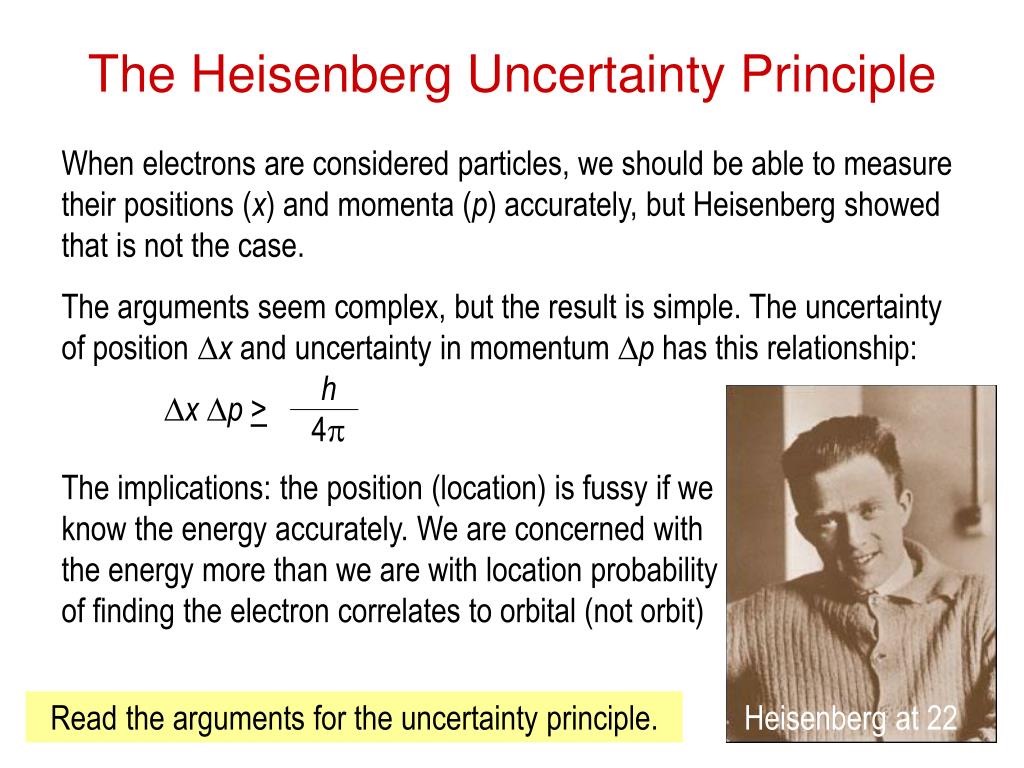
A philosophical lens and Non-Determinism: Philosophically, “quantum” evokes non-linearity, multiplicity, and the interconnectedness of all things. It suggests that reality is not fixed, but probabilistic and relational. The behaviour of photons (and all quantum particles) is fundamentally probabilistic, not deterministic.
The Quantum Society: Commentary and Quantum Analogies
“The main challenge of our times is to link the inner world of the self with the outer world of society, and to see both within the larger context of the natural world.”
The Quantum Society: Mind, Physics, and a New Social Vision by Danah Zohar and Ian Marshall challenges the mechanistic worldview that has shaped Western society for centuries. Drawing on principles of quantum physics, the authors propose a new social paradigm that emphasizes interconnectedness, flexibility, and creativity, moving beyond rigid hierarchies and binary thinking. Published in 1994. Quantum pioneers.
Zohar and Marshall argue that classical Newtonian models foster fragmentation and alienation, leading to extremes of individualism or collectivism. In contrast, quantum principles - uncertainty, complementarity, and entanglement - offer metaphors for a society that is dynamic, pluralistic - be like water - adaptable. Their vision promotes:
Dialogue and ambiguity over rigid certainty. Bottom-up organization rather than centralized control. Integration of freedom and responsibility, creating coherence without uniformity. This approach reflects a “both/and” mindset, encouraging diversity as a creative force rather than a source of division; counterbalancing-the-opposites. The book’s strength lies in its imaginative use of physics metaphors to illuminate social philosophy. It invites readers to re-think governance, economics, and culture through the lens of quantum interconnectedness. However, critics note that its application remains speculative and metaphorical, lacking empirical grounding. A moot point. This work is invaluable; a pioneering conceptual framework for envisioning adaptive, resilient societies based on quantum physics - the interconnectedness-of-all-things.
I read this book circa 2004. This was the first time I came across a Bose-Einstein condensate (BEC) - the fifth state of matter - formed when bosons are cooled to near absolute zero, causing them to occupy the same quantum state and behave as a single coherent entity. This phenomenon exemplifies quantum mechanics at a macroscopic scale - individuality dissolves into collective unity. The analogy to a Quantum Society for me is compelling: particles in a BEC lose their separate identities to form a unified whole governed by shared quantum rules - Zohar and Marshall imagine individuals and communities aligning under common principles while retaining diversity. Both systems demonstrate that coherence and interdependence can emerge without erasing individuality, creating a society that is integrated yet adaptive. The Quantum Society offers a visionary model for social evolution inspired by quantum physics. By embracing uncertainty, interconnectedness, and emergent order, it challenges us to move beyond rigid separations toward a dynamic, holistic reality - where, like a Bose-Einstein condensate, unity and individuality co-exist in harmony.
This arising quantum evolutionary leap forward can shift humanity from our current external gazing materialist and consumerist age, and quantum jump exponentially and inwards to access brain neuroplasticity and quantum mutability; shifting brainwave states consciously from beta-to-alpha-to-delta-to-theta-to-gamma-waves like five gears of the mind; shifting from this pre-existing materialistic paradigm view of the world as separate me and other; and realizing a unified-field of consciousness, whereby everything is now interdependent and interconnected - local and non-local effects - quantum mutable states - where anything that can happen does happen. Indra’s Net.
“The order arises from non-local (acausal) indeterminate elements in the original parts; the unity arises from the ability of some quantum particles (bosons) to overlap and combine in such a way that they share an identity. The latest calculations on warm, laser-like, coherent quantum phenomena in water suggest a range of effect exceeding ½ mm. In the brain, this would extend across 10,000 neurones. More far-reaching effects are theoretically possible (Del Giudice, 1998).” The Quantum Society, page 51, footnotes on Bose-Einstein condensates.
What would this arising quantum in-volution-and-evolution look like in relation to a quantum society? Instead of re-inventing the wheel, this seed spark of an imagined reality has already been mapped out, pioneered and explored by Zohar and Marshall.
“Drawing on the many uncanny analogies between quantum reality and the dynamics of self and society, Zohar and Marshall have developed a startling and refreshingly optimistic understanding of our social perceptions, values and behaviours.” From the back cover, The Quantum Society. Zohar and Marshall exploring beyond the mainstream materialistic universe. Idealists and non-dualists will see this as a visionary book. Materialists will likely see it as hubris and woo-woo.
“In the high-spirited Up my Mother's Flagpole (1974), Zohar characterized her early life as a process of individuation and alienation. Then, after marrying, she used the metaphors of physics, which she had studied at MIT, to redefine life as relationship (The Quantum Self, 1989). Here, Zohar (Science & Culture/Oxford) and psychiatrist Marshall extend these concepts to a vision of a new vast and inclusive society.
Zohar and Marshall challenge the traditional Western dualities of mind and nature, spirit and matter, self and other, by liberally interpreting quantum physics as a theory that explains the fundamental operations of nature or reality as holistic, pluralistic, and integrative. The resemblance between the structure of the universe and the structure of the mind, they claim, enables individuals to conceptualize reality as it is pictured in quantum physics. They want to extend these qualities of the universe, shared with the human mind, as described by quantum physics, to the organization of social life.
With charming hand-drawn diagrams and lucid explanations of classical physics, quantum physics, neurobiology and molecular biology, Zohar and Marshall develop models, analogies, and metaphors for the even more elusive “physics of the mind”' and the “science of consciousness.” Their goal is a mutually creative relationship among mind, society, nature, a “both/and” form of thought rather than “either/or,” psychologies, families, and governments based on the principles of quantum physics, peacefully evolving. However, without concrete examples to illustrate such theories, this quirky work remains abstract and speculative. Zohar and Marshall offer the general reader a better introduction to contemporary science than to social philosophy while stretching the limit of fashionable interdisciplinary discussion.” THE QUANTUM SOCIETY | Kirkus Reviews An exceptional, insightful, and well-balanced review.
“DANAH Zohar believes that the Newtonian tradition of mechanistic science, which has been the model for Western life for two centuries, is bankrupt. She suggests that quantum mechanics, which overthrew mechanistic physics 70 years ago, should usurp it in every aspect of our lives. This is not wholly original: Fritjof Capra, Morris Berman, Rupert Sheldrake and others have been saying the same thing for nearly 20 years. But Zohar claims that our consciousness is a quantum phenomenon, and that any appearances to the contrary are merely the result of Newtonian conditioning.
Her book is thus partly yet another exercise in Western masochism, and partly an outrageous flouting of the naturalistic fallacy - her message is that because a single light particle seems able to go through two slits at once, we ought to be able to merge our egos with other people's. Zohar has collaborated with Ian Marshall, but the book is to a large extent a rewrite of Zohar's The Quantum Self (whole chunks of the earlier book are paraphrased), so the thrust of the argument, not to mention the first-person narration, feels like her own. Zohar's Newton is a straw man. He stressed separation, force, particles colliding and veering off into the void, while quantum mechanics stresses non-localized waves which can ignore the boundaries between things and persons.
One can see the appeal of this: if real hard science can make us feel more linked, less alienated, it validates our ancient yearnings. And if mortar shells still fall on Sarajevo according to impeccably Newtonian ballistics, and a Jumbo jet succumbs to gravity, slicing through an Amsterdam tower block, it helps if we can say that these atrocities are irredeemably old fashioned, and will soon melt away in a pleasant quantum haze.” BOOK REVIEW / We're all Bose-Einstein condensates now: Peter Forbes explores an abstract, mechanical attempt to prove that we are living in a dream world: The Quantum Society - Danah Zohar & Ian Marshall: Bloomsbury, pounds 14.99 | The Independent | The Independent An illuminating and counterbalancing viewpoint from a materialist perspective; applying Hegelian dialectic and balancing cognitive biases.
Quantum Human - all angles, all perspectives - counterbalance-the-opposites. CQ²
End of chamber 12
Chambers 1 to 35: all 35 chambers open