Ring VI · Return · Chamber 34
Chogyam Trungpa and Akong Rinpoche
About 22 minutes to read
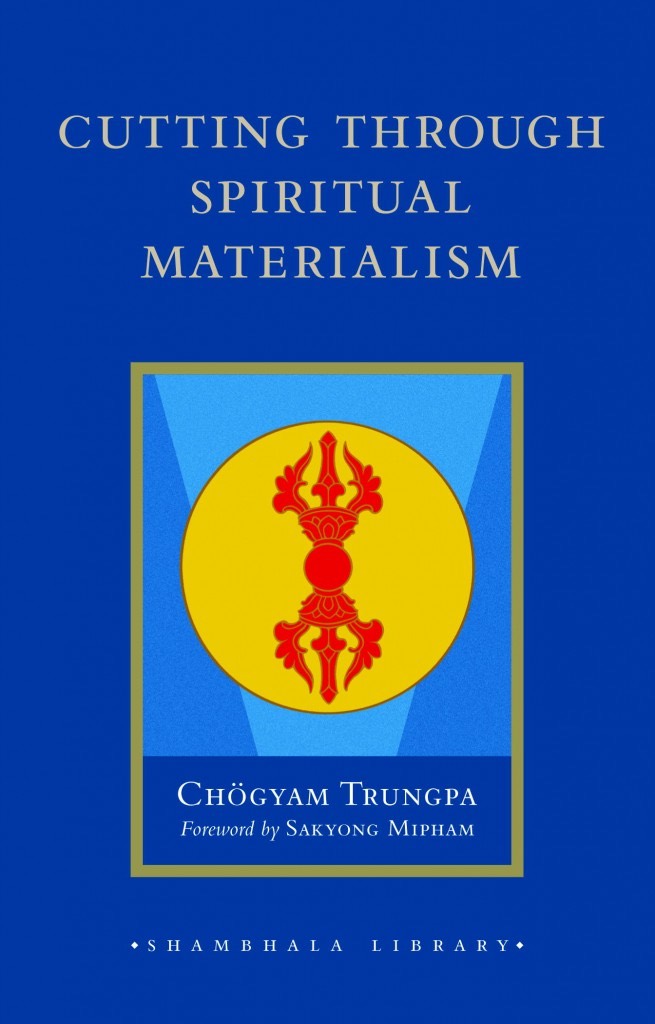
Cutting Through Spiritual Materialism a seminal work in contemporary Buddhist literature, first published in 1973. Chögyam Trungpa, a Tibetan Buddhist master and founder of the Shambhala tradition, wrote this book to address a subtle but all-pervasive obstacle on the spiritual path: the tendency to turn spirituality itself into another form of ego-gratification.
Trungpa’s central thesis is that the ego is endlessly resourceful and can appropriate even the most profound spiritual teachings for its own self-aggrandizement. Spiritual materialism is the process by which we use spiritual practices, teachings, or identities to reinforce our sense of self, rather than to surrender the ego and transcend it. Trungpa warns that this is a fundamental pitfall for seekers in both Eastern and Western contexts. Ego is constantly attempting to acquire and apply the teachings of spirituality for its own benefit. Ego converts anything to its own use; even spirituality.
The book explores how the ego can disguise itself in spiritual clothing - collecting teachings, seeking mystical experiences, or adopting the trappings of a “spiritual person” - all the while avoiding genuine transformation. Spiritual practice is purification of the mind-and-senses, the inner-world, the outer-world, and everything in-between.
Trungpa’s insight is that true spiritual progress requires relentless honesty and the willingness to let go of all attachments, to let go of the idea of enlightenment itself.
We must be willing to be completely ordinary people, which means accepting ourselves as we are, without trying to become greater, purer, or more spiritual...
Trungpa’s style is direct, paradoxical, confrontational, and compassionate. He encourages readers to look honestly at their motivations and to recognize the ways in which they might be using spirituality as another form of self-deception.
Enlightenment is the ego’s ultimate disappointment.
The book is organized as a series of talks and essays, each addressing a different aspect of the spiritual journey. Key topics include: The problem of spiritual materialism; the Five Skandhas, the role of the teacher and the student; surrender and devotion; the importance of mindfulness and awareness; the pitfalls of spiritual ambition. Each chapter is rich with anecdotes, practical advice, and Buddhist philosophy, making the book accessible to newcomers and experienced long-term practitioners.
Trungpa’s skillful means and clarity of mind are aligned with his expansive vision; taking ancient Tibetan Buddhist teachings and re-framing them for a modern world of spiritual seekers; forming a bridge between East-and-West transmission of Buddha Dharma.
The spiritual path is not about becoming someone who feels special or accumulating experiences. It is about seeing through the illusions of ego and embracing reality-as-it- is. No shortcuts. Focus on mind-discipline and form a firm foundation in daily practice.
The Five Skandas. “To understand more precisely the process of confirming the solidity of I and other, that is, the development of ego, it is helpful to be familiar with the five skandhas, a set of Buddhist concepts which describe ego a five-step process.
The first step or skandha, the birth of ego, is called “form” or basic ignorance. We ignore the open, fluid, and intelligent quality of space.
“Only the Infinite, Absolute Space of Being, Self-Existening and Self-Radiant, without the slightest qualification - is this comprehensible or understandable? It must be Realized. It is without reference to the point of view characteristic(s). It is not in the body. It is that Space.” Adi Da Samraj
When a gap or space occurs in our experience of mind, when there is a sudden glimpse of awareness-openness, absence of self, then a suspicion arises: “Suppose I find that there is no solid me? That possibility scares me. I don’t want to go into that. That abstract paranoia, the discomfort that something may be wrong, is the source of karmic chain reactions. It is the fear of ultimate confusion and despair. The fear of the absence of the self, of the egoless state, is a constant threat to us. “Suppose it is true, what then? I am afraid to look.” We want to maintain some solidity but the only material available with which to work is space, the absence of ego, so we try to solidify or freeze that experience of space. Ignorance in this case is not stupidity, but it is a kind of stubbornness. Suddenly we are bewildered by the discovery of selflessness and do not want to accept it; we want to hold on to something.
Then the next step is the attempt to find a way of occupying ourselves, diverting our attention from our aloneness. The karmic chain reaction begins. Karma is dependent upon the relativity of this and that - my existence and my projections - and karma is continually reborn as we continually try to busy ourselves. In other words, there is a fear of not being confirmed by our projections. One must constantly try to prove that one does exist by feeling one’s projections as a solid thing. Feeling the solidity of something seemingly outside you reassures you that you are a solid entity as well. This is the second skandha, “feeling.””
Chogyam Trungpa dissects the ego’s karmic chain reactions with clarity and insight and with the scalpel precision of a neuroscientist; the minds’ Five Skandhas, a multi-layered mind Matrix. The Five Skandhas -Chogyam Trungpa - Beezone Library
Trungpa does not sugarcoat the difficulties of the path. The book offers concrete guidance for recognizing and dismantling the ego’s inbuilt strategies. Whether you are new to meditation or a long-time practitioner, Trungpa’s insights will challenge and deepen your understanding of what it means to truly walk a spiritual path.
“We do not have to be ashamed of what we are. As sentient beings we have wonderful backgrounds. These backgrounds may not be particularly enlightened or peaceful or intelligent. Nevertheless, we have soil good enough to cultivate; we can plant anything in it.” Be like an inner-gardener and plant, grow and blossom beneficial seeds, and uproot and let go of afflictive habits - awareness-of-awareness-itself. CQ²
Cutting Through Spiritual Materialism is a must read for anyone interested in authentic spiritual practice and waking up to the eloquent simplicity of self-awareness. Trungpa’s wisdom helps us to see that the greatest obstacle to awakening is not the world, but our own tendency to turn even the search for truth into another ego projection like Bruce Lee entering a Hall-of-Mirrors-to-the-Self. The book is a guide to humility, honesty, and genuine transformation. And the only enemy is the enemy within. Cutting through spiritual materialism, the five skandhas like Neo breaking free from the minds’ mental self-limiting Matrix; teacher and student mirroring each other; mimic, imitate, emulate. Keep what is useful. Absorb, adapt, integrate. Discard what is not beneficial.
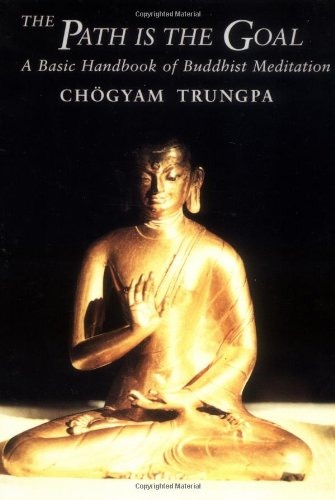
The Path is the Goal - A Basic Handbook of Tibetan Meditation
“The teachings given here on the outlook and technique of meditation provide the foundation that every practitioner needs to awaken as the Buddha did. Trungpa teaches us to let go of the urge to make meditation serve our ambition; thus, we can relax into openness. We are shown how the deliberate practice of mindfulness develops into contrived awareness, and we discover the world of insight that awareness reveals. We learn of a subtle psychological stage set that we carry with us everywhere and unwittingly use to structure all our experience - and we find that meditation gradually carries us beyond this and beyond ego altogether to the experience of unconditioned freedom.” The Path Is the Goal: A Basic Handbook of Buddhist Meditation An insightful and illuminating commentary.
Chögyam Trungpa’s The Path is the Goal is a rare hidden gem in the landscape of Buddhist literature - a book that is a practical manual and a philosophical and holistic map, guiding the reader through the entire journey and exploration of Tibetan Buddhist meditation. Each page is crafted with Trungpa’s signature clarity, poetic insight, and gentle humour, making the profound accessible and the subtle; tangible.
Trungpa begins by grounding the reader in the essential Buddhist insight: “According to the Buddha, no one can attain basic sanity or enlightenment without practicing meditation.”
This sets the tone for the book: meditation is not an optional bolt-on. It is the essence and heart of awakening. Trungpa’s genius is to demystify the path, showing that enlightenment is not a distant goal, but a process of becoming intimate with one’s own mind, moment-by-moment. Many Paths. One Stream. The Path is the Way and Goal.
Shamatha: Mindfulness and Stillness The journey begins with shamatha - the practice of mindfulness and calm-abiding. Trungpa describes this as “developing a good relationship with yourself,” emphasizing gentleness and patience. He writes:
“The practice of meditation is not a matter of trying to achieve ecstasy, spiritual bliss, or tranquility, nor is it an attempt to be a better person. It is simply the creation of a space in which we are able to expose and undo our neurotic games, our self-deceptions, our hidden fears and hopes.” Love again the stranger who was your self. Love-after-love.
Shamatha is the art of sitting with what is, learning to rest the mind on the breath, and returning - again and again - paying attention with kindness to body-breath-and-mind -mindfulness is vital - we need the ability to concentrate in every aspect of our lives.
Vipassana: Awareness and Insight Once the foundation of mindfulness has been formed - Trungpa introduces vipassana - cultivation of insight and clear seeing. In order to do this, you need to be mindful. He bridges the two practices:
“Mindfulness and awareness work together, like two hands washing each other.”
Vipassana is not about analyzing or dissecting experience; it is about seeing directly into the nature of thoughts, emotions, and sensations. Awareness is the panoramic vision that sees the whole situation, not just the details. Trungpa’s language is crystal clear and precise like a laser beam; on the dot:
“a sense of openness, a panoramic quality that includes everything that is happening.”
He guides the reader to notice the arising and passing of phenomena, to see the impermanence and insubstantiality of all experience like clouds passing by and the nature of clear mind. Mind like a still lake. Body soft like water. Breath breathing itself.
The Bridge: Shamatha-Vipassana The book’s strength is in the detailed clarity of Trungpa’s guidance and instructions; fine-honed from his Oxford University education. Trungpas’ explanation of the bridge between shamatha-and-vipassana is exceptional. He shows how mindfulness and awareness are entangled and mutually supportive.
The deliberate practice of mindfulness develops into contrived awareness, and we discover the world of insight that awareness reveals; building a bridge like the corpus callosum, acting as a meditator and communicator between the divided hemispheres. This bridge is the heart of Buddhist mind science: the ability to rest in stillness while seeing with clarity - to be on-the-dot and spatially aware - balancing the opposites.
Insight and Compassion Meditation Trungpa does not stop at one’s own personal insight. He expands the map to include compassion meditation (Tonglen), showing that true awakening is inseparable from the wish to be of benefit to all sentient beings.
The practice of meditation gradually carries us beyond this and beyond ego altogether to the experience of unconditioned freedom. Trungpa teaches that as we see through the illusion of a separate self, compassion naturally arises. The book offers practical instructions for cultivating loving-kindness and exchanging self for others. A simple and profound practice; embodying loving-kindness.
What makes The Path is the Goal luminous is Trungpa’s skillful way with the written word. He is precise and poetic, able to name the subtlest movements of mind while evoking the beauty of the inner-lit path.
We learn of a subtle psychological stage set that we carry with us everywhere and unwittingly use to structure all our experience. This stage - 188 cognitive biases. He invites the reader to become intimate with this “stage set,” to see how our habits and assumptions shape our world, and to gently dismantle them through practice.
Each page, each chapter, a jewel - crystal clear, multifaceted, illuminating. The germ and genius of this book is how these jewels are strung together like a pearl necklace; forming a net of meaning and deepening insight and practice. Like Indra’s Net of Precious Jewels, each insight reflects and amplifies the others, creating an interwoven and entangled whole which is greater than the sum of its parts. CQ² - calm-abiding, awareness and insight, compassion meditation - E=MC²
The Path is the Goal is not only a book to be read - it is a manual to be lived. Trungpa’s instructions are practical, direct, and compassionate. He encourages the reader to experiment, to make mistakes, and to return; always, to the simplicity of the breath. The path is not separate from daily life. Meditation is about experience.
“Meditation is not a matter of trying to achieve ecstasy, spiritual bliss, or tranquility.” Elegance, simplicity, complexity; reconciling minds seeming paradoxes.
The Path is the Goal is a masterpiece of Buddhist mind science - a map, a mirror, a companion for the journey. Trungpa’s genius lies in his ability to make the profound simple, the subtle accessible; the path, a living, breathing reality. Each page, a jewel, together, a net of wisdom that can illuminate a practice over a lifetime; many lives.
To be quantum human is to balance-the-opposites and Chogyam Trungpa and Akong Tulku Rinpoche provide a pristine mirror-to-the-Self like Laurel and Hardy, Tom and Jerry, Morph and Chaz and any other counterbalancing double act. CQ² - E=MC²
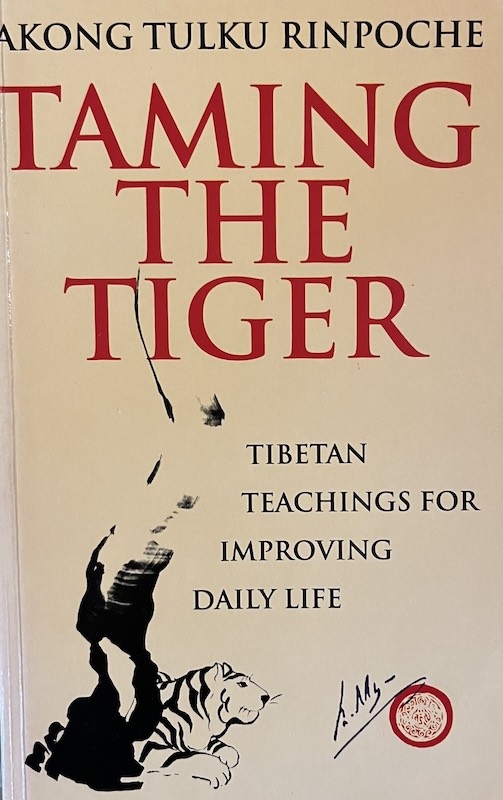
Akong Tulku Rinpoche - Taming the Tiger
Taming the Tiger is a practical and philosophical guide to transforming the mind and cultivating inner peace, rooted in Tibetan Buddhist tradition. The book is structured in two main parts: theory and practice, reflecting the classic approach of first understanding the nature of the mind - then applying methods to transform it.
Consciousness-Quotient-Squared - integrating theory-and-practice - E=MC²
Theory: The first part of the book explores the nature of the mind, suffering, and the roots of emotional disturbance. Akong Rinpoche explains in simple plain English how our habitual patterns and afflictive emotions - anger, attachment, ignorance - are hidden “tigers” in the mind that need taming. He emphasizes the importance of recognizing these patterns with clarity and compassion, rather than with self-judgment.
“The mind is the root of all our experience, both of ourselves and of others. If we perceive the world in an unclear way, confusion and suffering will surely arise. It is like someone with defective vision seeing the world as being upside down, or a fearful person finding everything frightening. We may be largely unaware of our ignorance and wrong views, yet at present the mind can be compared to a wild tiger, rampaging through our daily lives. Motivated by desire, hatred and bewilderment this untamed mind blindly pursues what it wants and lashes out at all that stands in its way, with little or no understanding of the way things really are.” Taming the Tiger | SamyeLing.org
This quote highlights Akong’s central message: true transformation is an inside job, requiring both discipline and compassion. And modern science agrees; the science of flow state is merging discipline and surrender. CQ² - disciplined compassion - E=MC²
Daily Practice: The second part provides step-by-step meditative and contemplative practices for training the mind. These include mindfulness of breath, body awareness, and specific antidotes for negative emotions. Akong Rinpoche’s approach is gentle and rigorous, encouraging daily practice and self-reflection. Anytime. Anywhere.
The teachings in Taming the Tiger resonate deeply with the Quantum Human paradigm:
Self-awareness and Meta-cognition: Recognizing and observing one’s own mental patterns is akin to Quantum Human’s “awareness-of-awareness-itself” and meta-cognition is a superpower, and the essence of meditation is awareness.
Integration of Opposites: Quantum Human seeks to balance yin-and-yang, theory- and-practice, Akong Rinpoche teaches the integration of discipline (yang) and surrender (yin) in taming the mind. And this is why, after returning from India in 2012, I went to Samye Ling and took Refuge and became a student under the guidance of Akong Tulku Rinpoche. After all, I am Tiger-Aries and Akong’s book Taming the Tiger - a neon-light arrow - synchronicity written on a book cover alongside Akong’s exquisite Calligraphy - a painting of a tiger.
Neuroplasticity and Habit Change: Taming the Tiger focuses on repetition, practice, and the gradual re-wiring of the mind. This mirrors the Quantum Human emphasis on neuroplasticity - “neurons that fire together, wire together.” The second-half practice portion is that the proof is in the tasting and experiencing for oneself. Akong is a recognised meditation master in the Kagyu lineage of Tibetan Buddhism.
When I first read this book in my early thirties, I already had a decade of self-practice. In simple, subtle and profound ways, Akong’s gradual step-by-step guidance formed the foundation for my own formal meditation practice, which at the time was fairly regular - now a committed daily practice - applying the teachings in everyday life.
“The wildness we have to deal with is not simply that of anger and rage; it is much more fundamental than that. The tendency to be driven by ignorance, hatred and delusion enslaves us, allowing confusion and negative emotions to predominate. Thus the mind becomes wild and uncontrollable and our freedom is effectively destroyed.
Normally we are so blind that we are unaware of how wild our minds really are. When things go wrong, we tend to blame other people and circumstances, rather than look inside ourselves for the causes of the suffering. But if we are ever to find true peace or happiness; it is that wildness within which must be faced and dealt with. Only then can we learn to use our energy in a more positive and balanced way, so that we stop causing harm to ourselves and to others.” Simplicity, elegance, subtle complexity.
Transformation occurs through Practice: Rinpoche’s approach stresses that theory and insight alone is not enough; daily, embodied practice is essential for real change.
Taming the Tiger is a manual for inner-transformation that aligns with the Quantum Human ideal: to become a conscious participant in one’s own evolution, harmonizing theory-and-practice - cultivating a unified-field-of-awareness - Akong, my Guru-ji.
And this book, my joint number one since it acts as a perfect counterbalance to Chogyam Trungpa’s Crazy Wisdom; now infused with Akong’s solid, calm and steady mental strength - grounded wisdom and compassion like two wings of a bird; to fly.
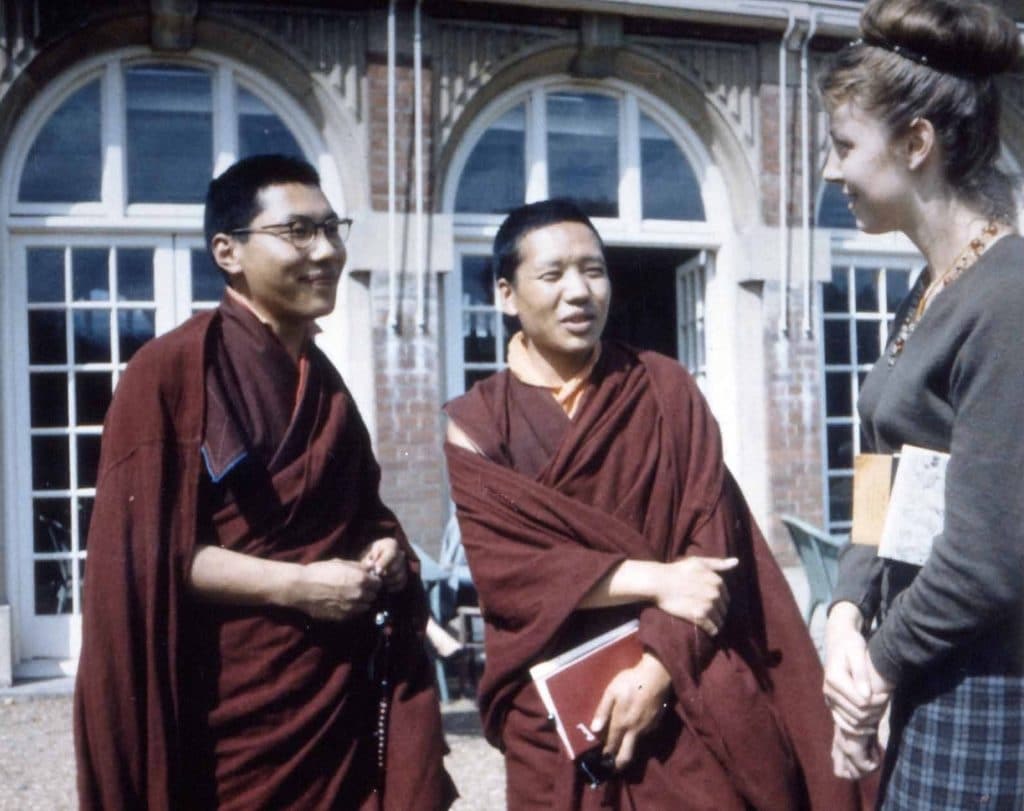
Chogyam Trungpa & Akong Rinpoche: Buddha Dharma in Counterpoint
Exile and Arrival: From Tibet to Oxford
In the wake of the Chinese invasion of Tibet in October 1950, two young tulkus - Chogyam Trungpa and Akong Rinpoche - fled their homeland on foot, crossing the Himalayas in a harrowing journey marked by hunger, loss, and the collapse of an old world. Their escape, not only a physical ordeal - a spiritual crucible, forging a bond of brotherhood and resilience that would shape their lives throughout beginningless-and-endless-time; entwined across space by an in-visible etheric umbilical cord like twins.
Arriving first in India, they joined the wave of Tibetan refugees, then made their way to England. In Oxford, their destinies diverged and remained intertwined: Trungpa, the scholar, enrolled at Oxford University, immersing himself in Western philosophy, literature; the avant-garde. Akong, the humble servant, swept the college floors to support them both, embodying the Buddhist ideal of service without self-importance.
Mirrors and Counterbalances: Two Ways of Being
Chogyam Trungpa a spiritual firebrand - charismatic, unpredictable, dazzling - abused alcohol, sex and drugs - aka the “Jimi Hendrix of Rinpoches” a master improviser who electrified Western audiences with his teachings on Crazy Wisdom, the dangers of spiritual materialism, and the transformative power of art and direct experience.
Trungpa’s approach was radical: he broke taboos, challenged conventions, and invited students to leap beyond comfort into the unknown. Sex-drugs-rock-and-roll BABY.
Akong Rinpoche aka Aki and for those closest to him Aki-Baby - by contrast, was the embodiment of practical and embodied compassion. While Trungpa played the role of the iconoclast and rock superstar of Tibetan Buddhism, scorching a path and searing a flame across America; Akong quietly built the foundations of Tibetan Buddhism in the West and setting up soup kitchens, his manifold activities - humanitarian, spiritual and medical - diligently teaching his students in crystal clear, precise and simple plain English. Simple, eloquent, subtle complexity; profound depth.
Together, they co-founded Samye Ling Monastery in Scotland after their Guru; the 16th Karmapa had envisioned the confluence of three streams and instructed Chogyam and Akong to find a suitable location.
The 16th Karmapa’s vision - Samye Ling Monastery - Oxford formative years
Guided by Karmapa’s vision, Chogyam and Akong searched for a suitable site in the UK. They eventually discovered a property in Eskdalemuir, Dumfriesshire, Scotland, where three streams - the White Esk, the Black Esk, and the Rae Burn - converge.
Recognizing this location as the fulfillment of Karmapa’s prophecy, they established Samye Ling Monastery in 1967.
The name “Samye Ling” is itself significant: it is named after Samye, the first Buddhist monastery in Tibet, symbolizing the transmission of Tibetan Buddhism to Western soil. The confluence of the three streams at Samye Ling became a living metaphor for the meeting of East and West, tradition and innovation, and blending different spiritual lineages; a living tradition - a living tree - transplanting Buddha Dharma to the West.
The confluence of three streams is seen as a place of natural power and harmony, supporting the flourishing of spiritual practice and community. The site’s geography mirrors the mission of Samye Ling - to serve as a bridge between Tibetan Buddhism and Western seekers, and to foster unity among diverse traditions. In Tibetan tradition, such locations are believed to offer protection from negative influences and to attract blessings, making them an ideal location for a monastery or retreat centre.
Akong established soup kitchens and created humanitarian projects across the UK and beyond. He was often found in the kitchen, serving soup to the hungry; living the Bodhisattva vow in every gesture. His teaching, simple, direct, rooted in everyday kindness. Compassion; a smile, a gesture, every act, being grounded in the present.
Today, Samye Ling Monastery stands as the first and one of the most influential Tibetan Buddhist centres in the West. The Karmapa’s vision of the three streams continues to inspire practitioners, symbolizing the ongoing flow of wisdom, compassion, and community across cultures and generations.
Chogyam and Akong’s formative years: Their Oxford years crystallized their differences and deepened their mutual respect. Trungpa’s immersion in academia and the arts gave him the tools to communicate Buddhism in a language that resonated with Western seekers - often through paradox, poetry and deliberate provocation. Akong’s experience as a general assistant and sweeping and clearing away clutter - reinforced his commitment to humility, service, and meeting people’s basic needs before addressing higher spiritual aspirations - balancing the opposites - E=MC²
A complete path, a unified-field: Trungpa, the visionary who inspired minds and hearts; Akong, the steady hand who nurtured bodies and souls. Their partnership, a living example of the Buddhist principle of “relative and absolute” - the interplay of wisdom and compassion, emptiness and form, inspiration and practicality.
Consciousness-Quotient-Squared - counterbalancing the opposites - E=MC²
The relationship between Chogyam Trungpa and Akong Rinpoche is a testament to the power of complementary opposites. Trungpa’s wild creativity and Akong’s steady compassion mirrored and counterbalanced each other, offering students a holistic model of spiritual life. Trungpa showed how to break free from conceptual limitations; Akong showed how to ground awakening in everyday kindness. Together, they helped plant the seeds of Tibetan Buddhism in the West in Scotland - co-founding Samye Ling - Chogyam re-located and blazed a path across America; each, their inimitable way.
Their story is a living mandala:
a field
thunder and silence meet
soup served
mind set free
Hegelian Dialectic: Trungpa’s Genius, Abuse, and Synthesis
Thesis: Trungpa’s Genius and Contributions Chogyam Trungpa was a pivotal figure in bringing Tibetan Buddhism to the West. He was recognized as the 11th Trungpa Tulku and trained rigorously in the Kagyu and Nyingma traditions. After fleeing Tibet, he studied at Oxford and became known for his ability to translate Buddhist wisdom into language and forms accessible to Westerners.
Trungpa founded Vajradhatu, Naropa University, and the Shambhala Training method. He was celebrated for his “crazy wisdom” approach - using unconventional, sometimes shocking methods to break through students’ conceptual barriers. His teachings on spiritual materialism, meditation, and the integration of dharma with modern life remain influential. [balancedac...vement.com]
Antithesis: Abuse, Transgressions, and Controversy Trungpa’s legacy is deeply marred by serious ethical violations. He was known for heavy drinking, sexual predation, and at least one documented incident of ordering the forced stripping (sexual assault) of a student and his girlfriend. These actions caused significant controversy during his life and after. [en.wikipedia.org]
He relinquished his monastic vows in 1969 after scandals in the UK, including relationships with students and marrying a 16-year-old English girl, Diana Pybus, at age 31. This act - leaving the monastic order and marrying - constitutes his “de-robing.” He voluntarily gave up his vows and never returned to monastic status. [prem-rawat-bio.org]
Trungpa’s community, Shambhala, has been further rocked by subsequent abuse scandals involving his successors and students, raising questions about the transmission of abusive dynamics. [beyondthetemple.com]
His lifestyle - marked by alcoholism, sexual relationships with students, and authoritarian community dynamics - has been described as abusive and cult-like by critics and some former students. [thewalrus.ca]
Synthesis: Legacy and Ongoing Debate
The synthesis in Trungpa’s case is complex. Many practitioners and scholars acknowledge that his teachings have profound value and have shaped Western Buddhism in lasting ways. His books and institutions continue to inspire and educate. [mysterylores.com]
At the same time, there is a growing consensus that ethical integrity is inseparable from authentic spiritual transmission. The community is divided: some separate Trungpa’s teachings from his actions, while others argue that his abuses fundamentally undermine his legacy. I have only ever read his books, and this is his lasting legacy.
Hegelian synthesis here is not a simple reconciliation, but an ongoing, dynamic tension: Trungpa’s genius and his transgressions are both real and must be held together in honest dialogue. This tension has led to a more critical, mature approach to teacher-student relationships and the importance of accountability in spiritual communities. [mysterylores.com].
Mirror neurons mimic, imitate, and emulate the outer environment. Ask yourself; what qualities do you want to plant, grow and blossom, and at the same time, uproot and let go of. And this is why finding an authentic spiritual teacher is vital; do your due diligence, look out for any obvious and subtle warning signs. Trust your own intuition and instincts. Spiritual Abuse & How to Avoid It - Deep Psychology
References
Wikipedia: Chögyam Trungpa [en.wikipedia.org]
Balanced Achievement: Spiritual Teachers - Chögyam Trungpa [balancedac...vement.com]
Evaluating Chogyam Trungpa’s Teachings Amid Controversy [mysterylores.com]
Prem Rawat Bio: Chögyam Trungpa [prem-rawat-bio.org]
Beyond the Temple: Reginal Ray and Trungpa’s Lineage of Abuse [beyondthetemple.com]
The Walrus: Survivors of an International Buddhist Cult Share Their Stories [thewalrus.ca]
Buddha Dharma
The Crossing
Two monks in exile.
One sweeps the floor,
one sweeps the mind.
Both carry mountains in their hearts,
cross the Himalayas each dawn.
One with a book, one with a broom,
both with empty hands.
Hendrix and the Soup Ladle
One played wisdom like Hendrix, a wild guitar,
notes bending, blending, burning midnight oil.
The other stirred pots and pans,
serving silence in each bowl.
One shattered egos limitation,
the other built soup kitchens.
Both fed hunger and compassion,
one with thunder, one with bread.
Mandala of Compassion
In the mandala’s centre, two figures bow:
One, a storm of sound and paradox,
one, a river of calm and clarity.
The Dharma wheel turns
wisdom and compassion
two wings of a bird - gone beyond
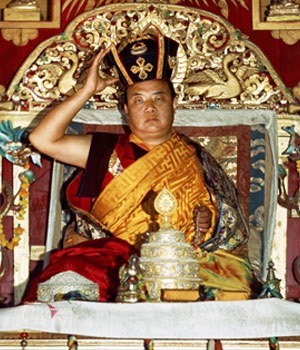
The 16th Karmapa: Spiritual Shepherd and Peacemaker
The 16th Karmapa, Rangjung Rigpe Dorje, was the head of the Karma Kagyu lineage and a spiritual force who guided Tibetan Buddhism through its greatest upheaval in the 20th century. Revered as the “King of the Yogis,” he was known for his profound compassion, wisdom, and ability to unite people across divides - cultural, spiritual, and personal. [kagyu.org]
Reconciliation at the Deathbed One of the most poignant episodes in the Karmapa’s life was his role in reconciling Chogyam Trungpa and Akong Rinpoche. After years of creative partnership and later estrangement - the two were summoned to the Karmapa’s bedside as he neared death in 1981. The Karmapa, aware of the importance of harmony among his senior disciples; calmly insisted they let go of any past grievances.
“You are both my heart sons. The Dharma in the West depends on your cooperation. Whatever has happened, let it go. Now is the time for unity.” He took their hands and placed them together, saying they should reconcile any differences they had as much as possible; such was his wish. Moved by his words and presence, Chogyam and Akong embraced and made peace; fulfilling the Karmapa’s wish for reconciliation and ensuring the continued flourishing of the Dharma in the West. The XVIth Karmapa Passes Away
“His Holiness was the living example of the Buddha’s compassion and wisdom. In his presence, one felt the possibility of complete openness and fearlessness.” Chogyam Trungpa.
“In the presence of His Holiness, all barriers dissolved. His blessing was the space in which we could truly meet again.” Akong Rinpoche.
This act of reconciliation became a living testament to the Karmapa’s role as a spiritual father and peacemaker. 16th Karmapa - Karmapa Foundation Europe
The Karmapa and the Native American Elder: A Meeting of Twin Traditions
The 16th Karmapa’s vision extended beyond Tibetan Buddhism. During his travels in North America, he expressed a deep wish to meet with the continent’s indigenous peoples, believing in the spiritual kinship between Tibetans and Native Americans.
The Hopi Encounter: In the mid-1970s, the Karmapa visited the Hopi Nation in Arizona. The meeting, described in “Radiant Compassion: The Life of the 16th Gyalwa Karmapa” by Gerd Bausch became mythical and legendary. The Karmapa was greeted by Chief Ned Nayatewa and later met Oswald White Bear Fredericks, a respected Hopi elder.
Ceremony and Prophecy: The Karmapa and the Hopi elders exchanged gifts and prophecies. The Karmapa remarked:
“We have known one another for hundreds of years already. Your rituals, ceremonies, and way of life are very similar to ours. I will always remember you in my meditation.” [16th-karma...weebly.com]
The Hopi chief replied, “We have a similar prophecy!” - referring to the ancient vision that “when the iron eagle flies and horses with wheels run on roads, the Red People and the people of the East will meet.” H.H. the 16th Karmapa’s Visit to the Hopi - Buddhism Today Magazine The Karmapa’s visit was seen as the fulfillment of this prophecy.
During the visit, the Hopi shared that there had been a long drought.
The Karmapa assured them, “Don’t worry, I’ll take care of it.” Shortly after, rain fell on the parched land, which the Hopi regarded as a sign of blessing. [buddhism-today.org]
Gerd Bausch’s “Radiant Compassion” provides a detailed account of the Karmapa’s journey, including the Hopi encounter. Bausch, travelled with the Karmapa and documented the profound impact of these cross-cultural meetings. He describes the Karmapa’s humility, humour, and ability to bridge worlds - East and West, Buddhist and indigenous, ancient and modern. [treasuryoflives.org]
The 16th Karmapa’s life was a living mandala of compassion, wisdom, and unity. Whether reconciling his closest disciples or honouring the spiritual traditions of other peoples, he embodied the principle:
“Compassion is the root of all practice.” (Heart Advice of the Karmapa) [justdharma.org]
References:
“Radiant Compassion: The Life of the 16th Gyalwa Karmapa” by Gerd Bausch
“Heart Advice of the Karmapa”
H.H. the 16th Karmapa’s Visit to the Hopi
Condolence Message from His Holiness The Karmapa
The Peacemaker’s Blessing
At the edge of life,
King of Yogis calls his heart sons
old wounds dissolve in his warmth and presence.
Let the past be beyond, let unity be your offering.
Rain falls upon the desert, two rivers meet again.
Eagle and lotus meet beneath Arizona sky,
prophecies spoken and shared; rain blessing the land.
We have known each other for centuries,
Two nations entangled prayers -
East and West, kith and kin in the sand.
Silence holds them -
ancient vows remembered,
the earth listens and receives.
End of chamber 34
Chambers 1 to 35: all 35 chambers open