Ring II · Discipline · Chamber 8
Mapping the Mandala, Regulating the Nervous System
About 8 minutes to read
“Rapid breathing increases sympathetic activity and fight-or-flight. Breathing rhythms affect attention. Inhalation increases heart rate, and exhalation decreases heart rate. Mindful breathing practice reduces blood pressure...This is why breathing practices are tied so well with cognitive functions, with emotional functions, as well as how the neuronal functions occur.” Dr. Abha Karki Rajbhandari, PhD. NeuroYoga - How does yoga affect the nervous system?
This mapping acts as a living mandala and practical framework. Each chamber is a petal in the mandala, contributing to the wholeness of the practitioner. The structure is not linear but spiral - each return to a title/chamber brings new depth, like the dance of yin-and-yang, the interplay between Bop and Gum, Laurel and Hardy, Morph and Chaz; your own Divided Brain. The secret is in the question and the willingness to re-ask, reframe, and refine - mirroring the quantum process of observation and transformation. This chamber explores breath - a vital foundation for self-regulation.
The inclusion of Socratic dialogue, Plato’s Cave, Hegelian dialectic, and Frankenstein’s perspective reminds us that the journey to be Quantum Human is both ancient and ever now: a continual unfolding of wisdom through self-enquiry, awakening, synthesis, and the courage to see through new eyes. Awakening quantum human exponential potentiality to actuality - self-actualized - embodied-presence - CQ² M.I.A² E=MC²
Mixed Internal Arts - moving to balance, in balancing move - moving towards flow state and Samadhi, where the ‘I’ goes missing-in-action. In this way, M.I.A². And it is the breath which connects everything-to-everything-else. In yoga, the breath is known as the carrier of prāṇa. Prā - a prefix meaning first, most fundamental, ṇa - meaning to breath, to live, to be alive, and movement. Prāṇa; universal lifeforce energy. In yogic anatomy, the yogic body is composed of five koshas, layers, sheaths, dimensions; the second being prāṇamaya kosha - five breathes - a unified-field of awareness. E=MC²
“Scientific interest in the brain and body interactions has been surging in recent years. One fundamental yet underexplored aspect of brain and body interactions is the link between the respiratory and the nervous systems. In this article, we give an overview of the emerging literature on how respiration modulates neural, cognitive, and emotional processes. Moreover, we present a perspective linking respiration to the free-energy principle. We frame volitional modulation of the breath as an active inference mechanism in which sensory evidence is recontextualized to alter interoceptive models. We further propose that respiration-entrained gamma oscillations may reflect the propagation of prediction errors from the sensory level up to cortical regions in order to alter higher level predictions. Accordingly, controlled breathing emerges as an easily accessible tool for emotional, cognitive, and physiological regulation.” Keeping the Breath in Mind: Respiration, Neural Oscillations, and the Free Energy Principle - PMC (nih.gov) Breathing is so simple; yet so vital.
Prāṇa - universal lifeforce energy - linking respiration to the free energy principle.
Key to the internal arts - yoga, Tai Chi, meditation, movement, dance - awareness of breathing patterns and its ripple effects on the body-breath-and-mind-continuum; regulating the CNS and maintaining homeostasis - paying attention with kindness.1
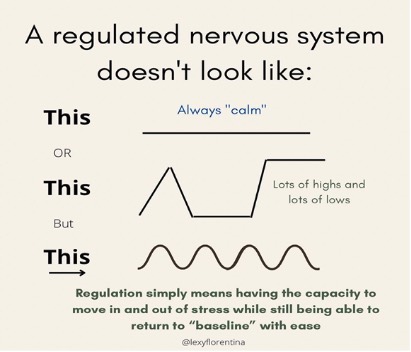
This begs the question, what if we can get to the root of all dis-ease through self-regulation of the breath and Central Nervous System (CNS) - in this way - we can optimize health and well-being and return to baseline and homeostasis with steadiness, comfort and ease; remembering along the way to consciously breathe long, slow, and deep, and cultivate beneficial sensations-to-mind-states like an inner-gardener; quantum human: paying attention with kindness, give back your heart to itself, love again the stranger who was yourself. Love After Love. Derek Walcott.
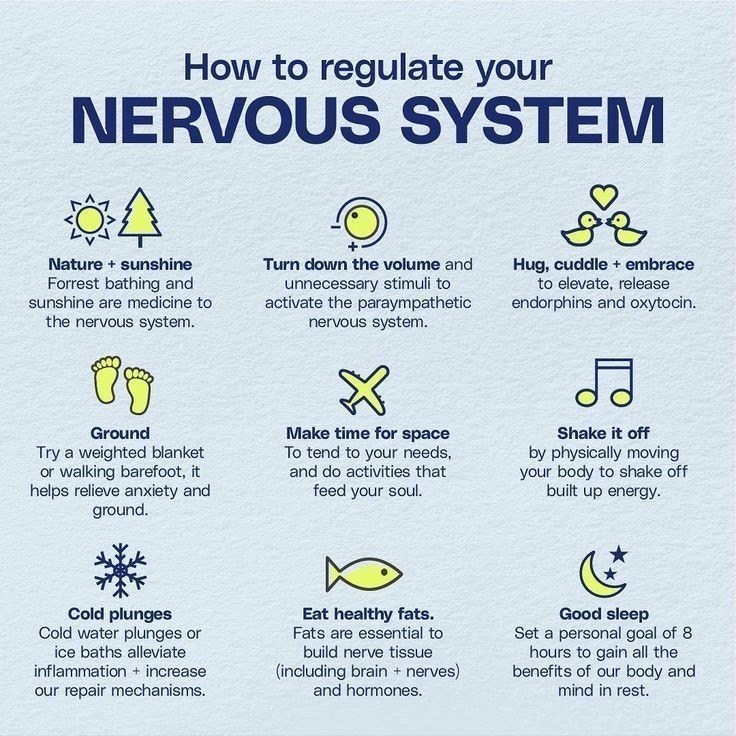
“When the body is disordered, make use of the body to reduce.
When thought is agitated, make use of Prāṇāyāma to reduce.” Commentary by T Krishnamacharya: - From T Krishnamacharya’s composition,
The Yoga Rahasya Chapter Four verse 31
The movement of the breath is a
mirror to the movement of the mind.
Commentary by Paul Harvey: - 108 Prāṇāyāma Practice Pointers2
“The key path of haṭha-yoga is to gain control over prāṇa, the life force. The principal practice for that is prāṇāyāma. Because breath is involuntary - yet we can consciously modify it - controlling the breath helps us to control other involuntary functions. This in turn is the gateway to controlling life force or prāṇa.” A. G. Mohan. The art of breathing. And this is what the ancients knew; that we have somehow subsumed and forgotten.
“Diaphragmatic breathing is relaxing and therapeutic, reduces stress, and is a fundamental procedure of Pranayama Yoga, Zen, transcendental meditation and other meditation practices. Analysis of oxidative stress levels in people who meditate indicated that meditation correlates with lower oxidative stress levels, lower cortisol levels, and higher melatonin levels. It is known that cortisol inhibits enzymes responsible for the antioxidant activity of cells and that melatonin is a strong antioxidant; therefore, in this study, we investigated the effects of diaphragmatic breathing on exercise-induced oxidative stress and the putative role of cortisol and melatonin hormones in this stress pathway.” Diaphragmatic Breathing Reduces Exercise-Induced Oxidative Stress - PMC (nih.gov) Modern science now verifying what the ancients knew. And all shall be well. And all manner of things shall be well.3
“The diaphragm is the motor muscle of breath, which can be automatic, forced, or controlled. The diaphragm is assigned to multiple functions, both indirectly and directly, which go beyond breathing...The functions of the diaphragm do not stop locally in its anatomy but affect the whole-body system. The respiratory rhythm, directly and indirectly, affects the central nervous system (CNS). This article describes and reviews these influences, containing, for the first time, information on this subject in a single text. The ability of breath to move the brain mass and determine patterns of neural oscillation will be discussed. The role of the diaphragm in influencing motor expression and its effect on intracranial blood shifts in respiratory activity will also be discussed. It is known that the diaphragm can have multiple uses in improving the symptomatological picture of chronic diseases, but there is no current, concrete data on the effects that the rehabilitative training or manual approaches could have on the patient; in particular, on his/her cognitive and cerebral aspects in general.” The Influence of Breathing on the Central Nervous System - PMC (nih.gov) A meta-paper.
My eyes zoom-in on these lines. “The same respiratory rhythm is recorded differently from specific brain areas, from which the neural oscillations, which allow communication between them, start. The greater the oscillations are coordinated, the greater the function expressed by the different cerebral areas involved. The diaphragm is the "diapason" of the neural system. Breathing, in particular, affects the gamma waves, which involve the neocortex (frontal, parietal, and temporal area); these areas are activated for cognitive function: memory, attention, sensory perception, problem-solving, and language processes [40]. Neural oscillations are measured in local fields potentials (LFPs) or via an electroencephalogram (EEGs), influencing the action potential or spikes of neurons [42].” Breathing and oscillation of the neural network.
The key to optimal breathing is learning to control the diaphragm and regulate the breath and getting to the root cause of dis-ease. Body-breath-and-mind at ease and homeostasis. And this is what the ancients knew that modern science is only now exploring and verifying. Be your own inner-neuroscientist. And yoga means union.
Exercise your Diaphragm “This yoga practice helps you increase awareness of the movement of your diaphragm, explore the role of the diaphragm in spinal stabilization and relieve ribcage stiffness.” Olga gives you eyes to see-feel-sense-and-touch - and the key to health and wellbeing - paying attention with kindness to your diaphragm like Inspector Gadget Go-Go-Gadget-Eyes-and-Ears; heightening precision, in-tuition and spatial awareness; cerebral calmness. Love your diaphragm. Love your breath. CQ²
“Hi there! My name is Olga Kabel, I am a yoga teacher and yoga therapist. Welcome to my YouTube channel! I’ve been practicing and teaching yoga for almost two decades. On this channel I post lots and lots of practices that address specific body issues (like neck tension or hip pain), restore physical and emotional balance, increase the sense of vitality, and help improve your overall outlook. To make your yoga practice even more customized to your needs, please get my Home Yoga Practice app. It will help you choose the most useful practice for you on any given day. http://sequencewiz.org/new-home-yoga-practice-mobile-app/
The path is the way; Ukiyo, Japanese meaning living in the moment, to be an artist of “the floating world.” Cognitive awareness, Emotional intelligence, Somatic presence.
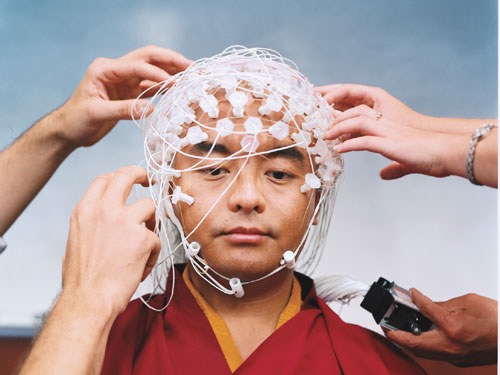
In meditation, thoughts become like clouds passing by. “Just be aware. Just let it be.” Mingyur Rinpoche. A Tibetan Buddhism monk - who was the first person measured with significantly elevated and stable gamma-waves in meditation and also during baseline measurement of his everyday activities. And the essence of meditation is awareness - awareness-of-awareness-itself. Meta-cognition is a superpower. CQ²
“During the study, Rinpoche had his brainwave activity measured while he meditated. He was asked to meditate on compassion for one minute, followed by 30 seconds of rest, four times in a row.
When the researchers first looked at the scans, the results were so shocking that they thought their equipment was malfunctioning.
As soon as Mingyur began to meditate, there was a huge burst of electrical activity on the monitors. This brainwave activity lasted throughout the entire compassion-meditation and continued throughout the three subsequent meditations.
When the researchers examined the activity using functional magnetic resonance imaging (fMRI), which creates a 3D video of brain activity, Mingyur’s brain circuitry for empathy was found to be 700-800 times higher during the meditation periods compared to the rest periods.
This finding was not unique to Mingyur, as the 21 other Buddhist monks who participated in the neuroscience research also showed similar results in their brainwave activity.” A Meditation Study Measuring The Brain Waves Of Buddhist Monks Cognitive awareness, Emotional intelligence, Somatic presence, Ethical discernment, Aesthetic sensitivity, Metaphysical intuition, Interpersonal resonance, Temporal awareness. CQ²
A Guided Meditation on the Body, Space, and Awareness with Yongey Mingyur Rinpoche “In this short guided-meditation, Tibetan Buddhist meditation master, Yongey Mingyur Rinpoche gives simple instructions for bringing awareness to the body, sensory experience, space, and finally to awareness itself. The main point of the practice is to fully embrace the present moment with mindfulness and awareness.
Learn how to use meditation to transform stressful situations and challenging emotions into support for awareness: https://tergar.org/beyond-mindfulness...”
End of chamber 8
Chambers 1 to 35: all 35 chambers open