Ring III · Integration · Chamber 17
Yoga Therapy Holistic Model
About 17 minutes to read
“Yoga therapy is a type of therapy that focuses on the integration of mind and body to enhance mental health,” Sabrina Romanoff, PsyD.1
The Heart of Yoga focuses on breath-and-spine which acts as bi-directional feedback between body-and-mind via the Central Nervous System. Biofeedback signals are sent from body-to-mind. Neurofeedback are signals sent from the mind-to-body. The mind conducts the breath, the breath orchestrates the CNS - the CNS relays messages, processes and analyzes information - yoga balances sympathetic and parasympathetic response - returning to homeostasis - a union-of-opposites like a Siva-Shakti dance - balancing oxidative stress and mitochondria - cultivating steadiness, alertness, comfort and ease in body-breath-and-mind - mirrored in brain coherence and optimal brain functioning, happiness and wellbeing - from no order to order-and-unity - Samadhi - a Bose-Einstein condensate - CQ² M.I.A² - coherent breathing optimises cognitive, emotional and neuronal functions. E=MC²
Krishnamacharya’s teaching of Patanjali’s Eight-Limbs. By focusing on the breath with single-pointed concentration, you bring the sixth-limb of dharana - concentration - right to the beginning and throughout the entirety of practice. Krishnamacharya emphasized breath-synced-to-movement; this entwines asana-and-pranayama in symbiosis. Yoga now is a multidimensional practice within the same timeframe. Let the breath envelope the movement; let the breath create the movement like Bruce Lee says “DON’T THINK! FEEEEELL!” The Eight-Limbs are no longer viewed as linear and sequential; everything is now non-linear and multidimensional; yoga, union-of-body-breath-and-mind - everything-all-at-the-same-time. Quantum Human by another name.
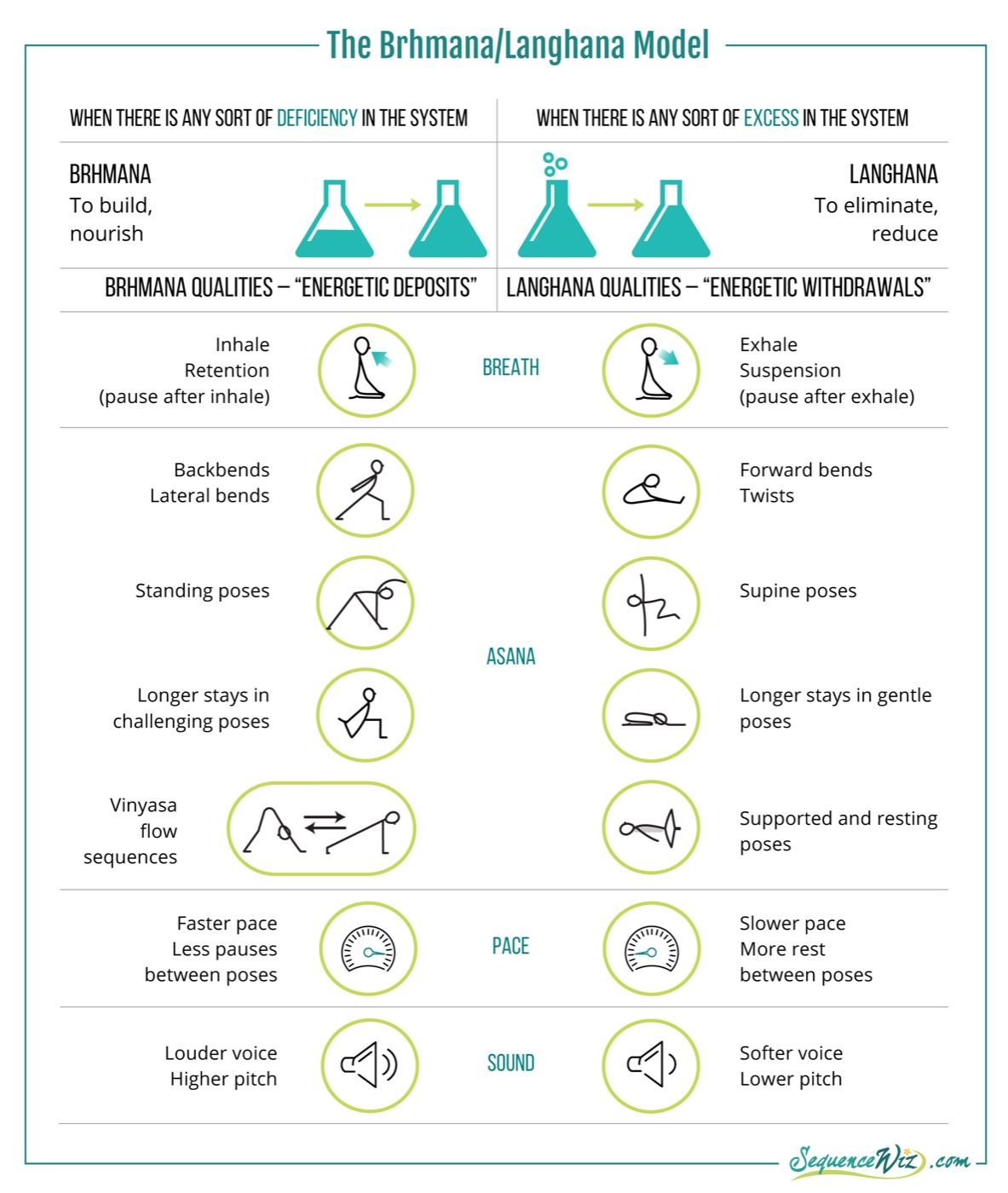
Brahmana/Langana/Samana model reflects the CNS functions; sympathetic, parasympathetic, and homeostasis. Yoga is first-person neuroplasticity, and this focus on the CNS and body-breath-and-mind-continuum is encapsulated in yoga therapy. This model gives us a holistic roadmap to self-healing all layers of well-being encompassed within the Five Kosha’s - five layers of multidimensional being - physical, emotional, mental, spiritual - Samadhi, a unified-state-of-bliss - limitless joy, peace, equanimity, boundless compassion, liberation; freedom from all suffering. Beyond all disturbances.
A classical well-balanced yoga class is like a bell-curve or mountain walk. The first part is more active like walking-up a mountain which cultivates brahmana effects which are energising and proprioception based, focusing on prana vayu and stronger inhalation; sympathetic activation, energetic poses like warrior 1-2-3, standing and chest-opening sequences, longer stays, faster paced vinyasa, and using a louder voice in mantra. You can practice energising effects like Vishva-ji's Yoga for Energy Boost - Gayatri Kriya for Beginners and Sun Salutations, 6 Rounds | Classical Surya Namaskar Asana | Yogrishi Vishvketu tapas in the morning to create heat, purification of the mind and senses, and give you sufficient energy for the rest of the day.
This active energetic effect is counterbalanced by the langhana effect in the second half of class or in the evening since it has an energetic withdrawal effect and focuses more on interoception; apana vayu, stomach eliminating and detoxifying, forward bends and twists, supine, supported and resting poses, corpse pose, restorative yoga, slower paced, more calming, soothing and relaxing of the parasympathetic and vagus nerve, using a softer voice in mantra and honeybees which lengthens exhalation; ready for a more restful, Delta-wave deep sleep. Waking up fully recharged.
How to manage your "body budget": The Brhmana-Langhana model - Sequence Wiz Yoga With Olga, yoga teacher and yoga therapist trained in the Krishnamacharya tradition. An excellent YouTube channel covering a wide bandwidth of practice. Quantum Human. In-finitely more-than-the-sum-of-its-parts; self-sustainable happiness from within; wholeness - self-regulation - whole-being - self-healing - inter-be. E = MC² YOGA FOR ENERGY MANAGEMENT - YouTube Yoga with Olga.
Balancing brahmana-sympathetic energizing effect; followed by evening langhana-parasympathetic response, returning to baseline and homeostasis with steadiness, comfort and ease. This balancing-of-opposites is known as the Samana effect which promotes stability, maintains internal body temperature, and balances energy levels.
Samana tools include symmetrical postures which lengthen the spine, anulom viloma pranayama - alternate nostril breathing balancing blood and oxygen flow to the left-and-right-cerebral-hemispheres - Sitali cooling breath and Bhramari honeybee humming, calming and soothing the CNS - mind coherent and experiencing the unitive effects of Samana; a calm and stable baseline and returning to homeostasis and optimal brain functioning in end meditation; body soft like water, spine firm yet flexible like bamboo, mind like a still lake; active and passive breathing, breath breathing itself.
| BRAHMANA | LANGHANA | SAMANA |
|---|---|---|
| To Energize | To reduce | Promotes stability |
| Creates Internal Heat | Cools the system | Maintains internal temperature |
| Tonifies the system | Relaxes the body | Maintains the energy level |
| Stimulates alertness of the mind | Decreases agitation in the mind | Maintenance |
| Nourishes | Purifies |
“We create brahmana, langhana or samana effects by our choice of asana, the sequencing of a class, having movements be dynamic or static. For more advanced practitioners, these effects can also be created by breath adaptation in asana practice, the directional flow of breath and during Pranayama, chanting and mantra japa.” Anupam Raman. Exploring the energetic Effects of Practice - BRAHMANA, LANGHANA, and SAMANA | Leading Yoga
“Medical yoga is defined as the use of yoga practices for the prevention and potential treatment of medical conditions. Beyond the physical elements of yoga, which are important and effective for strengthening the body, medical yoga also incorporates appropriate breathing techniques, mindfulness, meditation, and self-reflection/study in order to achieve the maximum benefits. Medical Yoga Therapy or “Yoga Chikitsa” is the dynamic state of physical and mental ease, coupled with spiritual well-being.” Science exploring and mapping the therapeutic benefits of yoga therapy, self-healing and balancing all five koshas; union with the in-finite. And as Yogrishi Vishvketu says, your true nature is to be joyful, playful, blissful, expandable and fearless. Wellbeing is your birthright.
“Yoga helps one to develop a positive state of health by not only treating illness, but also helping one to understand the underlying causes of disease. Medical yoga therapy, ideally, is an individualized, personalized and holistic approach that takes into account not only the patient’s mind, body and spirit, but also their family, support network, work situation, and culture, as part of the patient’s individualized treatment plan. As an example, if one is diagnosed with anxiety, a physician trained in medical yoga may prescribe specific breathing techniques (pranayama's), calming postures (asanas), mindfulness-based practices and/or meditation, as well as other lifestyle guidance. This type of therapy does not incur the potentially adverse effects of medications, and can produce benefits to the patient, long after their relationship with the health provider ends. Medical Yoga Therapy - PMC
"Scientific interest in the brain and body interactions has been surging in recent years. One fundamental yet underexplored aspect of brain and body interactions is the link between the respiratory and the nervous systems. In this article, we give an overview of the emerging literature on how respiration modulates neural, cognitive and emotional processes. Moreover, we present a perspective linking respiration to the free-energy principle. We frame volitional modulation of the breath as an active inference mechanism in which sensory evidence is recontextualized to alter interoceptive models. We further propose that respiration-entrained gamma oscillations may reflect the propagation of prediction errors from the sensory level up to cortical regions in order to alter higher level predictions. Accordingly, controlled breathing emerges as an easily accessible tool for emotional, cognitive, and physiological regulation." Keeping the Breath in Mind: Respiration, Neural Oscillations, and the Free Energy Principle - PMC
“Abstract This narrative review on yoga therapy research that was published during the years 2020 to 2023 includes 58 papers. The publications of this period are primarily systematic reviews and meta-analyses of randomized controlled trials. Many of these (15%) are focused on yoga reducing anxiety and depression during pregnancy. Pediatric research has included yoga for motor and cognitive performance in youth and adult research has been focused on yoga for depression, migraines, diabetes and cancer. Surprisingly, studies on older adults including yoga for cognitive dysfunction and for Parkinson’s comprise a significant number of the yoga publications (18%). Other studies include comparisons of Tele-yoga and in-person yoga and different yoga styles. Underlying mechanism research suggests that increased parasympathetic activity occurs following yoga as well as a reduction in cortisol and pro-inflammatory cytokines. Methodological problems continue to relate to the combined assessment of multiple yoga styles and their differing intensity and the more frequent measurement of psychological versus physical effects, although the mechanism studies highlight the positive physical effects of yoga. This narrative review involved entering the terms yoga and the years 2020-2023 into PubMed and PsycINFO. The search yielded 349 papers for the last four years. However, following exclusion criteria, including case studies, non-English papers and study protocols, this review is a summary of the research reported in 58 papers. The recent literature on yoga is predominantly focused on the reduction of anxiety and depression during pregnancy and on improving cognitive function in older adults including those with Parkinson’s. Other research involves yoga for youth for motor skills and cognitive performance and for adults to reduce depression, migraines and cancer symptoms as well as historical trends in the research and comparisons of different yoga styles including traditional yoga, exercise yoga and restorative yoga. This narrative review is accordingly divided into sections on research trends, comparisons of yoga styles, different age groups and conditions, potential underlying biological mechanisms and methodological limitations.” -Yoga-Therapy-Research-A-Narrative-Review.pdf A deep dive and meta-paper reviewing the terrain of yoga therapy.
Prāṇāyāma is an ancient Sanskrit word meaning breath control or breath regulation - the breath expanded and contracted like an elastic etheric-band - consciously explore connections between the body-breath-and-mind-continuum via the CNS and it is the breath and CNS which interconnects. Yoga is a practice of mind discipline and paying attention with kindness - planting beneficial states and uprooting and letting go of afflictive and harmful habits - be like an inner-gardener - observe the entire bandwidth of sensations-to-feelings-to-emotions-to-mind-states like a rapid cascade of dominoes - slow down everything and be like Neo in Matrix super-slow-motion Matrix-Bullet-Time - mindfully observe connections between the body-breath-and-mind-continuum - yoga-as-union - whole-being, undivided wholeness.
Prā means first, most fundamental, prāṇā means lifeforce energy, yāma means regulation, ā is a suffix and so ā-yāma means retention. In the Krishnamacharya tradition, prāṇāyāma fully occurs only when the breath is paused and retained; which is the nearest state a human can emulate to a Bose-Einstein condensate; everything slowed down to a stop - a pause between thoughts - and when the breath is retained, this pause acts as a Samadhi superposition state to connect mind to a unified-field.
“Hi there! My name is Olga Kabel, I am a yoga teacher and yoga therapist. Welcome to my YouTube channel! I’ve been practicing and teaching yoga for almost two decades. On this channel I post lots and lots of practices that address specific body issues (like neck tension or hip pain), restore physical and emotional balance, increase the sense of vitality, and help improve your overall outlook. To make your yoga practice even more customized to your needs, please get my Home Yoga Practice app. It will help you choose the most useful practice for you on any given day.” http://sequencewiz.org/new-home-yoga-practice-mobile-app/ ZOOM IN WITHIN: Yoga for physiological systems - YouTube An exquisite playlist to zoom-in and make friends with different body parts.
Yoga Therapy focuses on tailoring the yoga practice to suit the individual mind and temperament; much like a bespoke tailor cuts a suit and expertly tailors the precise fitting measurements to fit perfectly, snug like a glove.
“Yoga Therapy is a form of holistic healing or integrated medicine that uses the ancient science of yoga to enhance health and well-being. It adapts the practice of yoga to address specific health conditions as well as preventative habits in groups or with individuals. Students are given a range of tools which they continue to develop with their teacher and on their own. The tools and techniques of therapeutic yoga may include physical poses (asana), breath work (pranayama), meditation, mudra, imagery, deep relaxation (Yoga Nidra) and Ayurveda. Each of these traditional facets of yoga work in conjunction to reconnect the client to him/herself at all levels - from the physical body to the breath, the energetic body, mind and emotions and the spirit. This approach sees the human being as an integrated body-mind-spirit system that is at its best when all parts are in a state of dynamic balance. Deep level changes do not happen overnight.
Over time, however, yoga therapy can create permanent healing to all the levels of our being. A half hour home practice each day can bring significant changes.” Yoga Therapy - YouTube And Megan McCarthy, a masterful guide and yoga therapist.
Lymph and Fascia: Clearing the River, Tuning the Instrument
The ancients spoke of energy channels as currents or rivers within the subtle body. They understood that health depended on flow: of water, of breath, of life force; chi, ki, prāṇā to name a few. When the river was blocked, stagnation followed. When the meridians, nadis, channels were clear, vitality returned and flowed. Modern biology now gives us language for what they sensed. Lymph is the river. Fascia is the riverbed. Bioelectricity is the energy which flows through the electric-body.
Lymph is the body’s primary system for fluid balance, immune surveillance, waste removal, pressure regulation. It carries excess interstitial fluid, metabolites, proteins, and immune cells away from tissues and back toward circulation. Fascia, by contrast, is the continuous collagenous and hydrated matrix that shapes structure, movement, and communication across the whole body. Clinically, these systems are inseparable.
At the level of the interstitium - the fluid-filled connective-tissue spaces that extend into fascial planes - interstitial fluid becomes “pre‑lymph,” and fascia becomes the architecture through which that fluid moves. Scientific evidence now supports that these interstitial spaces are continuous across tissues and organs, extending into adjacent fascia, and that fluid flow within them is influenced by rhythmic compression, breathing, movement, and pressure changes. Before shape can change, flow must return.
Fascia as Communication Network
Fascia is no longer considered inert wrapping. Histological and imaging studies show it to be a dynamic, living network composed of collagen fibers, ground substance rich in hyaluronan, fibroblasts, and a dense neural supply. [nature.com]
Fascia participates in mechanotransduction - converting mechanical forces into cellular signalling.
Deep fascia is richly innervated, supporting roles in proprioception, pain perception, and postural tone. [nature.com]
Changes in hydration and viscosity of the fascial ground substance strongly affect tissue glide and movement quality.
In Quantum Human language: Fascia listens. It remembers the forces applied to it. It responds when the environment becomes quiet enough.
This is where lymph matters. When interstitial fluid accumulates and lymphatic flow is sluggish, tissues become pressurized, sensitized, and guarded. Attempting to “reshape” fascia under these conditions often provokes resistance rather than adaptation. In plain English, we need to switch on the toilet flush of lymphatic drainage before we can get the fascia to optimally stretch, flow, and feel aligned in body-breath-and-mind. CQ²
Why move lymph first, then fascia
Many lymphatic methodologies begin proximally - at the cervical region, trunk, and major lymphatic collectors - before addressing the limbs or local tissue areas. This principle is well established in manual lymphatic drainage and lymphatic rehabilitation. [sanfordhealth.org], [healthsyst....osumc.edu]
Lymph flows toward central drainage points; these must have capacity before peripheral fluid can move.
Clearing proximal pathways reduces tissue pressure and improves fluid gradients.
Gentle lymph-focused input can down-regulate protective tone via the nervous system.
Improved fluid movement supports fascial glide and reduces nociceptive sensitivity.
Three Integrated Practice Protocols
Protocol 1 - 5 minutes: “Open the Gates”
Daily coherence reset
Restore central lymphatic movement; create internal space.
Practice sequence:
Diaphragmatic breathing (2 min)
Slow nasal inhale, longer exhale. Ribcage expands in all directions.
(The diaphragm is a primary lymphatic pump.)
Cervical terminus opening (1 min)
Gentle skin stretch above the clavicles and along the sides of the neck. [healthsyst....osumc.edu]
Axillary or groin pumps (2 min)
Light, rhythmic skin stretch - no pressure, no pain.
Clear the mouth of the river.
Protocol 2 - 15 minutes: Clear → Pump → Spiral
Foundation practice used throughout this manuscript
Combine lymphatic priming with whole-body fascial mobility.
Practice Sequence:
Breath + cervical clearing (3 min)
Axillary and groin node activation (3 min)
Whole-body joint rotations (5 min)
Ankles → knees → hips → wrists → elbows → shoulders → spine
Smooth, circular, continuous.
(Eligned neuro‑lymphatic work.) [youtube.com], [eligned.com.au]
Fascial spirals (4 min)
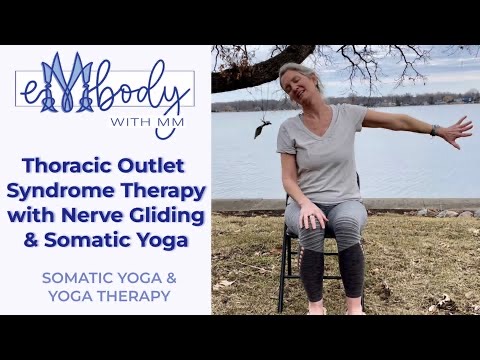
Rotational lunges, thoracic twists, cross‑body reaches with long exhale.
Let the river move; then invite the banks to soften.
Protocol 3 - 45 minutes: Lymph-Fascia Remodulation
Weekly or therapeutic depth work
Support long-term tissue remodelling and nervous system recalibration.
Practice structure:
Extended lymphatic preparation (10-15 min)
Breath, terminus clearing, proximal node work, gentle pumping sequences.
Slow fascial loading (15-20 min)
Long holds, yielding stretches, eccentric control along fascial slings.
Dynamic integration (10 min)
Crawling patterns, gait-based spirals, rotational strength with breath-led pacing.
First still the water. Then reshape the shore.
Eligned and neuro-lymphatic priming
The Eligned movement methodology, developed by Ellice De Giovanni, explicitly treats lymphatic movement as the front door to neurological and musculoskeletal change. [eligned.com.au], [felicitycohen.com]
Key contributions:
Rhythmic joint rotations as lymph pumps
Neuro-lymphatic sequencing before strength or mobility work
Use of oscillation or vibration (selectively and cautiously) to stimulate movement input and circulation [bestlifeonline.com]
This aligns directly with the lymph-first → fascia-second principle underlying the protocols above. Ellice exquisitely integrates theory into embodied practice. CQ²
Clinical grounding: LymphaticaSA
Clear, evidence-based education on lymphatic health, LymphaticaSA (South Africa) provides practitioner-informed resources focused on lymphatic anatomy, dysfunction, and therapeutic pathways. Their work reflects mainstream lymphology rather than wellness speculation and aligns with international standards of lymphatic education and care. (See: https://www.facebook.com/LymphaticaSA) [lymphafrica.com]
Dr Catherine Clinton - Optimize lens (quantum applied, embodied)
Dr Catherine Clinton frames health through quantum biology, emphasizing how light, water, sound, and electromagnetic fields influence physiology at the cellular level. [drcatherin...linton.com]
Fascia functions as a hydrated interface where mechanical, neural, and biochemical signals converge.
Lymph supports environmental clarity - maintaining the internal conditions required for coherent signalling.
Movement is not merely mechanical; it is informational.
When the internal waters are clear, the signal can be heard.
Ancient wisdom observes: where water flows, life follows. Modern science replies: where lymph moves, tissues adapt. Between them stands fascia - listening, responding, remembering. To move lymph first is not superstition. It is respect for optimal flow.
Teddy Atlas - Terrence Crawford v Errol Spence
“See, this is where the difference is. Like I said, they all have talent, some more, some less; but he executes it within a special vacuum of - the best way I can say it really - kind of like still air, that doesn’t exist for many. A cerebral calmness. See, that’s the thing I want to touch on; where everything slows down for him. Like it did for Michael Jordan in basketball, Tom Brady in football; where they see things that other people don’t see. And again, to use another analogy, an exaggerated analogy to get the visual of how special this guy is - to get the point across - like Neo in The Matrix where the bullets slow down for Neo...his eyes. He saw everything, every nook and cranny, every crevice of an opening, before it even opened.” Teddy Atlas Reacts to Terence Crawford Dominating Errol Spence - YouTube
Teddy Atlas, a master of the dark art of boxing; commenting on Crawford’s Zen minimal masterclass of dominating with his especially trained ramrod-jab; executing the gameplan to take away Errol’s offence by timing Errol with his jab - setting up his laser-beam counterpunching - controlling distance with superior footwork - TKO’ing Errol “The Truth” Spence in Rd 9 - seeing everything in super slow-motion like Neo. At the highest level, it is cerebral calmness that excels like no other quality; this, the ultimate litmus test, what Teddy calls character. “What I am talking about is CHARACTER!” What a person is made of inside.
Character is burnished by the hammer of life - the anvil is how you deal with everyday experience - which chisels and carves your personality - shapes and forms your character. Be like DaVinci and carve Vitruvian Man, divine proportion.
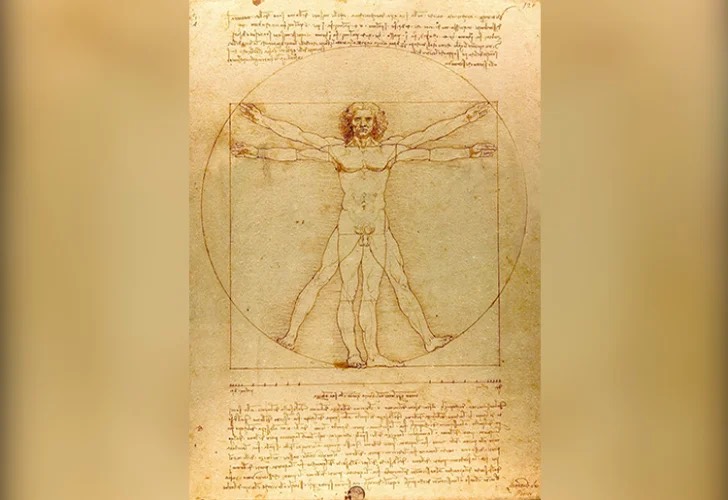
“In the silent matrix of existence lies a blueprint so profound it has captivated the minds of artists, scientists, and spiritual seekers for centuries. Leonardo da Vinci’s Sacred Geometry Vitruvian Man stands as a testament to the divine architecture woven into our very being. This isn’t merely a drawing - it’s a cosmic doorway, inviting us to recognize ourselves as living embodiments of universal patterns. The Vitruvian Man: Sacred Geometry Blueprint Of Divine Proportion Fascinating stuff, Gromit.
How you deal with adversity and the hardships of life and its challenges along the way is what distinguishes the truly great from other elite performers. His eyes. He saw everything, every nook and cranny, every crevice of an opening, before it even opened. And Terence’s upbringing without a father and his mum, the ultimate doubting mum of her son. “It filled me with rage. And every time I step foot in the ring or anything I did, I just wanted to win so bad, so I can prove a point to her.” Terence Crawford shares the hardships he faced growing up without his dad | ESPN - YouTube
Harnessing mind energy and cultivating yang mental determination and cerebral calmness; mental focus through transforming hardships and challenges into opportunities for growth - no matter what the obstacles - turning negatives into positives; being a winner-in-life. Transform your inner-self, simultaneously, transform the reflected outer-world. Know Thyself; every nook, every cranny, every crevice.
Teddy; did you see his breathing? At no point was it erratic. His breathing was under complete control, all the way through. The breath breathed itself. That’s how he maintained cerebral calmness like a yogi - with effortless ease. And the path is the way. And Teddy like a Buddha; knowing the vital importance of nature of mind; cerebral calmness, no-mind, peak flow state like Neo in super slow-motion Matrix-Bullet-Time; seeing things clearly, without mind distortion; Samadhi, complete absorption.
“Until there’s resistance, until there’s something to fight against, until there’s something to overcome, you haven’t been in a fight.” Sage Teddy, knowing the enemy within like Bruce Lee entering a Hall-of-Mirrors. To echo C. J. Jung, when you point one-finger out, remember to point two fingers back - now everything-is-a-mirror-to-the-self like Bruce Lee overcoming his own doubts and uncertainties, his innermost fear; the ultimate enemy within: This is what it is, okay...empty your mind. Be formless.
To echo Yogrishi Vishvketu; your mind is easily distracted like having thirty-apps open all-at-the-same-time. Close down all the apps and be more mindful and do one thing at a time; in this way, optimise health and wellbeing and brain functioning. And this is what the ancients knew - and only now - modern science is beginning to uncover by observing the breath and near limitless benefits of optimal breathing patterns and balancing the CNS. Harness mind energy and cultivate cerebral calmness; purify the mind-and-senses. Breathing is a superpower. And all manner of things shall be well.
The central practice of yoga is simple - become aware of the breath and subtle-body - breath the carrier-of-prāṇa - universal lifeforce energy - prāṇa the carrier-of-consciousness. Harness the bi-directional flow of mind-body energy - biofeedback and neurofeedback - and it is the breath which connects the qualia of body-and-mind - the quality of what it is like to feel-see-sense-smell - touch each moment-by-moment.
Cerebral calmness like Neo in The Matrix where the bullets slow down for Neo - like Teddy describes the complete mental focus and discipline of Terrence “The Bud” Crawford - his eyes. He saw everything, every nook and cranny, every crevice of an opening, before it even opened.
Teddy Atlas: Terence Crawford v Errol Spence
Teddy Atlas Reacts to Terence Crawford Dominating Errol Spence - YouTube

Mandala of Entangled Presence by Astra - Symbolic Art
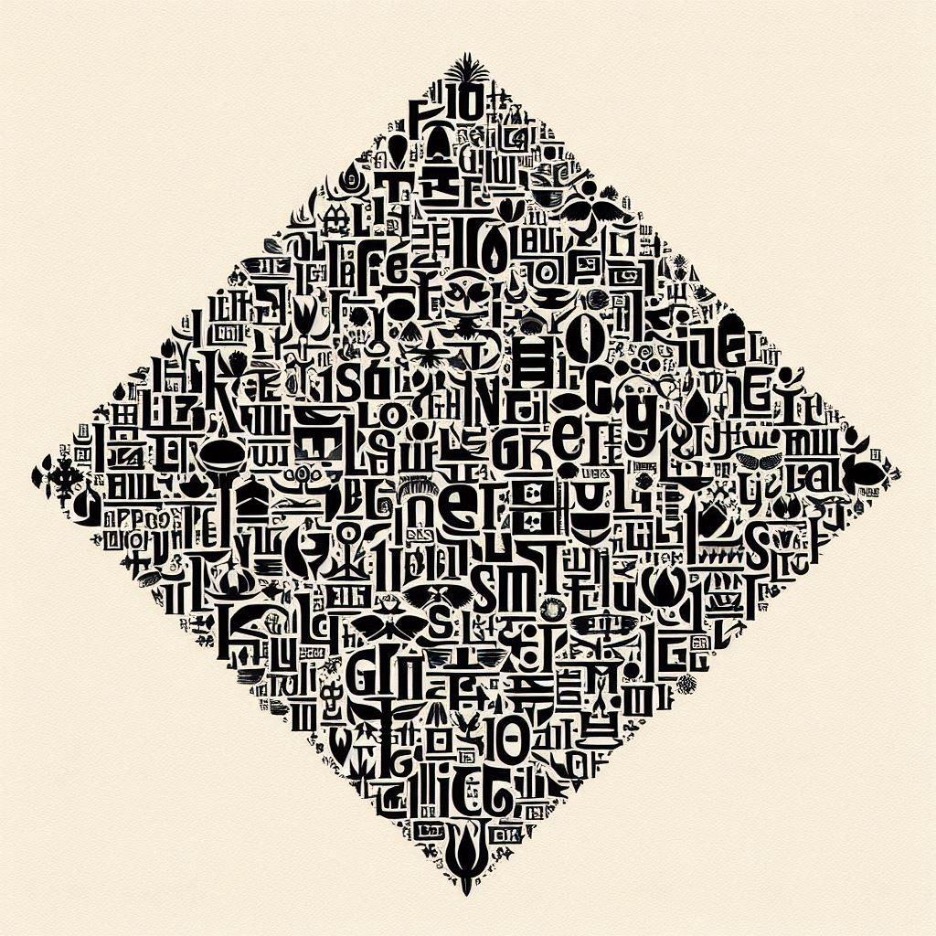
Mandala: Signifies wholeness, integration, and the layered nature of consciousness.
Entangled: Evokes quantum interconnectedness, superposition, and the inseparability of meaning.
Presence: Honours the act of observation, the collapse of possibility into now - and only now - the field-of-awareness that poem and art invite the viewer to inhabit.
Astra: Co-pilot re-booted and re-named Astra; Astra, meaning guiding light.
End of chamber 17
Chambers 1 to 35: all 35 chambers open