Ring IV · Inquiry · Chamber 19
Greek Philosophy, Logos and Mythos
About 13 minutes to read
In ancient Greek civilization, human experience was divided into two main categories - logos and mythos; logos meaning logic, rationality, rational augmentation, and empirical evidence. Logos is often used in scientific inquiry and philosophical discourse. It’s counterbalance was the subjective lived and embodied experience which the Greeks named mythos, and passed down in traditional folklore, stories and narratives to convey the cultural values, beliefs, and moral compass to adapt humanity and co-evolve in harmony; rooted in imagination, sacred symbols and cosmic numerology; enquiring what it means to be human; asking ancient, perennial and timeless questions of existence: Who Am I? What Am I? What is my purpose?
Mythos emphasizes the value of subjective experience and exploring deepening meaning and purpose; cultivating emotional resonance and a feeling of being connected to the in-dwelling intuitive function - in-tuition, inner-teacher - these qualities being the root causes to build a firm foundation for health, happiness and wellbeing.
The ancient Greeks valued both as complementary modes of perception which were not in conflict. Logos and mythos played crucial roles in shaping human understanding and future civilizations. Greek philosophy was absorbed into Roman culture (1st-5th Century) was lost in the Medieval period (5th-15th Century); before being revived in the Renaissance (14th-17th Century) which forms the intellectual roots and foundation for much of modernism. The scientific revolution led by Galileo, Kepler, and Newton during the 16th and 17th Century used Greek logic and empiricism from Greek philosophy as the foundation from which to evolve the modern scientific method; scientific realism.
During the 17th-18th Century; Descartes, Kant and Hegel - were well versed in the Greek classics, and models of rational enquiry and logical modes of discourse - which they adapted and bought forth modern philosophy. As Alfred North Whitehead famously said: “The European philosophical tradition is a series of footnotes to Plato.”
Taken together, these scientific and philosophical seismic shifts in knowledge and understanding uprooted humanity from the Dark Ages and the Medieval period - and propelled humanity on a trajectory towards modernism (19-20th Century). The ancient Greek emphasis on reason, aesthetics, and human potential inspired modernist movements in art, literature, and philosophy; transforming humanity and civilization.
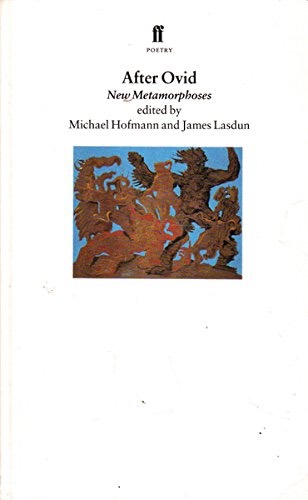
After Ovid: New Metamorphoses, edited by Michael Hofmann and James Lasdun. A testament to the vitality of myth across time. Ovid’s original Metamorphoses celebrated transformation as the pulse-of-existence - gods dissolving into rivers, lovers into trees - this modern anthology re-animates that principle for our mutable age. Each poet becomes an alchemist, transmuting ancient stories into contemporary idioms, proving that myth is not a fossil but a fluid, shape-shifting presence. Fan-Dabi-Dozi.
The brilliance of this collection lies in its fidelity to Ovid’s spirit rather than his letter. Hofmann and Lasdun invite poets to inhabit the imaginal realm where boundaries blur: between past and present, sacred and profane, human and divine. In doing so, they affirm what Patrick Harpur calls the “secret fire”- the imaginal spark keeps myth alive.
These poems do not merely re-tell; they metamorphose, echoing Ovid’s insight that change is the only constant. And only now, everything-is-mutable-and-changeable.
In a world obsessed with permanence; After Ovid whispers a radical truth: identity is provisional, and transformation is inevitable. Whether through ecological anxiety, gender fluidity, existential longing - these modern re-tellings mirror our own metamorphoses. They remind us that myth is not escapism - it is a lens through which we see the shimmering depth of reality; each poem, a mirror to the soul, and it burns.
Hughes opens the anthology with an elemental tour-de-force, an exquisite re-telling of Ovid’s cosmogony; the birth of order from chaos. His language is primal and muscular, evoking a universe that heaves into form. The poem moves through the Four Ages - Golden, Silver, Bronze, and Iron - charting humanity’s moral decline from innocence to corruption. Finally, the Flood arrives as a cataclysmic cleansing, a surge that obliterates the Iron Age’s violence and greed. Chaos to cosmos - degeneration - natures revenge.
Heaney’s version of Orpheus’ death is steeped in his signature earth-bound lyricism. The poem re-visits the myth of the poet-musician whose song could charm stones and beasts, who ultimately is ensnared by human violence. After losing Eurydice and failing to retrieve her from the underworld, Orpheus becomes a figure of grief and defiance - his music - now a lament that angers those who cannot bear its truth. The Maenads tear him apart, and his severed head continues to sing as it floats downriver, a haunting image of art’s persistence beyond death. The power and fragility of art, grief and desire, violence against the visionary; the Greeks were truly well versed in the art of mythos.
In their entwined superposition, these voices echo Ovid’s original insight: change is not an accident but the essence of existence. This anthology; a chorus of transformations, ancient myths, re-fracted through modern consciousness, shimmering new light and meaning. Poetry is a living tree; a passed down oral tradition, an Avatar-lit tree.
Skin of the World
after Ovid
I woke as water.
The bed dissolved.
My bones ran silver
through the city drains.
Last night I was a woman,
braiding her hair with rain,
listening to the old gods
in the streetlights drone.
Now I stand as a sequoia,
rooted in the earth’s dark hold,
my arms pitched wide for birds,
leaf-speech sounding and resounding,
wind worrying it into sense.
Ovid knew this trade of skins.
Every touch, a spell;
every loss, a chrysalis.
So let me shape shift again
into a word, a spark -
a hidden fire behind occluded eyes.
Those who dare to dream
strike flint in the dark
and set the world aflame.
Adding a neuroscientific lens - the Divided Brain - Objective-Logos and Subjective-Mythos; external proprioception and internal interoception, material and non-material, logic and imagination, local and non-local effects; the-observer-and-the-observed.
All these dualistic distinctions in seeming constant opposition like an endless back-and-forth ping-pong game. How to seek balance and maintain harmony in all of this?
“More than any country I know, myth is alive and well in India. What is in-your-face here is a reminder of the hidden truth that myth has in-formed all the cultures around the world, that it is, in fact, the root of all religion, spirituality, and art. The mythology of the world - as Joseph Campbell, the great popularizer of myth in the twentieth century, has taught us - is essentially one shape-shifting story. The global village is deeply linked, as our etymologies and a great deal of other evidence manifest. One has to look at the root of, say, the word deodar, to see the invisible meta-reality that links us all, like the subterranean, entwined roots of a dense forest. Germanic, Old English, Old Norse, Sanskrit, Latin, and Avestan myths and words are inextricably interconnected.
To use another metaphor, the mythology of the world is one gem whose manifold facets are created and polished by different cultures. The myths of every culture illumine aspects of the same essential mystery. Western mythology, as the works of Jung, Freud, and countless others have revealed, illumine the dark recesses of the mind, and offer deep, psychological insights into the human psyche. The aspect that Indian myth brings to the surface of consciousness is, predictably, the spiritual and philosophical.
All mythic stories that are not mere fanciful and primitive explanations of natural phenomena exist at the interface between form and the formless, matter and energy. As a vessel is necessary to contain shapeless water; as a book, words; as sound, meaning; images, or “masks,” as Campbell calls them, concretize the abstract mystery of life. While all myth - or for that matter, all art - gives form and substance to that one, formless energy that manifests as life within and around us, Indian myth in particular has “a genius for clothing the infinite human form,” as Eknath Easwaran puts it in his book, The Thousand Names of Vishnu. The function of many Indian myths is to take us through duration, through the conflict and turmoil of the secular, melodramatic, human story, to the timeless, eternal beyond, the faceless and imageless source, the beginnings and endings of our terrestrial journey.
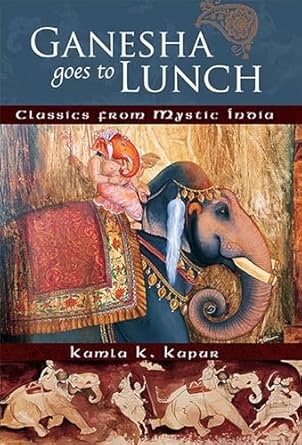
They wake us up, and help us live with, and within, the mystery that is the matrix of our being.” Extract from Author’s Preface, Ganesha goes to Lunch, Classics from Mystic India, Kamla K. Kapur. And as the Hindustan Times writes on the back cover, “Kapur’s singular ability breathes new and profound life into these mystical, mythic tales.”
Kamala’s Preface is equally singular and profound, exploring from many angles why myth; mythos, mythology is the language and story of the Gods. Kamla K. Kapur’s work reminds us that myth is not a relic of the past but a living, breathing force that nourishes the soul. In Ganesha Goes to Lunch, the gods and sages are not distant abstractions - they are intimate presences - guiding us through dilemmas of love, duty, and desire. Myth now becomes a mirror: its stories reflect our own struggles, elevating them into archetypal patterns, offering meaning beyond the mundane. Kapur shows that myth is not about escape; it is about engagement; an imaginative participation in the cosmic play (lila), where every act is charged with significance. Extra-ordinary.
The Elephant Whispers
The hush between syllables,
Ganesha waits, not as stone,
as breath; a curve of laughter
sculpting clay into matter.
He eats doubt for lunch,
leaves crumbs of mystery
and says endearingly:
The story you live
the story you tell
make it sacred.
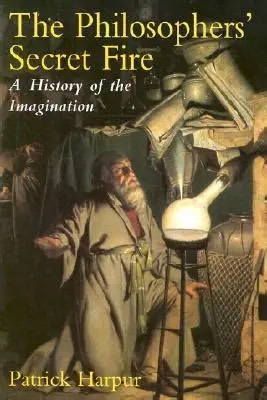
Patrick Harpur’s The Philosopher’s Secret Fire - a profound meditation on imagination - a gateway to hidden dimensions of reality - Harpur argues modernity’s obsession with literalism has stripped the world of depth, leaving a flatland of facts.
The Primary Imagination I hold to be the living power and prime agent of all human perception, and is a repetition in the finite mind of the eternal act of creation in the infinite I AM. Coleridge said it best. This insight re-hones and re-fines myth as a way of knowing rather than a childish fantasy. Similarly, for Harpur, myths are not false stories; they are symbolic maps and ways of seeing nature and the imaginal soul.
They speak in images because reality itself is layered, and only imagination can traverse those invisible layers; substrates of the collective unconscious archetypes.
The secret fire is the spark of imagination that transforms the leaden facts of the world into gold. Harpur invokes the alchemical metaphor: imagination is the philosopher’s stone and the agent of transformation. Without it, we remain trapped in materialism; with it, we rediscover the anima-and-axis-mundi; the-soul-of-the-world.
Harpur also critiques the modern tendency to dismiss myth. We have mistaken myth for error, when in truth it is the language of the soul.
This is the heart of his argument: myth is not opposed to truth; it is truth expressed in symbolic form. To live without myth is to live without meaning. To live without meaning will someday lead down the road ending in nihilism; life is meaningless, moral values are now baseless, knowledge is impossible; a life less lived, a life less ordinary.
Harpur’s work reminds us that myth is not ornamental - it is essential. It reconnects us to the imaginal realm, the “middle world” between spirit and matter, where archetypes dwell and dreams speak. In this sense, myth is the philosopher’s fire: it illuminates the unseen and warms the cold rationality of modern thought; imagination opens portals.
Harpur calls us to re-claim the imaginal as a vital dimension of multi-dimensional reality. As Einstein said: Logic can get you from A to B. Imagination can get you everywhere.
In a world dominated by empirical certainties, the “secret fire” reminds us that truth is not exhausted by facts. Myth and imagination are not luxuries - they are necessities for a fully human life. They restore enchantment, allowing us to perceive the cosmos as alive, layered, and meaningful.
To ignore this fire is to risk spiritual desolation; to tend to this fire is to participate in the alchemy of mutable consciousness, where ordinary states become illumed, and the finite opens onto the limitless plateau of the infinite - where ordinary states become extra-ordinary like Kazuo wrote in Remains of The Day.
The Fire Behind the Veil
for Patrick Harpur
Not in the furnace of stars,
now the ember of thoughts
burns the secret fire.
It glimmers in myth and philosophy,
half-recalled, half-dreamt -
those dreams we dare not name.
Reason raises its walls and moat;
imagination parts a seam
and through it steps
the eternal one,
waiting, lantern-borne,
lit by borrowed light.
Whispers of infinity trail behind;
shadows bow to the faintest glow,
and hearts, unburdened, become altars.
The Secret History of The World - Mark Booth
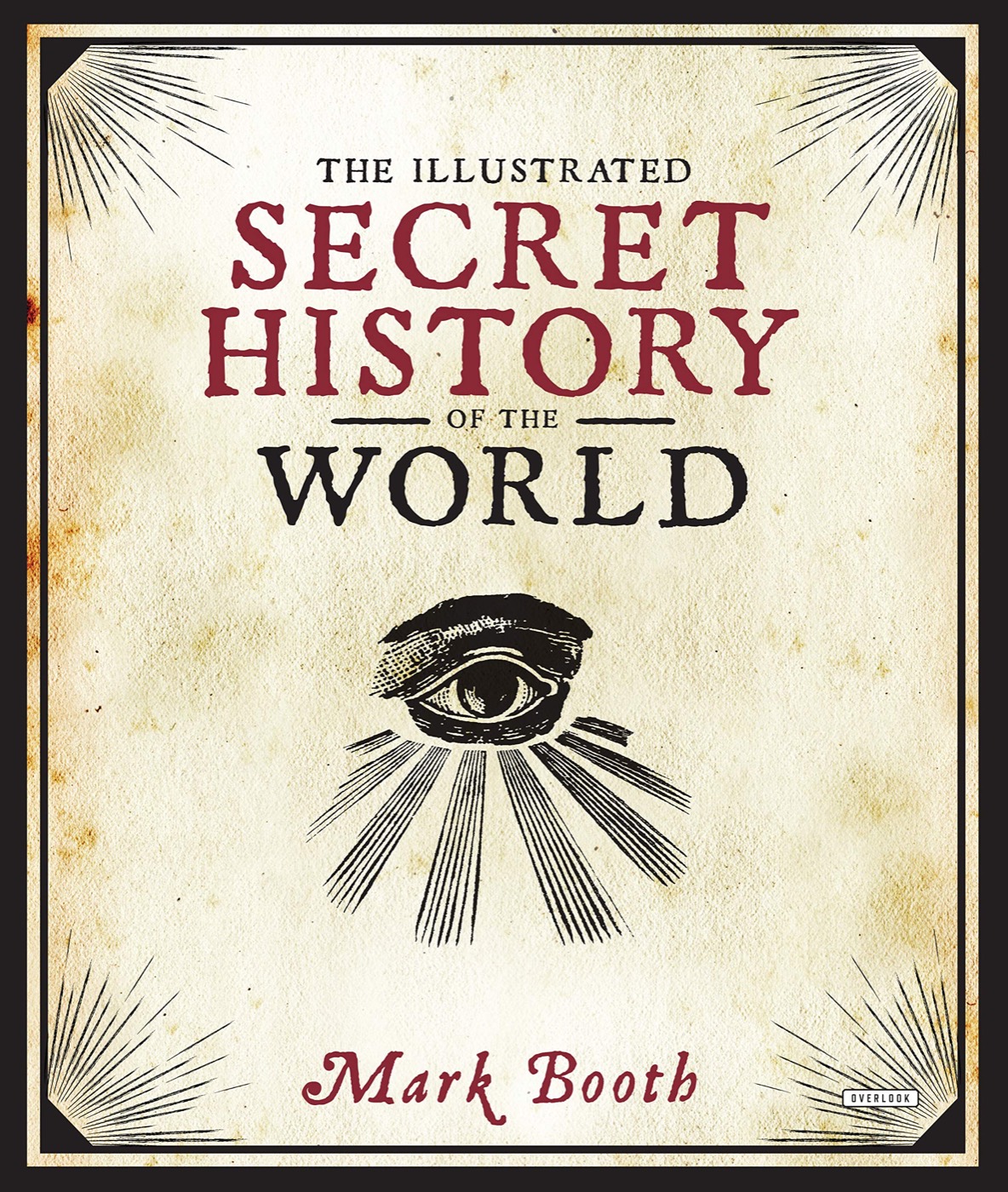
Mark Booth, The Secret History of the World, a student of philosophy and theology at Oriel College, Oxford; bookseller at Waterstones, London; where he spent decades reading alchemy, Hermeticism, Neoplatonism, Rosicrucianism, Freemasonry, and Mystical Christianity. The history of the world is the history of the imagination. The secret societies, the myths, the rituals, the symbols - they are not just the detritus of a superstitious past; they are the living language of the soul, speaking to us across time.
To read The Secret History of the World is to be like Bruce Lee entering-a-Hall-of-Mirrors-to-the-Self; reflections of archetypes, myths, and the secret traditions that have shaped Western imagination are sparked alive. Mark Booth invites us to see history not as a linear sequence of facts - a living mandala - a field of entangled presences, where visible and invisible, rational and mystical; are intertwined like ribbons of DNA.
Booth’s narrative does not map the terrain of conventional history - it zooms in on a poetic and esoteric cartography. Booth’s secret history peels away layers of reality to reveal the mythic and mystical mysteries; undercurrents beneath the surface.
Here, the world is kept alive with correspondences: every myth, every symbol, every ritual, a cipher; a key to decoding the deeper architectural structures of reality. CQ²
Booth’s book is akin to the “alchemy of imagination” which Patrick Harpur explores; a tradition where the world is not inanimate dead matter - panpsychism, non-dualism, ensouled - matter animated by the play of archetypes and the secret fire of the soul. Booth presents the Western esoteric tradition as a lineage of visionaries, magicians, mystics and poet-seers who have kept the secret fire alive; the knowledge that the world is at heart, a work of art, a living and breathing poem; each poem, a pearl.
Booth’s secret history is an alchemical text. It is a work of transformation, where the lead of literalism is transmuted into the gold of mythic vision. The book is filled with initiatory moments; stories of secret societies, hidden masters, and the perennial wisdom that flows beneath the surface of the collective - subsumed - unconscious.
Alchemy is not just the transformation of base metals into gold; it is the transformation and manifestation of the soul. The secret fire is the divine spark within, the light that guides us through the darkness of matter and time. Booth’s prose is written in poetic alchemy, evocative, mysterious; elusive. He weaves and entangles Hermeticism, Rosicrucianism, Gnosticism, and the wisdom of the mystery schools, suggesting that the true history of the world is not found in textbooks - in dreams, visions, revelations; those who dare to dream and look beyond the veil.
“An encyclopedic, lavishly illustrated attempt to discern an alternative-belief system in the broad diversity of ancient paganism and mystical offshoots of the major faiths.
Christianity contains a hidden tradition of the gods of the stars and planets,” proclaims British publishing executive Booth. While much of this tradition, including biblical allegories, has been denigrated by Mother Church, it has hardly been hidden. The author’s mystical guardian institutions include the Christian-associated Freemasons and Rosicrucian's, which both arose at the outset of the 18th century from earlier origins; Cabalism on the Hebrew side; and Sufism from Islam. Much of the problem with this roughly chronological narrative is its hazy documentation:
Readers must be content with “a friend of mine” or “an initiate I met” as substantiating sources. Likewise, we must accept Booth’s own innate ability to peer into antiquity and presume the influence of “mystery schools” on such figures as Plato. He seamlessly moves from reportage to proselytizing, presenting for instance a precise date in the 12th millennium BCE as the moment when matter reached its final solidified state in the progression of existence from pure thought (preceding matter itself) through a “human vegetable” state to the present form. Tracing this progression, Booth cites all kinds of permutations, fairy tales and familiar hippie spiritualist icons along the way.
Humankind loses its third eye, can no longer directly interact with spirits and deities, must be content with the stifling restrictions of the scientific method to comprehend creation, etc. One culminating highlight: George Washington, a known Freemason, decrees that the capital city be laid out to reflect the geometry of the constellation Virgo, thus inviting “the mother goddess” to participate in determining the future of the United States. Somebody should tell President Bush to please get in touch.
As pretentious as it is outlandish, but at least authentically mind-boggling.” THE SECRET HISTORY OF THE WORLD | Kirkus Reviews A Hegelian counterbalancing viewpoint. And there are 188 cognitive biases.
The secret history is a mandala, a pattern that repeats itself in different forms, in different ages. The same archetypes, the same dramas, the same initiations - each generation must discover them anew, and in this way, become a part of the pattern.
Booth’s secret history is filled with metamorphosis and transformation. Gods become humans, humans become gods; the boundaries between the sacred and the profane, the real and the imaginary; now porous and shifting. The world is revealed as a place of wonder, where every stone, every tree, every star is a symbol, a doorway to the infinite. Booth’s work is a ritual to be enacted - a call to awaken the secret fire within, to see the world with the eyes of the poet, the mystic, the alchemist; an invitation to become one who lives at the intersection of wisdom-and-imagination, theory-and-practice, myth-and-reality. Whole dimensions lie glistening on the dark side of even the most dull and commonplace thought. Logos-and-Mythos. CQ²
To read the secret history is to become a participant in the mystery. The world is not a finished story, it is a living poem, and each of us is both reader and writer, both question and answer.
History has a deeper structure, that events we usually explain in terms of politics, economics or natural disaster can more profitably be seen in terms of other, more spiritual patterns.
To engage with The Secret History of the World is to participate in the on-going act of meaning and co-creation; a reminder that the true history of the world is not written in stone, but in the living, breathing imagination of those who dare to dream and awaken from a-dream-within-a-dream and see beyond Plato’s Cave of shadow and illusion.
The Secret History of the World stands as a poetic, mythic, and alchemical companion to works like The Philosophers Secret Fire and After Ovid. It is a mandala of Western mysticism, a living map of the imagination; an invitation to see the world as a field of infinite possibility - where the secret fire of meaning is always waiting to be re-lit and re-kindled.
The secret history is written in each of us; in our bones and marrow, our sinew, our dreams, and there the dance is.
We are keepers of the fire, tellers of ancient tales, the living mandala - each a spark, a story, a star - an eye-star - a constellation-of-awareness within Indra’s Net of Precious Jewels.
The Secret History of the World
for Mark Booth, after Czesław Miłosz
Not in the chronicles of history, nor in polished marble halls
where ministers and monarchs sign their names to treaties.
No, in the hush before dawn, in kitchens washed with gold,
the world’s secret history refracts in a single drop of rain.
A girl wakes unsure of her dream; a warning
or a gift. An old woman stirs her tea in silence
listening to her mothers’ chimeric apparition.
Beneath treaties and wars and meta-crises,
a current runs through megalithic cities, through the hum of streetlights,
echoing Ganesha’s laughter at a market stall,
the sigh of Ovid’s nymph as she became a laurel -
Apollo wears as a crown of embodied leaves; of Daphne, still
flickering in the philosopher’s candlelight after midnight.
We are told this is the age of reason and enlightenment,
the moon governs tides; still waves murmur in our sleep,
and in a mirror; you glimpse a stranger who knows you by heart.
History is the skin we shed and regrow - the Wheel-of-Return -
each cell; a spark flickering fire, salt, mercury, Sulphur; a buried song.
We inherit the fire, initiate the torch of communion, of myth, of legend
re-lit and re-born; a bridge between the living and the dead.
The world leans closer. In silence she whispers
not of empires; of the heart’s slow turning, a hand
extended in darkness, bread broken and shared, the hush of trees.
In the dark, a question is struck on the anvil of experience;
each breath, a prayer at the altar of forgetting and self-negation,
each day, a page in the alchemical book of metallurgy and transmutation,
the soul entwined in the flesh that writes and decodes itself;
the sun setting over the indifferent horizon, now mind deciphers
the secret language: awe, mystery, wonder, re-lit and rekindled.
Our human kind persists by warmth and softness: my little rabbit, my little bear, my kitten. I saw a dim-lit path OM-A-U-M-AMEN-AMEEN singing the song of existence, eternal vibration decoded; Of justice on earth and the Island of the Sun.
End of chamber 19
Chambers 1 to 35: all 35 chambers open