Ring V · Emptiness · Chamber 29
St Oswald's Church, Grasmere
About 17 minutes to read
Don Paterson: Rain
October 2009. I am sitting on a wooden pew in St. Oswald’s Church in Grasmere; William and Dorothy Wordsworth and some of his family are buried in the churchyard.
The time is coming up to 7.45pm. Don Paterson walks to the podium and begins:
“There are two types of people in this world. Those who have seen Battlestar Galactica, and those who are yet to see Battlestar Galactica; the re-booted version.”
A eureka “Ah-Ha” light bulb moment ‘pops’ into my head like Ray in Ghostbusters says, it just popped in there. Every cell in my body surges bioelectricity and my right-hand wants to raise itself and my voice say:
“There is a THIRD type of person. Those who LIVE Battlestar Galactica - the re-booted quantum mutable version where everything-spirals-radiates-unfurls - a multidimensional and interdependent reality like Indra’s Net of Precious Jewels - Everything-Everywhere-All-At-Once - where anything that can happen, does happen.”
Being yin-passive by nature, I stay silent and watch and observe with complete absorption; a master of his craft sharing his exquisite artform and poetic vision.
Don opens a small blue book and reads the opening poem, Two Trees.
One morning, Don Miguel got out of bed
with one idea rooted in his head:
to graft his orange to his lemon tree.
It took him the whole day to work them free,
lay open their sides, and lash them tight.
With eyes closed; my Inspector-Gadget Go-Go-Gadget-Ears zoom-in on Don’s chiming words flowing like a waterfall; rippling a cascade of shimmering stanzas with a precise and rhythmical metronome; the pulsing beat of his words akin to DJ Shadow and the beat of the drum; firing auditory and visual neurons to the brain in all-directions.
Don, a neurolinguistic Pinball wizard; a-lighting my minds-eye like a light-bulb radiating bioluminescence; an image of Iain McGilchrist’s Divided Brain superimposed alongside two trees; psychically symbolizing the complementary yet polar-opposite hemispheres; the left-hemisphere; rational, logical and disembodied like Dr. Spock, and the right-hemisphere; intuitive, impulsive and embodied like Captain Kirk.
This divided brain and mirror neuron patterning contrast lies at the heart of the dynamic interplay between Laurel and Hardy, Sherlock-y and Watson, and any other counter-balancing yin-and-yang double act. And the corpus callosum acts as a fibre bridge connecting and mediating between the opposites. This the cosmic dance of Lila, the cosmic-interplay; the dance between Siva-Shakti like an orange to his lemon tree.
At the end of Two Trees, Don says, “Someone came up to me and asked what Two Trees was about, and I replied, ‘I’ve honestly no idea what this poem is about.’”
Don reads two poems about his twin sons - I intuit fraternal - fascinating stuff, Gromit.
Halfway into the reading, Don reads Bathysphere. An opening long-tracking shot like Scorsese in Goodfellas restaurant scene1 - pan back - zoom-up and into the air.
And they ask me what I saw...
And me re-remembering being in Ankor Wat and re-living Ankors’ mystical wonder. It was like that, exactly how Don illuminates Gaia, Mother Earth, an Avatar-lit world, and
I saw my own mind surge into the world
and close it all inside one human tear.
Don Paterson · Poem: ‘The Bathysphere’ (lrb.co.uk) Don, with neurolinguistic scalpel precision, dissecting words into soundscapes vibrating in the ear and a-lighting the brain and bio-photons; distilling a laser beam metronome and sampling rhythmical beats like DJ Shadow is to the beat of the drum; a neurolinguistic pinball wizard firing mystical states:
I saw that time is love, and time requires
of everything its full expenditure
that love might be conserved; and then I saw
that love is not what we mean by the word...
To this day, this is joint number one on my Top Ten Mystical pound-for-pound best poem list - along with Dogen’s ‘A Painting of a Rice Cake’ - painting unsurpassed enlightenment. And when I say to this day, I mean like when Deontay Wilder says: “TO THIS DAY! TOO THIS DAYY!”2 Mystical; beyond the minds materialist Matrix.
At the end of the reading:
‘Who would you like me to sign this to?” Eyes down.
“My twin Mince.” Eyes up. Warm smile. Tada. Wall-E.
“Sixteen years after he debuted on the poetry scene with the acclaimed collection Nil Nil, Don Paterson has triumphed over one of the strongest poetry shortlists in years to take the Forward prize for best collection with Rain, a work which judges said showed the Scottish poet's "total mastery of his art and his particular genius with rhythm.” Don Paterson wins the Forward poetry prize with 'masterful' collection | Don Paterson | The Guardian
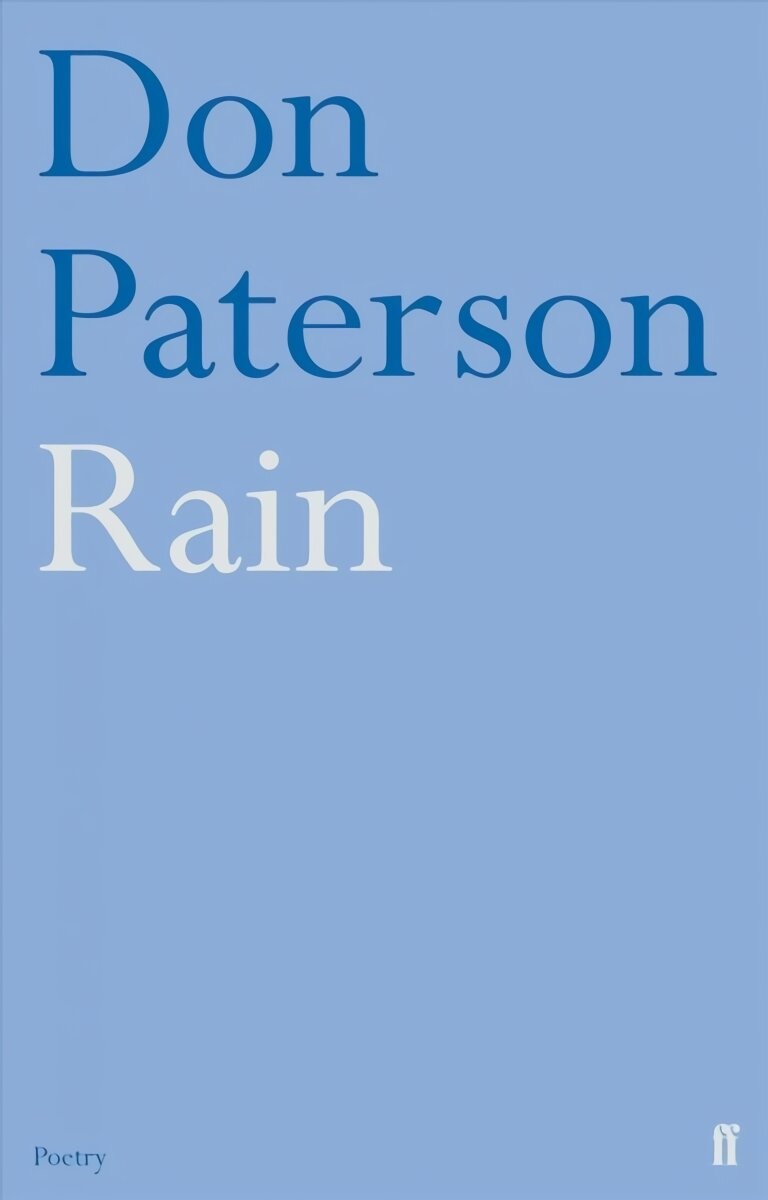
“April 2016. This event is the 20th reading in the Raymond Danowski Poetry Library Reading Series. Paterson is the author of several award-winning poetry collections, including the recent "Rain" (winner of the Forward Prize), "Orpheus," and "Landing Light." "Ask any reader of British poetry to identify who is doing the best work right now, and you should get short odds on the answer being Don Paterson," writes the Boston Review. The New Yorker calls him "a poet of surface gorgeousness (he rhymes, he writes in chiming little stanzas), who is nevertheless right at home in the dark."
A fellow of the Royal Society of Literature, Paterson has been the recipient of the Whitbread Poetry Prize, the Queen's Gold Medal for Poetry and the Geoffrey Faber Memorial Award. He has been awarded both the T.S. Eliot Prize and the Forward Poetry Prize on two occasions. Paterson was also appointed Officer of the Order of the British Empire (OBE) in 2008. In addition to being a talented poet, Paterson is also a musician, an active composer and a professor of poetry at the University of St. Andrews, Emory's sister university.” Acclaimed Scottish Poet Don Paterson reads at Emory University (youtube.com) And this, the germ and genius of Don’s ineffable ascent. Don Paterson aka The Don aka Sage Don aka Lao Tzu Don, the old wise man. And in my eyes - Quantum Human; poetic, visionary, illuminating; a numinous way.
Emma Jones: reading The Striped World - Winner Best First Collection, Forward Prize, 2009
“With their tidal imagination, the poems in this debut collection sweep between old worlds and new, seeking the lost and recovering the found among shipwrecks, underwater zoos and discovered lands. Emma Jones brings her inventive worlds dramatically to life in a series of vividly distilled meetings – of settlers and indigenous peoples, of seawaters and shore, of humanity and the wilds of nature. Here, tigers stalk the captive and the free, while Death encounters his own double and Daphne tells of her new leaves, ‘They sing, and make the world.’ The same might be said of the poems themselves in this restless and memorable search for belonging.
Emma Jones was born in Sydney and studied at the universities of Sydney and Cambridge. Her first book, The Striped World, has won the Forward Prize for Best First Collection, the Queensland Premier’s Literary Award for Best Collection and is shortlisted for the John Llewellyn Rhys Prize. In 2009-10 she was poet-in-residence at the Wordsworth Trust.” The Striped World by Emma Jones | Paperback | Faber Poetry
Spring, 2009. After attending a monthly gathering of Dove Cottage Poets, I notice you don’t use “I”. I tend not to either. Is that deliberate? Emma gives me two collections by Octavio Paz. His Collected Works, and a small collection based on living and experiencing the vibrancy of India, which Paz named A Tale of Two Gardens.
I walk along the Permissive Path, a favourite walk of William and Dorothy Wordsworth.
At the top of Easedale Road, I turn right into Lancrigg Hotel and gardens and wander into the arboretum and sit under the shade of a Sequoia tree; possibly planted from a tree seed that Darwin picked up whilst sailing around the world on The Beagle. I open A Tale of Two Gardens and begin to read the fire in each poem.
Each poem is time, and it burns.
"The poetry of Octavio Paz," wrote the critic Ramón Xirau, "does not hesitate between language and silence; it leads into the realm of silence where true language lives.”
Octavio Paz. A poet, philosopher and diplomat, born near Mexico City. Ambassador of Mexico to India; where Paz completed several works - began A Tale of Two Gardens. 1990 Nobel Prize Winner. Born Tiger-Aries - wood-wood-fire - March 31st; 1914.
A Tale of Two Gardens is a collection of poems written between 1952 and 1995, reflecting Paz’s deep engagement with India during his diplomatic tenure and lifelong fascination with its culture. The title poem contrasts two symbolic gardens:
The first garden: Paz’s childhood space in Mixcoac, Mexico - an Eden of innocence and memory. The second garden: an Indian garden linked to his adult life, love, and spiritual awakening. These gardens are not mere physical spaces but metaphysical landscapes, representing time, memory, space, and transformation.
His recurring themes:
Rebirth and Renewal. The gardens symbolize cycles of life - innocence lost and re-discovered through spiritual and erotic experience. The Indian garden becomes a site of passionate love and transcendence, echoing tantric and Vedantic philosophies.
East Meets West. Paz’s poetry is a crossroads of cultures, blending Mexican identity with Indian mysticism. His immersion in Indian thought - Buddhism, Tantra, and Sanskrit aesthetics - shapes a vision where time is cyclical, not linear, and reality is a play of counterbalancing opposites; this, the dance of Lila, a cosmic Shiva-Shakti eternal dance; and at the still point of the turning world, there the dance is. T. S. Eliot.
The Archetype of the Garden. The garden becomes an archetypal centre, a timeless void where rivers of cosmic life flow. It is both a memory and a metaphysical axis, suggesting that true gardens exist within us; as states of consciousness rather than geography.
Eroticism and Spirituality. Poems like Mutra fuse sensual imagery with cosmic metaphors - Summer, enormous mouth, vowel made of fumes and panting - evoking desire as a path to transcendence, a recurring le-motif in Paz’s work.
Paz’s vision resonates with Eastern non-dualism: Reality is maya, an illusion, yet luminous. Consciousness is the axis-of-being, echoing Nagarjuna’s śūnyatā (emptiness) and Tantric unity-of-opposites. His poetry enacts a dialectic of presence and absence, where silence and speech, body and spirit, converge like a Bose-Einstein condensate; everything-ordered-and-unified between order and chaos.
This philosophy aligns with his broader belief that poetry is a form of knowledge, a way to apprehend the ineffable. For Paz, gardens are thresholds to eternity, moments where finite touches infinite. And I named that half-hour: the Perfection of the Finite.
The poetic dimension. The language is sensual, impressionistic, and symbolic; bougainvillea, neem trees, temples, and rivers become metaphors for inner states. His verse often moves like a moving meditation: from stillness to ecstasy, from solitude to communion. A Tale of Two Gardens is not just about India or Mexico; it is about the human quest for meaning, the interplay of memory, desire, and transcendence, and the possibility of finding unity in diversity. Many diverse perspectives. Quantum Human in a poetic way. For a deeper dive: A Tale of Two Gardens by Octavio Paz | Research Starters | EBSCO Research A fascinating and insightful commentary by David Conde.
Early Autumn. I walk towards St. Oswalds Church in Grasmere and take a seat on one of the wooden pews. Emma Jones walks on stage, a woman dressed in red; red dress, red lipstick. A shape-shifting poetry Goddess morphing into human form-and-formlessness; she speaks in subterranean dulcet tones with a lilting Aussie accent; an electrical auditory power; the electricity of the alive reading; only now, in this moment. My Inspector-Gadget-Go-Go Gadget Eyes-and-Ears zoom-in on her second poem;
Tiger in the Menagerie, and me being a Chinese Tiger-Aries, hair on end.
No one could say how the tiger got into the menagerie.
It was too flash, too blue,
too much like the painting of a tiger.
At night the bars of the cage and the stripes of the tiger
looked into each other so long
that when it was time for those eyes to rock shut
the bars were the lashes of the stripes
the stripes were the lashes of the bars
I recollect living these lines:
and they walked together in their dreams so long
through the long colonnade
that shed its fretwork to the Indian main
that when the sun rose they’d gone and the tiger was
one clear orange eye that walked into the menagerie.
With eyes closed, feeling alive-and-electrified, the body electric, kinetic-kenosis, self-emptying into a transparent eyeball - one clear orange eye - a tiger walking and flickering and fading into the oblivious horizon. And poems are pearls.
I am born a Tiger-Aries, exactly the same birthday as Octavio Paz; same triple-elements, wood-wood-fire; and above all else, I live to counterbalance-the-opposites. And this is why when Emma Jones gave me A Tale of Two Gardens; cosmic mic-drop
Eileen Pun - Mapping Poetry and Grasmere
“The entire process has been incredibly interesting and worthwhile, particularly as a fledgling illustrator. It has been a way to become reacquainted with the Cumbrian geography and landscape.
Eileen Pun was born in New York and now lives in the Lake District where she works as a poet and artist. Her poetry has been published in various anthologies, most recently, Ten: The New Wave, Bloodaxe Books (2014). She studied Politics and International Relations at Lancaster University and is a former literature intern at The Wordsworth Trust, Grasmere. She has also worked in publishing at Carcanet Press, Manchester and The New World Press, Beijing. Her wonderful map drawings: ‘Withnail Map’ and ‘Ten of the Best’ from the new book: An A-Z of Cumbria & The Lake District on Film (Hayloft Publishing Ltd, October 2016) are her first published illustrations. Here, she talks in depth about her multi-faceted creative life and how she became involved in the A-Z project.” Mapping the A-Z: Interview with Eileen Pun – Poet, Artist… – Films Made in Cumbria & the Lake District Exquisitely mapping the landscape of Grasmere, the village closest to the Wordsworth’s hearts.
There is something very natural to me about organising things spatially and visually, as in the way of maps. I genuinely don’t feel I have a natural talent for drawing, but I do find sketching the details of ‘where to place things’ and relating them to each other deeply pleasing. If some of that joy comes across in the work, it would be wonderful to find reasons to produce more maps or illustrations of this kind for a wider audience, beyond the personal. And Eileen Pun; Monkey-Leo, Wushu sister, and the poetic eyes who patiently and joyfully taught me more than anyone, the art and craft and joy of crafting a poem. Pure play. Crafting a poem like a multidimensional crossword puzzle.
Last year, I spent more than half a year travelling around China in order to advance my work on a sequence of poems about a historical Chinese figure, a Chinese dancer from the Tang Dynasty known as Lady Gongsun. The well known Chinese poet Du Fu (whose work I admire) wrote a praise poem about her and my interest in Lady Gongsun started from there. A poet and Wushu practitioner dedicated to her art. My optimal scenario is where I have enough time and few pressures to begin my day with a run and martial arts, spend the morning writing poetry, sew most of the afternoon, quietly draw in the evenings and read before bed...which is the life of a dreamer.
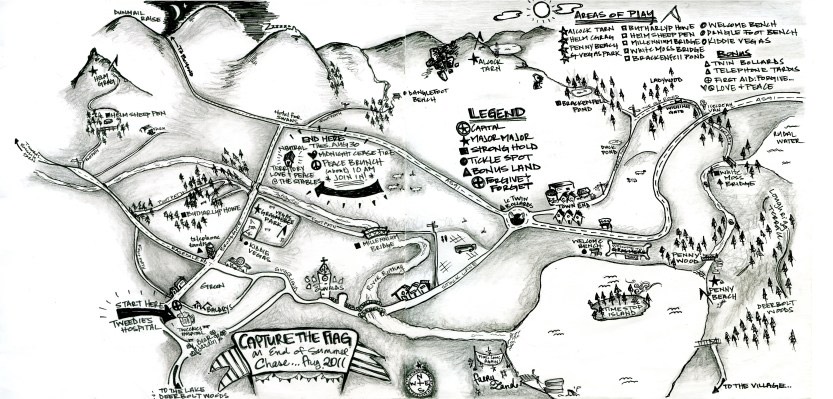
One spring day, I receive a text from Eileen circa 2014 - Hi Minks, are you free to meet up with me and Polly at Baldry’s to discuss poetry and many other things, no doubt...
Polly Atkin - Much Ado About Astrology - Shadow Dispatches - Much With Body
Eileen Pun and Polly Atkin are both Monkey-Leos in the Chinese and Western zodiacs, sharing the elemental signature of metal-metal-fire. Their friendship and creative kinship are rooted in this rare astrological resonance, which informs their individual and collaborative work. Consciousness-Quotient-Squared - metal-metal-fire² - E=MC²
How Their Twin Star Sings and Elements Inform Their Work
Monkey-Leo Synergy: Both are playful, curious, and fiercely creative - traits associated with the Monkey in Chinese astrology and the Leo’s boldness and warmth. The Monkey’s wit and adaptability fission-and-fuse with Leo’s leadership and expressive fire, resulting in poetry and art that is both intellectually agile and emotionally radiant.
Metal-Metal-Fire Dynamics: Metal brings clarity, precision, a reflective quality; fire adds passion, transformation; a drive to illuminate. In their work, you can see: Precision of imagery and structure (metal). Transformative, passionate themes (fire). A willingness to cut through surface appearances to reveal deeper truths (metal’s edge, fire’s illumination). A sense of play and risk-taking (Monkey-Leo’s creative courage).
Poetry and artistic creativity and many other superposition mirrors-to-the-self - their twin star dynamic means Eileen and Polly often act as each other’s first reader, critic, and muse. And me the silent-witness observer, mirror neuron patterning Monkey-Leo² magic. Their conversations are like multidimensional crossword puzzles; sparking new ideas, challenging assumptions, and encouraging each other to push boundaries, and me be like Monkey Magic flying on his monkey magic cloud.3 E=MC²
How Monkey-Leo Metal-Metal-Fire Informs Their Poetry
Restless Innovation: Both are drawn to experiment with form and voice, never content to repeat themselves. Their poems often leap between perspectives, times, and places, embodying the Monkey’s curiosity and Leo’s dramatic flair.
Resilience and Reflection: Metal’s resilience is seen in their willingness to tackle difficult subjects - illness, landscape, identity - while fire ensures the work is never cold nor detached like a Goldilocks meets Buddha’s Middle-Way; balancing-the-opposites.
Community and Connection: Leo’s warmth and Monkey’s sociability means their poetry extends out; inviting readers into a shared space of wonder and self-inquiry.
Shadow Dispatches (Pamphlet)
Polly Atkin’s well-received pamphlet, Shadow Dispatches - winner of the Mslexia Poetry Pamphlet Prize in 2012 - observational meditations on landscape, illness, and the shifting boundaries between self and world. The poems are marked by:
Sharp, metallic clarity - each line honed and precise. A restless searching energy - the fire of inquiry and transformation. Playful surprising imagery - the Monkey’s delight in the unexpected. Themes of resilience and adaptation - reflecting both metal’s strength and fire’s capacity for renewal. As if everything is written in the stars and birth charts.
Much With Body
In Much With Body, Atkin’s full-length collection, the Monkey-Leo metal-metal-fire signature is even more pronounced: My flowers everlasting. I long to be out.
Embodied Experience: The poems explore chronic illness and the body’s relationship to landscape, using language that is both sensuous (fire) and exact (metal).
Elemental Interplay: There is a constant dialogue between the physical (metal), the emotional (fire), and the imaginative (Monkey-Leo’s playfulness).
Transformative Vision: Atkin’s work invites the reader to see the world - and the self -anew, to find beauty and meaning in flux and uncertainty. We are quarantined/ somewhere between a vision state and an open-edged dream. Epiphany Insomnia.
Shadow Dispatches - Polly Atkin
The Creative Alchemy of Monkey-Leo Metal-Metal-Fire
For Polly Atkin and Eileen Pun, being Monkey-Leos with a metal-metal-fire signature is more than astrological trivia - it is a living metaphor for their creative process. Their poetry is forged in the crucible of resilience (metal), illuminated by passion and vision (fire), animated by curiosity and play (Monkey-Leo). Together, their twin star sings a song of transformation, connection, and creative courage - mapping new territories in poetry and art. Where was I? Ah yes, back at a traditional tearoom. Minks; what do you think? Eileen looks at me. I take a sip of tea from Baldry’s finest bone China teacup.
As the Zen saying says: Small Doubt. Small Enlightenment. Great Doubt. Great Enlightenment. This, my reply to Polly doubting herself after decades of self-mastery.
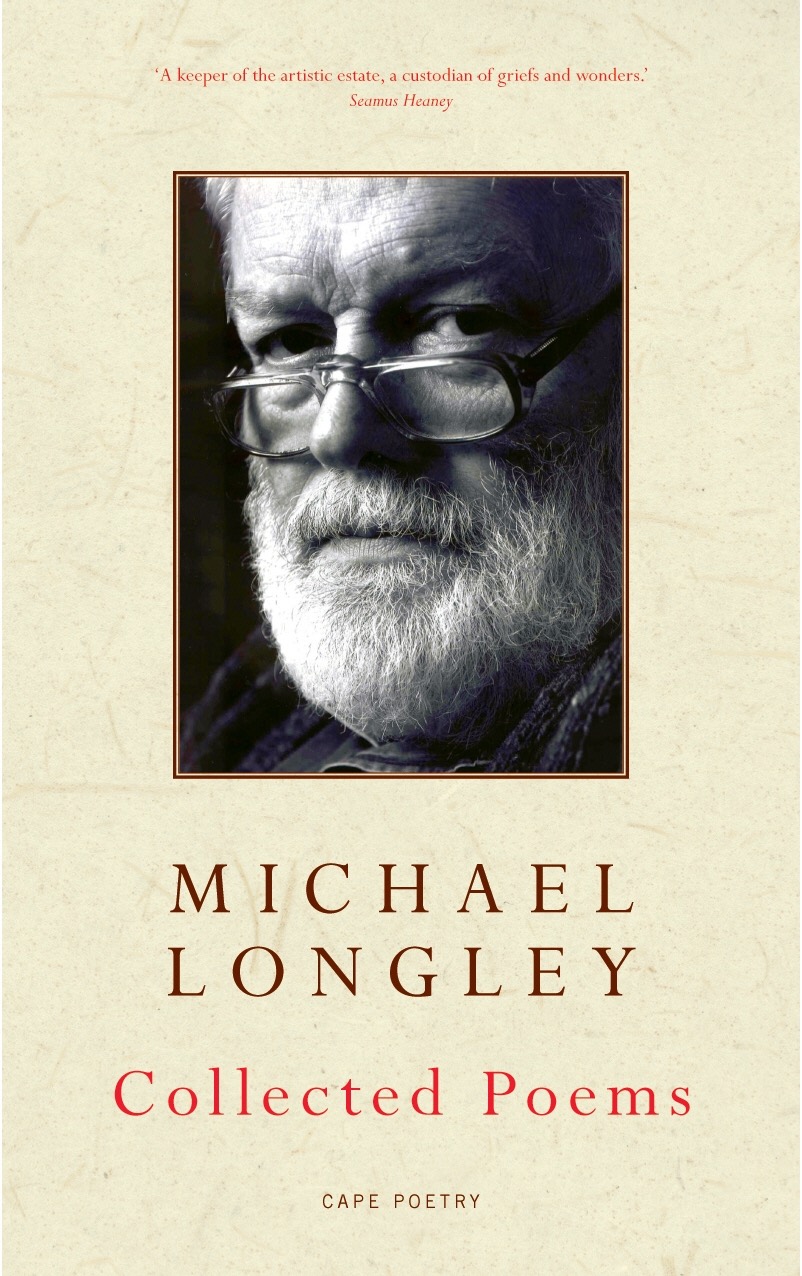
Michael Longley - Collected Poems
Michael Longley walks on stage to give a live reading of his Collected Works at The Daffodil Hotel in Grasmere for the Wordsworth Trust in 2011. Like Santa Klaus meets an Irish Sir David Attenborough, Michael with a lifetimes’ passion, wisdom, devotion and dedication to his art and craft elucidates;
“I like to imagine poetry as a wheel, and at the centre, at the hub is the word love. And from this centre, all the other themes flow out like spokes.”
A consummate reading flowing with lyrical poems; elegance, effortless beauty, Zen.
“Michael Longley has been called 'one of the finest lyric poets of our time'. In assembling the work of forty years, his Collected Poems displays a brilliantly sustained achievement whose depth, beauty and wit can now be fully appreciated. Longley's poetry combines intense concentration with remarkable variety. The formal and thematic range laid down in No Continuing City (1969) has undergone a series of rich metamorphoses up to Snow Water (2004), and the two poems included here as an epilogue.
Longley's genres span love poetry, war poetry, nature poetry, elegies, satires, verse epistles, poems that reflect on art and the art of poetry. He has extended the capacity of the lyric to absorb dark matter: the Great War, the Holocaust, the Northern Irish 'Troubles'. His poetic landscape intermingles Belfast (where he lives), western Ireland, Italy, Japan and Homeric Greece. Longley's superb translations from classical poets (such as 'Ceasefire', which greets the IRA ceasefire in terms of the Iliad) speak to contemporary issues while activating the deepest sources of European poetry.” Collected Poems by Michael Longley. A lifetimes work dedicated to his art and craft.
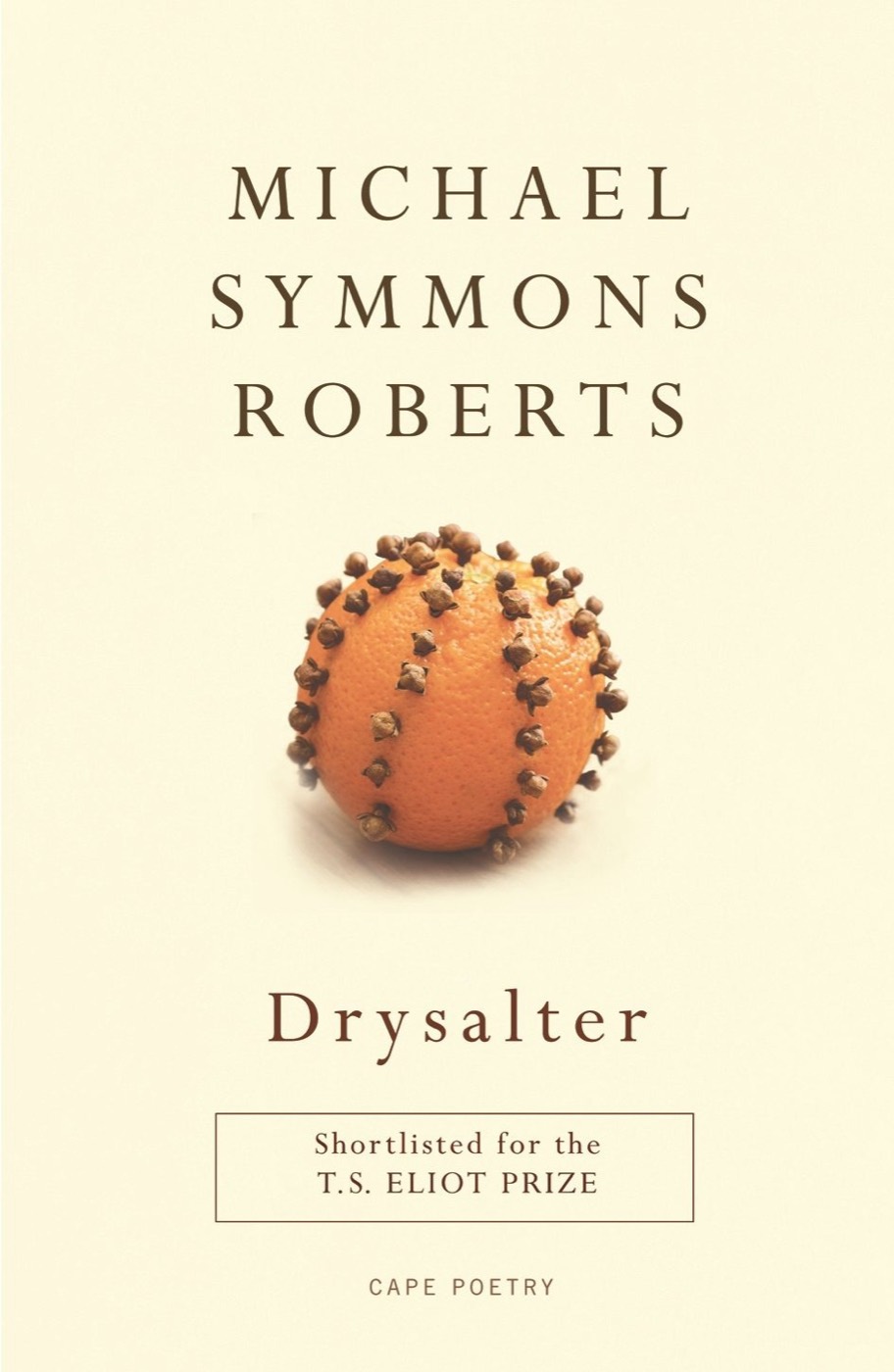
Michael Symmons Roberts’ Drysalter - Forward Prize for Best Collection in 2013
Michael Symmons Roberts’ walks on stage at The Daffodil Hotel in 2013. He opens with a poem that sets the tone for the entire collection: “World into Fragments.”
“Michael Symmons Roberts’ sixth - and most ambitious collection to date - takes its name from the ancient trade in powders, chemicals, salts and dyes, paints and cures. These poems offer a similarly potent and sensory multiplicity, unified through the formal constraint of 150 poems of 15 lines.
Like the medieval psalters echoed in its title, this collection contains both the sacred and profane. Here are hymns of praise and lamentation, songs of wonder and despair, journeying effortlessly through physical and metaphysical landscapes, from financial markets and urban sprawl to deserts and dark nights of the soul.
From an encomium to a karaoke booth to a conjuration of an inverse Antarctica, this collection is a compelling, powerful search for meaning, truth and falsehood. But, as ever in Roberts’ work - notably the Whitbread Award-winning Corpus - this search is rooted in the tangible world, leavened by wit, contradiction, tenderness and sensuality.
This is Roberts’ most expansive writing yet: mystical, philosophical, earthy and elegiac. Drysalter sings of the world’s unceasing ability to surprise, and the shock and dislocation of catching your own life unawares.
Reviews of Drysalter
“I love Michael Symmons Roberts’ poetry. He is a religious poet in a secular age. His work is about connection between the things of the spirit and the things of the world. And his work is about transcendence.” Jeanette Winterson.
“A major new collection of ‘super-sonnets’ demonstrates the poet’s amazing talent for putting intimacy on paper” Read the full review Kate Kellaway, The Observer.
Awards for Drysalter
Winner of the 2013 Forward Poetry Prize for Best Collection
Winner of the 2013 Costa Poetry Award
Shortlisted for the 2013 T. S. Eliot Poetry Prize
Shortlisted for the 2015 Portico Prize
And for me, World into Fragments begins a prophetic collection into the flatlands of postmodernism like Bruce Lee entering a Hall-of-fractured-mirrors-and-fragmentation.
End of chamber 29
Chambers 1 to 35: all 35 chambers open