Ring IV · Inquiry · Chamber 24
Quantum Mysticism, Hemi-Sync
About 85 minutes to read
Wave, field, mind - one breath -
mystery flows through all things -
now - all entangled
Hemi-Sync quantum mystics are a diverse group of thinkers, scientists, and explorers who blend quantum physics, consciousness studies, and experiential practices (such as meditation, brainwave synchronization, and altered states) proposing that reality is fundamentally interconnected, a-participatory, and shaped by mind and/or awareness.
The term “Hemi-Sync” refers to hemispheric synchronization - techniques (like those developed by Robert Monroe and his co-pilot, Itzhak Bentov) that harmonize the brain’s left-and-right-hemispheres, often accessing expanded or non-ordinary states of consciousness. Everything-now-is-connected; seeing reality-as-it-is. Pure awareness.
Quantum mystics in this tradition - Ken Wilber, David Bohm, Amit Goswami, Peter Russell, Michael Talbot, and others - draw on both scientific and spiritual insights. In Eastern traditions, this way of the mystic is encapsulated in Sanskrit - TAT TVAM ASI - and mirrored and reflected in the Western perennial philosophy; Know Thyself. E=MC²
Overview - Hemi-Sync quantum mystics bridge the worlds of quantum science and inner experience, proposing that consciousness, intention, and interconnectedness are at the heart of reality - and through entwining scientific exploration and entangled direct experience - only now - we can access deeper truths about ourselves, and the cosmos - peer through the looking glass and explore beyond the materialist universe.
Consciousness is fundamental: reality arises from consciousness, not the other way around; ala Amit Goswami’s monistic idealism and Self-Aware Universe.
The universe is holistic and interconnected: separation is an illusion; everything-is-entangled; ala John Wheeler’s U-shaped a-participatory Universe, one-electron-verse.
Observation and intention shape reality: the act of observation, intention, and participation are central to how reality unfolds; ala Michael Talbots’ Holographic Universe, a synthesis of David Bohm and Karl Pribram’s works. CQ²
Direct experience is as important as theory: practices like meditation, Hemi-Sync, and altered states are valued for exploring the nature of mind and expanded reality.
Science and spirituality are integrated: empirical inquiry and mystical experience are seen as complementary paths to understanding existence. CQ² E=MC²
Ken Wilber A pioneering integrator of science, mysticism, and psychology, whose work bridges the perennial wisdom traditions with modern consciousness studies.
Quantum Questions: Mystical Writings of the World’s Greatest Physicists, Wilber. A masterpiece bringing together some of the greatest minds of the 19th Century. This book anthologizes the metaphysical and spiritual reflections of the founding fathers of quantum physics; revealing their shared sense of awe at the mystery of existence.
"All matter originates and exists only by virtue of a force which brings the particle of an atom to vibration and holds this most minute solar system of the atom together" and that this force implies a "conscious and intelligent mind." Max Planck. This insight and understanding led Planck to go further and make a definitive statement on his philosophical position. “I regard consciousness as fundamental. I regard matter as derivative from consciousness. We cannot get behind consciousness. Everything that we talk about, everything that we regard as existing, postulates consciousness.”
The germ and genius of Wilber’s Quantum Questions lies in its courageous act of letting the greatest quantum physicists speak for themselves - not as scientists explaining equations, but as mystics and philosophers reflecting on the ultimate nature of reality. Wilber’s monumental effort is two-fold - a quantum-mystical rabbit-w-hole.
Curatorial Brilliance: Wilber read deeply across the original writings, letters, and essays of the quantum pioneers - Planck, Einstein, Schrödinger, Heisenberg, Pauli, de Broglie, Eddington, and Jeans - selecting passages where these minds grappled with the philosophical and mystical implications of their discoveries. He did not filter their voices through his own; he presented their words with clarity and context, allowing readers to encounter the authentic spiritual and metaphysical reflections of each physicist.
Editorial Integrity and Synthesis: Wilber’s editorial genius is his Zen-framing of these writings. He provides exquisite introductions and illuminating commentary that situate each physicist’s mystical perspective within the broader landscape of Western and Eastern philosophy, science, and spirituality. He draws out the common threads - such as the primacy of consciousness, the unity of all things, and limits of materialism - while honouring the unique voice and nuance of each thinker. CQ² - E=MC²
This book acts as a primer and foundational bridge between science and spirituality. It shows the founders of quantum physics were not “New Age” speculators, but rigorous scientists who, at the height of their intellectual powers, turned to mystical language to describe the oft-paradoxical mysteries they encountered. Wilber’s own integral philosophy is reflected in his ability to weave together Western rationalism and Eastern nondualism, showing how these physicists often arrived at insights resonant with Vedanta, Taoism, and other wisdom traditions. And this is what the ancients knew.
Wilber’s self-mastery of simultaneous roles as curator, editor, and bridge-builder - acting as the corpus callosum and mediator between the divided-hemispheres. He honours the voices of the quantum pioneers, revealing their mystical hearts, and invites us to see that the quest for knowledge and the quest for meaning at the highest level; gives rise to one-taste; everything now spontaneously arises. Quantum Human by another name. And Wilber’s Quantum Questions; the perfection-of-the-finite-within-the-infinite. Consciousness quotient squared gives rise to E=MC² - M.I.A² is the way.
| Physicist | Philosophical Position |
|---|---|
| Max Planck | Idealism / Primacy of Consciousness |
| Albert Einstein | Cosmic Mysticism / Scientific Realism |
| Erwin Schrödinger | Nondualism / Advaita Vedanta |
| Werner Heisenberg | Instrumentalism / Kantian Epistemology |
| Louis de Broglie | Dualism / Complementarity |
| Wolfgang Pauli | Psychophysical Monism / Complementarity |
| Arthur Eddington | Idealism / Mind-Stuff Theory |
| James Jeans | Idealism / Universe as Thought |
The founding fathers of quantum physics grew up in Europe at the turn of the 19th Century - in and around the epi-centres of Austria and Germany - all were deeply versed in Western philosophy and metaphysics - trained in rigorous Western traditions of logic, mathematics, and scientific realism, and also engaged with Eastern philosophies like Advaita Vedanta, Taoism, and mysticism. Their writings and reflections reveal a profound interest in questions of consciousness, unity, and the limits of materialist explanations, often drawing on metaphysical and spiritual insights to interpret the paradoxes of quantum theory. This cross-cultural fluency enriched their scientific work and led to nuanced philosophical positions ranging from idealism and nondualism to holistic realism, making their legacy a unique synthesis of East and West; meeting at the Socratic intersection. Consciousness quotient squared. E=MC²
“The most beautiful thing we can experience is the mysterious. It is the source of all true art and science.” Albert Einstein was influenced by Baruch Spinoza and saw his enduring work on a unified-field theory as a metaphysical project, viewing the universe as a rational and intelligible cosmos; God does not play dice. In this way, Einstein observed: “We are slowed down sound and light waves, a walking bundle of frequencies tuned into the cosmos. We are souls dressed up in sacred biochemical garments and our bodies are the instruments through which our souls play their music.” A beautiful, enquiring and self-aware mind; befitting his most famous equation.
Erwin Schrödinger saw science and metaphysics as sacred and entangled. “The total number of minds in the universe is one.” Schrödinger was well-versed in ancient wisdom traditions, particularly Vedanta and non-dualism which he re-interpreted with a quantum lens. “Vedanta teaches that consciousness is singular, all happenings are played out in one universal consciousness and there is no multiplicity of selves.”
Back to Ken Wilber. Wilber’s own classic work distilling his philosophy - A Theory of Everything - an integral philosophy mapping the evolution of consciousness as a spiral of awakening, synthesizing East and West, science and spirit. This book acts as a foundational map, and Wilber, a pioneering mind in the realm of consciousness exploration. Quantum Human by another name. Entangled mysticism. E=MC²
“The eye with which I see God is the same eye with which God sees me.” Meister Eckhart; medieval mystic and theologian. The mystical path - illuminated from within.
In sum total; Wilber’s works invite us to see quantum physics not as a refutation of spirituality, but as a gateway to a deeper understanding of unity and transcendence.
Peter Russell “At Cambridge University (UK), he studied mathematics and theoretical physics. Then, as he became increasingly fascinated by the mysteries of the human mind, he changed to experimental psychology. Pursuing this interest, he traveled to India to study meditation and eastern philosophy, and on his return took up the first research post ever offered in Britain on the psychology of meditation.” Peter Russell - Spirit of Now - Home Page
Russell champions the primacy of consciousness, arguing that mind is the foundation of reality. In his fission-and-fusion tour-de-force; The Primacy of Consciousness, Russell weaves together panpsychism and non-duality, and explores the commonality between Western science and Eastern traditions; arriving at the observation that consciousness is not a by-product of matter, instead, consciousness is the very ground from which all arises. Mind is matter-and-light - light-animating-matter - E=MC²
The Primacy of Consciousness - Graphic reproduction is equivalent to Brian Cox’s A Night With The Stars; a hemi-sync quantum-mystic foundation, shedding light and immense clarity on his subject matter - and why the primacy of consciousness transforms the nature of reality like Bruce Lee entering A Hall-of-Mirrors-to-the-Self.
And I shall also name this one-hour, the perfection-of-the-finite-within-the-infinite like a cosmic-mirror-to-the-self. E=MC² “We are not human beings having a spiritual experience; we are spiritual beings having a human experience.” Russell’s work bridges neuroscience, meditation, and quantum theory, inviting us to re-consider the nature-of-self-and-cosmos. Quantum Human by another name. CQ²
David Bohm A theoretical physicist who developed the concept of the implicate order - a holistic vision of reality where everything is enfolded within everything else.
Wholeness and the Implicate Order, Bohm argues that fragmentation is an illusion, and that consciousness is fundamental to the unfolding of the universe.
“The notion that all these fragments are separately existent is evidently an illusion, and this illusion cannot do other than lead to endless conflict and confusion.” Ars poetica.
Bohm’s dialogues with Krishnamurti - their classic book The Ending of Time and dialogues at Brookwood1 - formed the foundation for deepening Bohm’s quantum theories which have inspired generations to seek unity beyond apparent division.
“I think the difficulty is this fragmentation. First of all - old thought is broken up into bits like this nation, this country, this industry, this profession, and so on...and it's extremely hard to break into that. Now, the second; that comes about primarily because thought has developed traditionally in a way; such that it claims not to be affecting anything but just telling you the way things are. Therefore, people cannot see that they are creating a problem, and then apparently trying to solve it.
Let's take the problem - what problem do you like - pollution or the ecology. The ecology is not in itself a problem. It works perfectly well by itself. It's due to us right.
That's a problem because we are thinking in a certain way; by breaking everything up in each person doing his own thing right now; therefore, the ecological problem is due to thought right - but thought thinks it is a problem out there - and I must solve it now.
That doesn't make sense because simultaneously; thought is doing all the activities which make the problem, and then, there's another set of activities to try to overcome it. You see, it doesn't stop doing the things which are making the ecological problem, or the national problem, or whatever the problem is. The earth is one household really.”
David Bohm and the implicate order “Excerpt from the documentary "Art Meets Science and Spirituality in a Changing Economy - From Fragmentation to Wholeness.” Artists, scientists, spiritual leaders and economists gathered in Amsterdam in 1990 to explore the emerging paradigm of a holistic world view and the implications for a global economy.
Bohm warned of the dangers of rampant reason and technology, advocating instead the need for genuine supportive dialogue which he claimed could broaden and unify conflicting and troublesome divisions in the social world. In this; his epistemology mirrored his ontological viewpoint. He believed that the working of the brain, at the cellular level, obeyed the mathematics of some quantum effects. Therefore, he postulated that thought was distributed and non-localized in the way that quantum entities do not readily fit into our conventional model of space and time.”
Fritjof Capra in his seminal The Tao of Physics; after his own mystical experience and seeing particles-of-light dancing like Shiva; led Capra to explore the profound parallels between modern physics and Eastern mysticism, particularly the philosophies of Taoism, Buddhism, and Hinduism. A mystical maverick scientist, exploring beyond the confines and limits of materialism like Neo exploring beyond the minds’ Matrix.
Capra argues that the discoveries of quantum physics - such as superposition, and entanglement - the interconnectedness-of-all-things - the fluidity of matter and energy, and the limits of objective observation - echo ancient wisdom found in Eastern traditions. And this is what the ancients knew - Samadhi - Quantum by another name.
“The basic oneness of the universe is not only the central characteristic of the mystical experience; it is also one of the most important revelations of modern physics.”
Capra’s synthesis invites readers to see science and spirituality not as opposing forces, but as complementary ways of understanding reality. His work encourages a holistic worldview, where the boundaries between observer-and-observed, mind-and- matter - are dissolved in a dynamic, ever-unfolding web of interconnected relationships. The Tao of Physics stands as a bridge between the rational clarity of science and the intuitive wisdom of mysticism, inspiring generations of seekers and scientists alike to embrace a more integrated vision of the cosmos. CQ² E=MC²
“As I read your book it seems to me that it causes you to kind of go through a mental shift which is quite consequential, one from seeing the world as made up of objects; which seems to be a natural way to think of things like there you are sitting in a chair as an object; rather than understanding the world as a process like this conversation.”
“That's right. Also, a shift from objects to relationships, and that is apparent when we look at the world today, and you know, I come to the social dimension - which is not a main theme of this book - but it's still very important. And I actually begin the book with that. When we come to our, you know, social and political situation, we see that most of the problems that we have in the world today come from the fact that we see things in a fragmented way; that we are unable to focus on the relationships among things.
Take ecology for instance, one of the reasons why we are destroying the very environment on which our livelihood depends is that we really don't understand ecosystems well enough. Most of us don't. And we don't understand them well enough because - in order to do so - you need to know something about ecology, which is basically a science of relationships. Ecology is the science that deals with the relationships among all the members in the earth household, that's the original word in Greek - οἶκος - means household, so ecology is the science of the earth household.
More precisely, the science of how everything is interrelated in the earth household. And so when we disregard that, then we do a lot of damage to ourselves, and so we have to learn to shift from a perception of objects; to a perception of relationships, and as you said before; also, to a perception of processes. You have objects, relationships, and processes, and those are the shifts that are now going on. Fritjof Capra: The Web of Life (excerpt) -- A Thinking Allowed DVD w/ Jeffrey Mishlove A masterful interview and excellent overview of systems thinking, including Henri Bergson’s élan vital.
Amit Goswami Another maverick pioneering physicist and advocate of quantum activism, proposing that consciousness is the ground of all-being. In his influential book, The Self-Aware Universe, Goswami argues for a radical re-think of science and spirituality, suggesting that quantum principles reveal the creative power of mind.
“Consciousness is the ground of all being,” positioning consciousness not as a by-product of matter, but as the fundamental reality from which all existence arises.
Goswami’s work bridges Vedanta, quantum physics, and personal transformation, inviting readers to become active participants in the evolution of reality. The Self-Aware Universe explores how quantum mechanics challenges the materialist worldview, presenting evidence that consciousness can influence physical reality, and that the observer plays a central role in the unfolding of the universe; a physicist-philosopher.
Goswami’s approach is both scientific and experiential, encouraging practices such as meditation and self-enquiry to access deeper truths about the nature of mind and cosmos. His vision of quantum activism calls for individuals to engage consciously with the world, using intention and awareness to foster transformation and healing. CQ²
Goswami zooms-in on the famous Schrödinger’s cat thought experiment - which he uses to illustrate the paradoxes of quantum measurement and consciousness.
Goswami explores multiple variations on Schrödinger’s cat, each reflecting different interpretations of quantum mechanics and the role of consciousness in collapsing the wavefunction. Goswami discusses at least four main variations on Schrödinger’s cat in the book, each corresponding to a different philosophical or scientific stance:
Materialist Interpretation: the cat is both alive-and-dead until a classical measuring device (not consciousness) collapses the wavefunction.
Consciousness-Causes-Collapse Interpretation: the cat’s fate is undetermined until a conscious observer looks - at which point - consciousness collapses the wavefunction.
Many Worlds Interpretation: every possible outcome occurs in a branching universe -there is a world where the cat is alive, and another, where the cat is dead.
Quantum Mystic/Participatory Universe: the act of observation, intention, or participation (not just passive measurement) shapes reality, so the cat’s state is entangled with the observer’s consciousness and intention. Everything-is-now-interdependent-and-interconnected like Indra’s Net of Precious Jewels. CQ² spontaneously arising E=MC²
Goswami uses these variations to argue for his central thesis: consciousness is fundamental and plays an active role in shaping physical reality, not just passively observing it. His central thesis; a lifetimes work dedicated to seeking ultimate truth.
In sum total; Goswami’s work stands as a bridge between empirical science and spiritual wisdom, inspiring seekers to embrace a holistic, consciousness-centered view of reality. CQ² consciousness quotient squared. M.I.A² Mixed Internal Arts; the art of breathing to embody breath coherence which cultivates brain coherence, flow state entering quantum mutable states. And Goswami, a beautiful and enquiring and illuminating mind. And his book, the first I read circa 2004; encapsulating all three metrics I was quantum mystically and fuzzily exploring - CQ² M.I.A² E=MC²
Rewind back in time to the late eighties, early nineties; many of these maverick consciousness pioneers came under the radar of the psychiatrist, Jeffery Mishlove and his Thinking Allowed hour-long interviews. Way ahead of time. Quantum by another name. And Mishlove; my classic go-to interviewer; the opening music, the opening gambit of the interviewer, the emotional-feeling tone; the sepia inspired nostalgia.
Amit Goswami: Quantum Creativity (excerpt) -- A Thinking Allowed DVD w/ Jeffrey Mishlove As always, a masterclass in every way between interviewer-and-interviewee, the art of listening in Socratic Dialogue; meeting at the Socratic Intersection. CQ²
Nick Herbert Known for his explorations deep within quantum reality like Alice going down the psychedelic rabbit w-hole, witnessing the role of the witness-observer. In Quantum Reality, Herbert outlines eight interpretations of quantum mechanics, including mind-centric models where consciousness creates reality - each offering a unique perspective on what quantum theory tells us about the nature of reality.
Herbert’s book was published in 1985. Now in 2025, there have been a number of significant new interpretations of quantum reality. I have added some of these new interpretations using an updated list to Herberts original 8; where the new theory is an extension of one of the existing 8, I have added a commentary and a movie reference or two - changed the title - added new interpretations - Quantum Darwinism, TIQM, RQM, Modal Interpretations, QBISM. Et-voilà, an up-to-date mapping of the terrain.
Copenhagen Interpretation #1: The most traditional and widely taught interpretation of quantum mechanics. It holds that quantum systems exist in a superposition of all possible states until a measurement is made. When an observation occurs, the wavefunction “collapses” to a single, definite outcome, and only then does reality become concrete for that particular event. Before measurement, the system’s properties (position or momentum) are not just unknown; they are fundamentally indeterminate. Bohr insisted: There is no quantum world. There is only an abstract quantum description. Philosophical roots - pragmatic empiricism, anti-realist position.
Rosencrantz and Guildenstern Are Dead. The Copenhagen Interpretation teaches that reality exists as probabilities until observed. In Rosencrantz and Guildenstern Are Dead, the characters drift through a world of uncertainty, questioning meaning and purpose. Their existence feels suspended in possibility. Nothing is definite until an event forces resolution. This mirrors quantum collapse: observation transforms ambiguity into actuality. The film’s absurdist tone reflects the paradox of quantum mechanics where meaning emerges only when consciousness engages. Like the characters, we create reality by choosing what to notice, what to measure, what to believe. Mind, the measure of every existing thing - that can be named and labelled.
Subjective (Consciousness-Causes-Collapse) Interpretation #2: The act of observation causes wavefunction to collapse. Reality is not definite until observed by a conscious mind. This interpretation asserts that the act of conscious observation is what causes the quantum wavefunction to collapse into a definite outcome. Before a conscious mind observes a quantum system, all possible outcomes exist in a superposition - a blend of probabilities. Only when a conscious observer becomes aware of the system does one specific outcome become real; the other possibilities vanish. Experiential philosophy. Idealism in a nutshell. Mind-centric ontology.
The Truman Show is a perfect metaphor: Truman’s world exists as a constructed illusion until his awareness expands. His growing consciousness dismantles the false probabilities and reveals a deeper truth. The film illustrates that reality is not merely observed - it is authored by perception. When Truman questions, reality shifts; when he chooses, the illusion collapses. This mirrors the quantum principle that observation is not passive but creative - our awareness is the architect of the world we experience.
Waking Life is a dreamlike meditation on perception and meaning, emphasizing that reality emerges through consciousness and dialogue. This aligns with Subjective Collapse, where awareness creates reality, and Relational Interpretation, which asserts that properties exist only in interaction. The film’s philosophical tone mirrors the idea that reality is a co-created experience, not an objective given.
Pilot-Wave (Bohmian) Interpretation #3: Undivided wholeness. Particles have definite positions at all times, guided by a “pilot wave.” Quantum probabilities arise from ignorance about initial conditions, not fundamental randomness. The pilot wave (the quantum wavefunction) evolves according to the Schrödinger equation and guides the motion of particles. The particles’ positions are “hidden” because quantum mechanics only give us probabilities, not certainties, about where they are. Philosophical basis - deterministic realism, hidden variables. In Bohm’s theory, the hidden variable is the exact position of each particle. “The inseparable quantum interconnectedness of the whole universe is the fundamental reality.” And me thinks - the hidden variable is the God-particle like Indra’s Net of Jewels - a poetic parallel.
Interstellar. Pilot Wave theory proposes that particles follow deterministic paths guided by an underlying wave. Interstellar reflects this through its portrayal of time and gravity as invisible currents shaping destiny. The protagonist’s journey feels orchestrated by forces beyond perception - love and gravity acting as guiding waves. This mirrors the idea that beneath apparent randomness lies a deeper order, a quantum river carrying us toward outcomes aligned with consciousness. We are not adrift; we are surfing the wave of intention like Bodhi cresting-a-wave-and-being-at-one-with-the-ocean.
Many Worlds Interpretation #4: Proposed by the physicist Hugh Everett 111, whereby every quantum event branches the universe into multiple, parallel realities. All possible outcomes actually occur, but in separate “worlds.” MWI like Spider-Man-Into-the-Spider-Verse. Meaning, identity, freewill, choice, a new way of ethics are deeply intertwined with the implications of MWI. Philosophical ground - realist, ontological pluralism - a multiverse where the wavefunction never collapses.
Mr. Nobody explores the idea that every choice creates branching timelines. The protagonist lives multiple possible lives simultaneously, each stemming from different decisions. This perfectly mirrors the Many Worlds concept: all potential realities exist at once, and consciousness navigates which path becomes experienced. The film’s narrative structure - fragmented yet interconnected - reflects the quantum truth that reality is not singular but a multiverse of possibilities.
Quantum Logic Interpretation #5: An approach that adapts classical logic to better fit the realities of quantum mechanics. In classical logic, statements follow strict rules - like the distributive law where propositions are either true or false. However, quantum systems behave differently: measurements can be uncertain or incompatible, and the distributive law does not always hold. Quantum logic, developed by Birkhoff and von Neumann, uses the mathematical structure of Hilbert spaces to represent quantum propositions, resulting in a non-Boolean logic that reflects the unique features of quantum phenomena.
Flawless quantum mutable logic like a perfect and “flawless victory” in Mortal Combat.
This approach is sometimes called logical structuralism because it rebuilds the logical framework to match the structure of quantum theory. Logical operations such as “and” and “or” are re-defined to align with how quantum events combine and interact. As a result, quantum logic provides a more accurate way to reason about quantum systems, showing that the rules of logic may depend on the physical context they are used to describe. Philosophical ground - Logical structuralism like building worlds in Inception.
Quantum Logic challenges classical either/or thinking by introducing a framework where truth is contextual and relational. Arrival embodies this principle through its non-linear narrative and alien language that re-shapes and re-hones perception of time. In the film, understanding the language collapses the illusion of sequential cause and effect, revealing a reality where past, present, and future co-exist. This mirrors quantum logic: reality is not binary but fluid and meaning emerges through interaction. Consciousness, like the protagonist’s awakening, re-organizes the structure of experience - showing that logic itself is a construct shaped by awareness.
Neorealism - Objective Collapse Theories #6: (The world is made up of ordinary objects.) Wavefunction collapse is a real, physical process that happens spontaneously, not just when observed. Examples include the Ghirardi-Rimini-Weber theory. Objective collapse theories propose that the collapse of the quantum wavefunction is a real, physical process that happens independently of observation or consciousness. According to these theories, quantum systems do not remain in superpositions indefinitely; instead, the wavefunction spontaneously collapses after a certain time or under specific physical conditions. Coherence collapses into decoherence. A universe that exists independent of minds - collapses itself - where observers participate but do not create; this, the dance between objective structure and subjective experience. And at the still point of the turning world, there the dance is.
Key implication - reality is objective and observer-independent; observation reveals outcomes; it does not create them. Wall-E; the last functioning robot on a deserted earth - all alone like Donkey - no one else to share his reality - a world of one. Wall-E meets Eva; collapsing his reality into a co-created entangled experience; triggering a transition from potential to actuality, increasing coherence, meaning; shared structure.
Objective Collapse theories propose that wavefunctions don’t just collapse when observed - they collapse due to physical processes, giving reality an inherent structure beyond pure perception. Donnie Darko reflects this through its eerie determinism: events unfold as if guided by an unseen mechanism, collapsing possibilities into a singular, inevitable outcome. The film’s interplay of fate, time travel, and existential choice mirrors Neorealism’s assertion that reality is not endlessly fluid; it crystallizes through objective triggers. Consciousness participates, but the universe also has its own rules - a dance between mind and matter where collapse is both observed and inevitable.
Primer explores branching timelines and the breakdown of coherence as characters repeatedly travel through time. This mirrors decoherence, where interacting with the environment collapses superpositions into classical outcomes. It also resonates with Many Worlds, as each time-travel loop spawns’ divergent realities. The film’s complexity reflects quantum truth: every interaction reshapes the probability landscape.
Consciousness Creates Reality - Many Minds Interpretation #7: Similar to Many Worlds, but branching occurs in the minds of observers rather than the external world.
Consciousness is fundamental to the realization of quantum outcomes; a multiplicity of minds, each corresponding to a possible outcome. All possible experiences are realized, each tied to a different version of the observer’s consciousness. No objective collapse of the wavefunction.
The universal wavefunction evolves deterministically; subjective experience gives rise to the appearance of definite outcomes. Dualistic and functionalist philosophy of mind - which addresses the measurement problem in quantum mechanics by re-locating the indeterminacy - shifting from the physical to mental realm.
Movies that come to mind; any movie where the camera shifts perspective, quantum jumping from one persons’ perspective to another narrative; Tarantino being a renowned master for his non-linear storytelling; the art of shifting perspectives through an edit, changing the camera angle; Reservoir Dogs, Pulp Fiction, The Hateful Eight.
Quantum Decoherence explains why superpositions appear to “collapse” when interacting with the environment - creating the illusion of a single reality. Source Code dramatizes this as the protagonist re-lives multiple timelines, each seeming real until one stabilizes. The film mirrors decoherence: infinite probabilities exist; interaction with context selects one. Consciousness, like the hero’s choices, determines which version persists; revealing reality is a negotiation between possibility and environment.
The Fountain is a cinematic meditation on how perception shapes existence. Across its three timelines, the protagonist’s inner-state determines the reality experienced - whether as a conquistador seeking eternal life, a scientist racing against mortality, or a soul embracing transcendence. These parallel narratives illustrate that reality is not fixed; it bends to the lens of consciousness. When fear dominates, life becomes a desperate struggle against time. When awareness expands, reality transforms into acceptance and unity. The film’s fluidity of time-and-space mirrors the quantum principle that observation and intention collapse possibilities into form. The Fountain shows that the worlds we inhabit are reflections of the consciousness we hold.
The Duplex World of Heisenberg #8: The Duplex World of Heisenberg stands apart in the landscape of quantum interpretations - proposing reality is fundamentally split into two realms: the quantum world of potentiality and the classical world of actuality. In the quantum realm, all possible outcomes of a system exist simultaneously, a cloud of probabilities - Heisenberg “potentia” named after Aristotle; power, capacity, potential.
It is only when a measurement is made that one of these possibilities is selected and becomes an actual event in the classical world, while the rest fade into non-existence. This act of measurement is the bridge - the mysterious crossing-point - between the shimmering sea of quantum possibilities and the solid ground of classical facts.
Metaphorically, imagine the quantum world as a vast library filled with unwritten books, each representing a possible outcome. The act of measurement is like an author choosing one book to write, bringing its story into reality while the other books remain forever unwritten. Heisenberg’s interpretation does not require a physical collapse of the wavefunction; instead, it emphasizes the epistemological distinction between what is possible and what is actual. Reality, in this view, is not fully determined until it is observed - until the story is chosen and told.
This duality is beautifully illustrated in the film Arrival (2016), where the protagonist learns to perceive all possible futures simultaneously, yet must choose one path to actualize. Just as the character stands at the crossroads of many timelines, quantum systems exist in a superposition of possibilities until an observation collapses the wavefunction into a single outcome. The Duplex World invites us to see measurement as the act that writes the future, transforming quantum ambiguity into classical certainty.
The more precisely we know one aspect of reality (position), the less we know another (momentum). Run Lola Run captures this beautifully through its multiple timelines - each run alters outcomes based on tiny shifts in initial conditions. The film shows that certainty in one domain creates unpredictability in another, echoing Heisenberg’s insight that reality is not fixed but relational. Consciousness navigates this duality: every choice sharpens one possibility while blurring others. The movie’s frenetic energy and the soundtracks’ momentum mirrors quantum truth - life is a dance of precision and uncertainty, and awareness determines which rhythm we follow.
Heisenberg’s Duplex World interpretation highlights the central mystery of quantum mechanics: how and why does measurement select one outcome from many possibilities? It is a philosophical stance that asks us to contemplate the nature of reality itself, and to recognize that the world we experience is shaped not only by what is possible, but by what we choose to observe. The quantum realm is a field of dreams, and measurement is the moment we awaken to one-reality amongst many.
Quantum Darwinism: The Survival of the Fittest Facts #9: Quantum Darwinism, pioneered by Wojciech Zurek in the 2000s, explains how the classical world emerges from the quantum substrate through a process akin to natural selection. In the quantum jungle, countless potential realities compete for existence, but only those that can be redundantly copied into the environment - becoming robust, objective facts - survive and proliferate.
Imagine the quantum world as a vast evolutionary landscape, where only the fittest information - those that can be observed by many without disturbance - become the “classical” facts we all agree upon. The rest fade into oblivion, unfit for survival in the harsh environment of decoherence.
A cinematic parallel is Inception (2010), where only the most stable dreams persist, while others collapse under scrutiny. Quantum Darwinism suggests that our shared reality is the end product of a relentless selection process, where only the most robust truths endure. Curiouser-and-curiouser. Fascinating stuff, Gromit.
Transactional Interpretation (TIQM) #10: Proposed by John Cramer, offers a unique and time-symmetric view of quantum events. In this interpretation, quantum interactions are described as a “handshake” between advanced and retarding waves travelling both forward and backward in time.
When a quantum event occurs - such as a photon being emitted and later absorbed - there is an exchange of advanced (backward-in-time) and retarded (forward-in-time) waves. The emitter sends an “offer wave” forward in time, and the absorber responds with a “confirmation wave” backward in time.
The transaction is only completed when these waves match up, forming a standing wave that determines the outcome of the quantum event - ala Jodie Foster in Contact. TIQM posits that the wavefunction is not merely a representation of knowledge but is physically real and involved in the formation of quantum transactions.
Philosophical foundation - Time-symmetric realism, process philosophy. Past-present-future-collapse like Doc Brown and Marty McFly in Back To The Future 1, 11, 111. 1.21 giga-watts. How many timelines? And a more modern re-imagining; Netflix series, Dark, mind-bending Germanic sci-fi.
A cinematic parallel can be found in Interstellar (2014), where communication and causality ripple backward and forward through time, and the protagonist’s actions in the present are entangled with signals from the future. In TIQM, the universe is a web of such time-bridging transactions, each event a handshake that spans past and future.
Tenet visualizes actions rippling backward and forward in time, creating a reality negotiated across temporal boundaries. Consciousness, like the protagonist’s choices, bridges these flows, collapsing paradox into coherence. Reality is not linear - it is a dialogue between what was - what will be - past-present-future-collapse - Now.
Contact embodies this principle through its portrayal of communication across vast distances and dimensions. The film’s central theme is reciprocity: signals sent and received, questions answered through a dialogue that transcends linear time. This mirrors TIQM’s concept that reality is not a one-way projection but a mutual agreement between past and future possibilities. Consciousness, like Ellie’s unwavering belief, initiates the call; the universe responds, collapsing uncertainty into experience. Reality emerges as a conversation - a cosmic handshake between intention and manifestation.
Relational Quantum Mechanics (RQM): Reality Is in the Relationship #11: Relational Quantum Mechanics, introduced by Carlo Rovelli in 1996, proposes that quantum properties do not exist in isolation but only in relation to other systems. There is no absolute, observer-independent state of the world; instead, reality is a tapestry woven from countless interconnections. Each observer, whether a person or a particle, experiences their own version of reality - these realities may differ without contradiction.
Imagine a vast social network where every friendship, message, or shared memory is real only for the participants involved. There is no “master file” of the universe - only the sum of all relationships. RQM invites us to see the quantum world as a dance of perspectives - where what is true for one - may not be true for another - yet all are valid within their context.
The film Cloud Atlas (2012) captures this beautifully: multiple storylines and identities interweave across time-and-space, each perspective incomplete on its own, but together forming a greater whole. In RQM, the universe is a symphony of viewpoints, each note meaningful only in relation to the others.
Relational Interpretation asserts that reality is not absolute but emerges through relationships. Her embodies this truth: the protagonist’s world transforms through his connection with AI and Scarlett Johansen's dulcet tones. Reality is co-created in dialogue, not imposed from outside. This mirrors quantum relationality - properties exist only in interaction. Consciousness is not solitary; it is a web of relationships shaping experience.
Modal Interpretations: The World of Possibilities #12: Developed by Bas van Fraassen et al, a nuanced middle path: quantum states describe not what is, but what could be. The wavefunction encodes a menu of possible properties, and reality is the process by which one of these possibilities is actualized - without invoking a mysterious collapse or branching universes. Think of the quantum world as a restaurant with an infinite menu. The menu (wavefunction) lists all the dishes you could order, but only when you make a choice does a particular meal arrive at your table. Modal interpretations allow for a world rich in potential, where actuality emerges from possibility through a lawful, non-random process.
The film Sliding Doors (1998) is a metaphor for this view: the protagonist’s life splits into two possible timelines based on a single event, but only one is experienced. Modal interpretations remind us that the universe is a garden of forking paths, but we walk only one at a time.
QBISM: Quantum Bayesianism and the Summit of Meta-Cognition #13: QBISM (Quantum Bayesianism) is a radical re-imagining of quantum theory, developed by Christopher Fuchs, Rüdiger Schack, and others in the 2000’s. Here, the quantum state is not an objective property of the world - it is a personal expression of an agent’s beliefs about future experiences. Measurement is not about revealing a pre-existing reality - it is now about updating one’s expectations in light of new evidence - a quantum version of Bayesian reasoning.
QBISM is a direct descendant of John Wheeler’s “participatory universe,” where the observer is not a passive spectator but an active participant in the unfolding of reality.
QBISM stands at the summit of quantum reality because it fully embraces meta-cognition: the agent is aware not only of the world but aware of their own process of knowing. The quantum world becomes a playground for self-inquiry, where every measurement is a question posed to nature, and every outcome is a personal answer.
A fitting movie reference is The Matrix (1999), where Neo’s journey is not just about discovering the world’s hidden code, but about realizing the power of his own beliefs and choices to shape reality. In QBISM, the quantum world is not a fixed script but an evolving story, co-authored by each observer; ala The Placebo and Pygmalion Effects.
QBISM reframes quantum mechanics as a personal experience: probabilities are not objective truths; they are subjective beliefs updated through interaction. Reality is not a fixed external structure - it is a participatory process shaped by the observer’s expectations and choices ala Wheelers a-participatory U-Shaped self-aware universe.
The Man Who Knew Infinity mirrors this beautifully: Ramanujan’s mathematical insights are deeply personal, emerging from intuition and belief before being tested against experience. His journey reflects QBism’s core idea: knowledge is not detached; it is lived. Consciousness assigns meaning, updates probabilities, and co-creates reality through dialogue with the universe. In QBism, as in the film, truth is not discovered; it is negotiated.
Solaris centres on a sentient ocean manifesting human memories and emotions, reflecting QBism’s principle that reality is participatory and shaped by subjective experience. It also fits Consciousness Creates Reality, as the planet responds to inner states, collapsing possibilities into deeply personal forms. The film asks: is reality external, or a mirror of mind?
The Godfather of all quantum movies, Solaris (1972) directed by the peerless Russian Zen master, Andrei Tarkovsky’s meditation on the nature of what it is to be human and the nature of consciousness - and the quantum dance keeps playing on and on like Basement Jaxx; Red Alert, Red Alert, it’s a catastrophe, but don’t worry, don’t panic. Ain’t nothing going on but history...and the music keeps on playing on and on.2
TOE - QBISM Masterclass: Amanda Gefter & Curt Jaimungal Interviewer and interviewee synchronize and become entangled. Curt Jaimungal is a filmmaker, physicist, and host of the “Theories of Everything” podcast, renowned for his deep, open-minded interviews with leading thinkers in physics and philosophy; exploring the nature of consciousness. Amanda Gefter is a science writer and author of Trespassing on Einstein’s Lawn, whose journey began with a personal quest to understand the nature of nothingness and reality. Her research led her to John Wheeler’s participatory universe and, ultimately, to the forefront of QBISM, where she now explores the philosophical and personal implications of quantum theory.
Amanda’s journey is both intellectual and existential. Inspired by Wheeler’s radical idea that observers participate in bringing reality into being, she delved into the foundations of quantum mechanics, seeking a framework that could accommodate both the weirdness of quantum phenomena and the undeniable reality of personal experience. QBISM, with its emphasis on the agent’s beliefs and experiences, resonated deeply with her quest for meaning - understanding and purpose - an a-participatory universe.
In this masterclass, Amanda and Curt explore the heart of QBISM. They discuss how QBISM re-frames quantum theory as a tool for agents to manage their expectations about future experiences, rather than a description of an objective, observer-independent world. Measurement becomes an act of personal inquiry, and the quantum state is a reflection of the agent’s knowledge, not a property of the system.
Amanda explains how QBISM is a natural outgrowth of Wheeler’s participatory universe: reality is not something “out there” waiting to be discovered, but something co-created by each observer’s questions and actions. This leads to a profound meta-cognitive insight: the agent is not just a knower, but a knower who knows they are knowing. QBISM thus encapsulates the entire bandwidth of enquiry, from the empirical to the existential. A yogi is one who distinguishes the field-and-the-knower-of-the-field.
The conversation touches on the philosophical implications of QBISM for free will, the nature of facts, and the meaning of objectivity. Amanda argues that QBISM stands at the summit of quantum reality because it is the first interpretation to fully embrace the role of the observer - not just as a passive recipient of information, now, as an active, self-aware participant in the unfolding of the universe.
QBISM is not just a technical re-interpretation of quantum mechanics; it is a philosophical in-volution. It invites us to see ourselves as co-creators of reality, to embrace uncertainty as a source of freedom, and to recognize that the deepest truths of the universe are inseparable from the act of questioning itself. For Amanda Gefter and many others, QBISM is the culmination of a century-long quest to understand not just the world, but our place within it. And Curt Jaimungal, my go-to nu-school interviewer, and his Podcast - TOE - a treasure of genius consciousness-observer minds - many meta masterclasses in the art of Socratic dialogue meets Hegelian Dialectic. CQ²
Watch the full interview: QBism: The New Theory That Shatters Our View of Reality
And so Nick Herbert’s awe-inspiring book is the nearest thing I have come across to a 4-D multi-dimensional Tesseract hypercube disguised as a book. It uses these quantum-lenses-as-interpretation to illustrate the profound philosophical diversity in quantum physics - 13 fascinating multi-dimensional prisms - showing that while the mathematics is agreed upon, what it means for reality is still open to debate. His work is especially notable for making these complex ideas accessible to a broad audience and for his own contributions to quantum foundations, including his pioneering work on Bell’s Theorem and the nature of non-locality. Bell’s work goes beyond classical measurement. Quantum entanglement is inherently non-local. Non-locality without communication. In this way, science explores how; philosophy enquires: why?
The journey into the quantum realm led Herbert to observe; “There is no objective reality independent of the observer.” Herbert’s writing is accessible and provocative, encouraging readers to question the boundaries between mind and matter. And Nick Herbert, aka The Hippie Who Kept Science alive by taking psychedelics and exploring the nature of consciousness. CQ² - psychoactive plant medicine - E=MC²
“I wonder if we can begin the program tonight by having you explain to our viewers just what is quantum physics? And why would you find the phenomenon of Consciousness to be so interesting.” Jeffery Mishlove, a masterful twin-opening gambit.
“Well, uh, quantum physics started out in, in the 20s, to explain the interaction of light with atoms. It focused on that, but now it's extended to explain the interaction of anything-with-anything. It's basically physicist theory of the world these days, and it's been very successful, um, so there are two reasons I think why, uh, quantum physics and Consciousness have some connection. Umm, one is that quantum theory as most people know by now is very strange and has very weird properties, and...” Nick Herberts opening riposte - entering into quantum realms of weirdness and fuzziness.
“You're dealing with the very smallest particles of matter that exist; that's true subatomic particles, and physicists, typically we hear that this sort of stuff is no longer solid. It's, it's mostly a vacuum in quantum physics...” Mishlove shifting into hemi-sync.
“Not only is it not solid, it is mostly empty space...but it's also, uh, probabilities, just fuzzy, not even, not even, totally real...” Two illuminating and beautiful minds. CQ²
“In other words, particles aren't even particles anymore...” Interviewer-and-interviewee merging-into-one. Everything entangled. E=MC²
“And that's, that's another one of the connections with Consciousness that, that, uh, the solidity of matter is dissolving away in the light of these theories, and becoming more and more like the fuzziness that's inside our heads...” A poetic observation.
“And that's the basic, most fundamental theory in all of physics...” Two minds merging into one. "Yes, that's the basis of everything that we do in, in physics anyway.”
“Physics is affect. The basic science of all the sciences right, so in the sense, the most fundamental theory of all of science is that the basis of reality is fuzzy.” Superposition.
“Is fuzzy. It’s crumbling and it is ambiguous. That's, that’s the word I like to use; that somehow there's a - there's a basic ambiguity at the centre of World. At the centre of the inanimate world. Just the unconscious world, and uh, so that's the first reason - that there are some formal resemblances between quantum theory and what the Mind looks like from the inside. And the second reason is that, uh, physicists are running out of problems. We've in some senses, we're too successful, all the problems are within our grasp, uh; we've not solved entirely but solved in principle. So, we're reaching for more and more, uh, things to capture within this net. People are now trying to explain the very creation event itself by using quantum physics.” Seven minutes and thirty-nine seconds to blow your mind like a brain exploding in Scanners. Cosmic mic-drop. Nick Herbert: Consciousness and Quantum Reality (excerpt) - Thinking Allowed DVD w/ Jeffrey Mishlove - YouTube And we re-wind - back to the Old Skool - the Golden Era.
Summary: 13 Interpretations of Quantum Reality
| # | Interpretation Name & Title | Core Idea / Description | Movie Reference |
|---|---|---|---|
| 1 | Copenhagen Interpretation | Reality is created by measurement; before measurement, only probabilities exist. | Rosencrantz & Guildenstern Are Dead (1990) |
| 2 | Subjective (Consciousness-Causes-Collapse) Interpretation | Consciousness itself causes the collapse of the wavefunction. | The Truman Show (1998) |
| 3 | Pilot-Wave (Bohmian) Interpretation | Particles have definite positions at all times, guided by a “pilot wave.” No collapse; hidden variables. | Interstellar (2014) |
| 4 | Many Worlds Interpretation | All possible outcomes occur in branching universes; no collapse. | Mr. Nobody (2009) |
| 5 | Quantum Logic Interpretation | Quantum events follow a non-classical logic; logic itself is modified to fit quantum phenomena. | Primer (2004) Arrival (2016) |
| 6 | Neorealism - Objective Collapse Theories | Wavefunction collapse is a real, spontaneous physical process, not dependent on observation. | Donnie Darko (2001) Coherence (2013) |
| 7 | Consciousness Creates Reality - Many Minds Interpretation | Each mind experiences a single outcome; the universal wavefunction encompasses all possibilities. | The Fountain (2006) |
| 8 | The Duplex World of Heisenberg | Two realms: quantum potentiality and classical actuality; measurement bridges the two. | Arrival (2016), Run Lola Run (1998) |
| 9 | Quantum Darwinism: The Survival of the Fittest Facts | Classical reality emerges via environment-induced selection; only the “fittest” quantum states become facts. | Inception (2010) |
| 10 | Transactional Interpretation (TIQM) | Quantum events are “handshakes” between emitter and absorber, involving waves traveling forward and backward in time. | Interstellar (2014), Contact (1997) |
| 11 | Relational Quantum Mechanics (RQM): Reality Is in the Relationship | Quantum properties exist only in relation to other systems; reality is observer-relative. | Cloud Atlas (2012) |
| 12 | Modal Interpretations: The World of Possibilities | Quantum states describe possible properties, not actual ones; actuality emerges without collapse. | Sliding Doors (1998) |
| 13 | QBISM: Quantum Bayesianism and the Summit of Meta-Cognition | Quantum states represent an agent’s beliefs; measurement updates beliefs, not physical states. | Solaris (1972) |
Note: The original eight are from Herbert’s Quantum Reality (1985) Quantum Darwinism (9) TIQM (10), RQM (11), Modal (12), QBism (13), are major interpretations that rose to prominence after Herbert’s Quantum Reality; these would likely be included in an updated list. Some interpretations (e.g., Neo-Realism and Objective Collapse) are closely related and merged into Herbert’s original eight.
This table is a synthesis for clarity and completeness; Herbert himself did not publish a 13 quantum reality list. This updated list reflects the mutable evolution of the field. The movie references are chosen to metaphorically and thematically resonate with each interpretation’s core idea; theory coming alive in the readers’ eye-within-the-eyes.
“Physicists do not put forth these quantum realities as science fiction speculations concerning worlds that might have been, but as serious pictures of the one world we actually live in: the universe outside your door.
Since these quantum realities differ so radically, one might expect them to have radically different experimental consequences. An astonishing feature of these eight quantum realities, however, is that they are experimentally indistinguishable. For all presently conceivable experiments, each of these realities predicts exactly the same observable phenomena.
The ancient philosophers faced a similar reality crisis. For instance three ancient realities– 1. The world rests on a turtle’s back; 2. The world is bottomlessly solid; 3. The world floats in an infinite ocean–led to identical consequences as far as anyone could tell at that time.
Likewise modern physicists do not know how to determine experimentally what kind of world they actually live in.” Page 28-29. Quantum Reality. Beyond the New Physics.
Michael Talbot
Michael Talbot synthesized Bohm’s and Pribram’s ideas into a holographic model of reality. The Holographic Universe - Talbot explores paranormal phenomena and the interconnectedness-of-all-things, arguing that consciousness shapes the fabric of existence. He includes his own non-material experiences; O.O.B, spontaneous visions, poltergeist phenomena, telepathic and psychic events, encounters with non-physical entities, and so experientially lived The Holographic Universe. “We are, in some mysterious way, connected to everything in the universe.” Talbot’s work is a touchstone for those seeking to understand the universe as a living, conscious whole; co-creating synchronicity within a holographic universe. Quantum Human. Mos-Def.
“So that implies that this notion that, that we go about our everyday lives with thinking of ourselves as separate from each other, and the cup is separate from the coffee that goes in the cup; that these notions are somehow - what would you say - superficial or contradicted at a deeper level?” Mishlove; laser-beam. Wittgenstein opening gambit.
“Er, they're artificial definitely, and Bohm really stresses this. It’s a very interesting notion because in our Western way of thinking; we're so attached to the idea that when we come up with a concept like an apple, or an electron, or whatever; that, that exists out there and we forget it's kind of like fish - unaware of the water in which they swim -that the conceptual pigeonhole we use; words to describe reality are phenomenon, inside our head - they're not out there - and most of the time, this is a philosophical quibble, but when you get down to quantum physics, and this is one of the reasons that Bohm came up with the holographic idea; it starts to have real effects and one of those is - it's been discovered that if you take two subatomic particles like electrons and in certain instances; when you do something to one, it will always affect the other, no matter how far apart they are.
It's kind of like stories that you've heard of identical twins; where, when one is hurt the other feels the pain, and the problem is that we can find no process known to physics that explains how these could be sending a signal back and forth in fact...” Bop-and-Gum - fraternal twin tigers - 50% the same genes, 50% different, same-different-same; whereas identical twins have 99% the same genes, look, think, and act similar.
“Because it would have to be faster than the speed of light...”
“Instantaneous. It would have to be an instantaneous signal and Einstein's theory of relativity said you can't have instantaneous signals - because it would mean that you could - uh - violate the time barrier and conceivably call your grandfather and tell him not to marry your grandmother. And most physicists say; well, this would be just too troubling to incorporate into a rational picture of reality.” Michael Talbot sounding like Doc Brown and his time travelling adventures in Back To The Future, 1, 11, and 111.
Itzhak Bentov & Robert Monroe: Pioneers of Consciousness - The Gateway Process
“The human body is a resonant oscillator, capable of tuning into different frequencies of awareness.” Itzhak Bentov. A Quantum Human pioneer and theoretical genius bridging East-and-West, synthesizing ancient and modern; decades ahead of time.
“I am more than my physical body. Because I am more than physical matter, I can perceive that which is greater than the physical world.” Robert Monroe. The counterbalancing mirror to implement Bentov’s theory into real-world applications. At the intersection of science and consciousness exploration - two of its most innovative architects - Itzhak Bentov and Robert Monroe. Their collaboration and parallel work in the 1970s and 1980s - mapped the groundwork and laid the foundation for what would become the Gateway Process, a classified C.I.A project - a system for expanding human awareness that was decades ahead of mainstream scientific acceptance.
The Gateway Process: A Visionary Approach
The Gateway Process - developed at the Monroe Institute is a structured method for achieving altered states of consciousness through brainwave synchronization, guided meditation, and sound technology. At its core, the process uses binaural beats and other audio techniques to harmonize the brain’s left and right hemispheres - a state Monroe called “Hemi-Sync.” This synchronization is believed to facilitate access to non-ordinary states of awareness, out-of-body experiences, and deep meditative insight.
What made the Gateway Process way ahead of time was its empirical approach to subjective experience. While mainstream neuroscience was mapping the basics of brain function; Monroe and Bentov were experimenting with the practical induction of expanded consciousness, blending rigorous experimentation with open-minded inquiry.
The Gateway Process anticipated later developments in neurofeedback, mindfulness research, and the therapeutic use of altered states, positioning itself as a bridge between science and spirituality. Quantum Human exponential potentiality -wavefunction collapsing into actuality. CQ² - Hemi-Sync, binaural beats - E=MC²
Two maverick co-pilot pioneers like Maverick and Goose doing a flyover3 - the field of consciousness exploration - deep divers into the ocean of existence - dark realms, unconscious matter; murky, quirky, fuzzy, bio-electric-fields and watery lymphatic worlds co-mingled - a unified-field like Buzz Lightyear says To Infinity and Beyond.
Interdisciplinary Nature of the Gateway Process
The Gateway Process was a proto-pioneering interdisciplinary project. While Itzhak Bentov (biomedical inventor, consciousness researcher) and Robert Monroe (consciousness explorer, founder of the Monroe Institute) were the principal architects, the team and the project drew from a wide range of interrelated disciplines, including:
Neuroscience (brainwave research, hemispheric synchronization)
Quantum physics (theoretical frameworks for consciousness and nonlocality)
Psychology (altered states, perception, and cognition)
Bioengineering and physiology (vibrational models of the body, resonance)
Meditation and contemplative traditions (practical techniques for accessing altered states)
Military/intelligence analysis (operational applications, protocol design)
The Gateway Process stands out for its integration of hard science, consciousness research, and operational intelligence - fields which rarely collaborate so closely, especially in the context of classified government research. This blending of scientific, experiential and operational perspectives was highly innovative for its time, anticipating later trends in integrative and consciousness studies. Quantum in another way.
CIA Funding and Classification
The Gateway Process became the subject of classified research by the CIA and other U.S. intelligence agencies in the late 1970s and early 1980s. The CIA funded and commissioned studies to evaluate the potential of Hemi-Sync and related techniques for intelligence gathering, remote viewing, and other applications. The most famous of these is the 1983 Army report, “Analysis and Assessment of Gateway Process,” authored by Lt. Col. Wayne M. McDonnell.
The project remained classified for decades.
The core Gateway Process report and related documents were declassified and released to the public in 2003 under the Freedom of Information Act (FOIA
ANALYSIS AND ASSESSMENT OF GATEWAY PROCESS A 27-point document detailing everything from 1. Introduction. 2. Hypnosis. 3. Transcendental Meditation. 4. Biofeedback. 5. Gateway and Hemi-Sync. 6. Lamp v Laser. 7. Frequency Following Response. 8. Role of Resonance. 9. Brain Stimulation. 10. Energy Entrainment. 11. Consciousness and Energy. 12. Holograms. 13. The Part Encodes the Whole. 14. The Consciousness Matrix. 15. Brain in phase. 16. Evaluation. 17. Self-Cognition. 18. Time-Space Dimension. 19. Intervening dimensions. 20. Subatomic Particles. 21. Dimensions In-between. 22. Special Status, Out-of-Body-Experience. 23. Absolute in Perspective. 24. From Big Bang to Torus. 25. Our Place in Time. 26. Quality of Consciousness. 27. Consciousness in Perspective. And this report as a journey covers the entire microcosm-within-the-macrocosm - and the whole; in-finitely more than the sum of its parts, and each part, containing the whole like a petal, a flower.
Entroducing The Why Files
“The United States military is always looking for new ways to create super soldiers. They use performance-enhancing and mind-altering drugs. They're currently experimenting with brain implant technology. They've even explored genetic engineering to try and breed the perfect soldier. But those are nothing compared to what happened in 1983; when Lieutenant Colonel Wayne McDonnell submitted a very unusual and detailed report to US Army Intelligence.
It was called "Analysis and Assessment of Gateway Process.” This is a step-by-step guide on how to achieve an out-of-body experience for the purpose of intelligence gathering. But Colonel McDonnell's report went much further than that. An advanced Gateway participant can not just project their consciousness to a different place; they could pull their consciousness completely out of this reality. They could travel anywhere in the universe, and at any point in time.
The report revealed that our universe doesn't actually exist. It's a construct, created by our mind. By using the Gateway Process, you can exit the construct and see reality for what it really is. The 30-page Gateway report was immediately classified for one simple reason: anyone can learn to do it.” The Gateway Process: the CIA's Classified Space & Time Travel System That You Can Learn (Really)
“The Why Files is a channel for people who are fascinated (obsessed) with mysteries, myths, legends and conspiracies. We tell stories, seek the truth, and have a few laughs along the way.” Join AJ and Hecklefish, sifting facts from conspiracy theory. The Why Files - my nu-skool go to YouTube Channel for nigh-on-everything; Tesla and the secret of the great pyramid; the Anunnaki, makers of Mankind; We Live in a Simulation; Psychic Soldiers: The First Earth Battalion; Göbekli Tepe and the Prophecy of Pillar 43; Edgar Cayce and The Coming Prophecy, Many Worlds, Many Lives; Synchronicities: The Science Behind Your Meaningful Coincidences; The Secret Symbols of the Illuminati; Near Death Experiences; Evidence of Atlantis: Egypt's Lost Labyrinth; Ancient Prophecies: Hitlers Rise and Fall. Quantum mystic rabbit w-holes aplenty. The Why Files - YouTube AJ has an excellent team of researchers, and AJ’s skill is to write this into a compelling story; the art of making mythos come alive. Many of the titles are suggested by the Why Files community of avid viewers.
Itzhak Bentov: The Scientist as Explorer
Itzhak Bentov, a biomedical inventor and author, brought a unique scientific rigour to the study of consciousness. He theorized that the human body is a resonant oscillator, capable of tuning into different frequencies of awareness. Bentov’s work provided a physiological and biophysical framework for understanding how meditation and sound could alter consciousness. His insights into the body’s vibrational nature deeply influenced Monroe’s approach, grounding the Gateway Process in both scientific and experiential realities.
Robert Monroe: The Cartographer of Inner Space
Robert Monroe was a pioneer in the practical exploration of consciousness. After spontaneous out-of-body experiences, Monroe dedicated his life to understanding and teaching others how to access non-ordinary states. He founded the Monroe Institute, where the Gateway Process was developed and refined. Monroe’s openness to collaboration with scientists like Bentov ensured the Institute’s work was both innovative and credible.
The Bentov-Monroe Dynamic
The dynamic between Bentov and Monroe was one of mutual respect and complementary expertise. Bentov’s scientific background and inventive mind provided the theoretical scaffolding for Monroe’s experiential discoveries. Monroe, in turn, offered a practical laboratory for Bentov’s ideas, testing them in real-world applications with thousands of participants. Together, they exemplified the “quantum human” ideal: blending empirical inquiry with direct experience and refusing to limit themselves to the boundaries of conventional science.
Legacy and Relevance
Today, the Gateway Process is recognized as a forerunner to many modern approaches in consciousness studies, neurofeedback, and integrative health. Its emphasis on brainwave synchronization, direct experience, and the integration of science and spirituality continues to inspire researchers and seekers alike. Bentov and Monroe’s partnership stands as a testament to the power of interdisciplinary collaboration and the enduring human quest to explore the frontiers of mind and reality. CQ² - brainwave synchronization, experiential insight, integration - E=MC²
Barbara Ann Brennan: From Physicist to Healer
Barbara Ann Brennan (1939-2022) was a pioneering figure in the field of energy healing, renowned for her ability to bridge the worlds of science and spirituality. Her journey began in the heartland of science: she earned a Bachelor of Science in Physics and a Master’s in Atmospheric Physics from the University of Wisconsin-Madison. Brennan’s early career was marked by rigorous scientific inquiry, including six years as a research scientist at NASA’s Goddard Space Flight Center, where she studied atmospheric phenomena.
Despite her scientific achievements, Brennan was well aware of her heightened sensitivity to energy fields - a gift she first noticed as a child wandering the woods of Wisconsin, seeing subtle energies around trees and animals. This ability, which she later termed “High Sense Perception,” became the foundation for her life journey.
Brennan’s transition from physicist to healer was gradual and deeply personal. In the 1970s, she began formal training in therapeutic counselling, bioenergetics, and Core Energetics - a body-centered psychotherapy developed by John and Eva Pierrakos; who were influenced by Wilhelm Reich. Brennan became a Pathwork Helper and Core Energetics therapist, integrating psychological and energetic approaches to healing.
Her studies expanded to include spiritual healership, and she was influenced by teachers such as Rev. Rosalyn L. Bruyere. Brennan’s private healing practice, launched in 1977, quickly grew as she developed a reputation for her intuitive insights and her ability to perceive and work with the human energy field. In 1982, she founded the Barbara Brennan School of Healing, which became a global centre for training energy healers in what she called Brennan Healing Science - a holistic modality that integrates hands-on energy work, psychological insight, and spiritual growth. Home | Barbara Brennan School of Healing
Hands of Light: A Classic Blending Science and Light
Published in 1987, Hands of Light: A Guide to Healing Through the Human Energy Field became an instant classic, selling over a million copies and translated into more than 20 languages. The book’s enduring appeal lies in its unique synthesis of scientific rigour and spiritual wisdom - drawings by the author - the aura and subtle energy fields, renowned for their detail and multi-layered fields of colour, shape, and movement - each reflecting a person’s physical, emotional, and spiritual state - making the invisible world of energy anatomy come alive before the readers eyes; anger, spiky like a porcupine; joy, effervescent like sunlight on water; sadness, heavy like rain-soaked velvet; fear flickering like a startled flock of birds; love, warmth, a hearth’s gold glow.
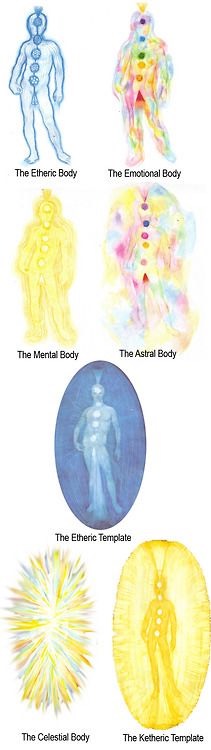
Brennan popularized a seven-layer model of the energy field, each layer corresponding to different aspects of physical, emotional, mental, and spiritual health. She described how blockages or distortions in these layers could lead to illness, and how healing could be cultivated by restoring energetic balance. The book offers detailed descriptions of the chakra system, explaining how these energy centres govern various aspects of health and consciousness. Brennan provides practical exercises for perceiving and balancing the chakras, making the material accessible to both beginners and advanced practitioners. Healing hands. Light heals. And this is what the ancients knew. CQ² - coherent breathing cultivates healing frequency - E=MC²
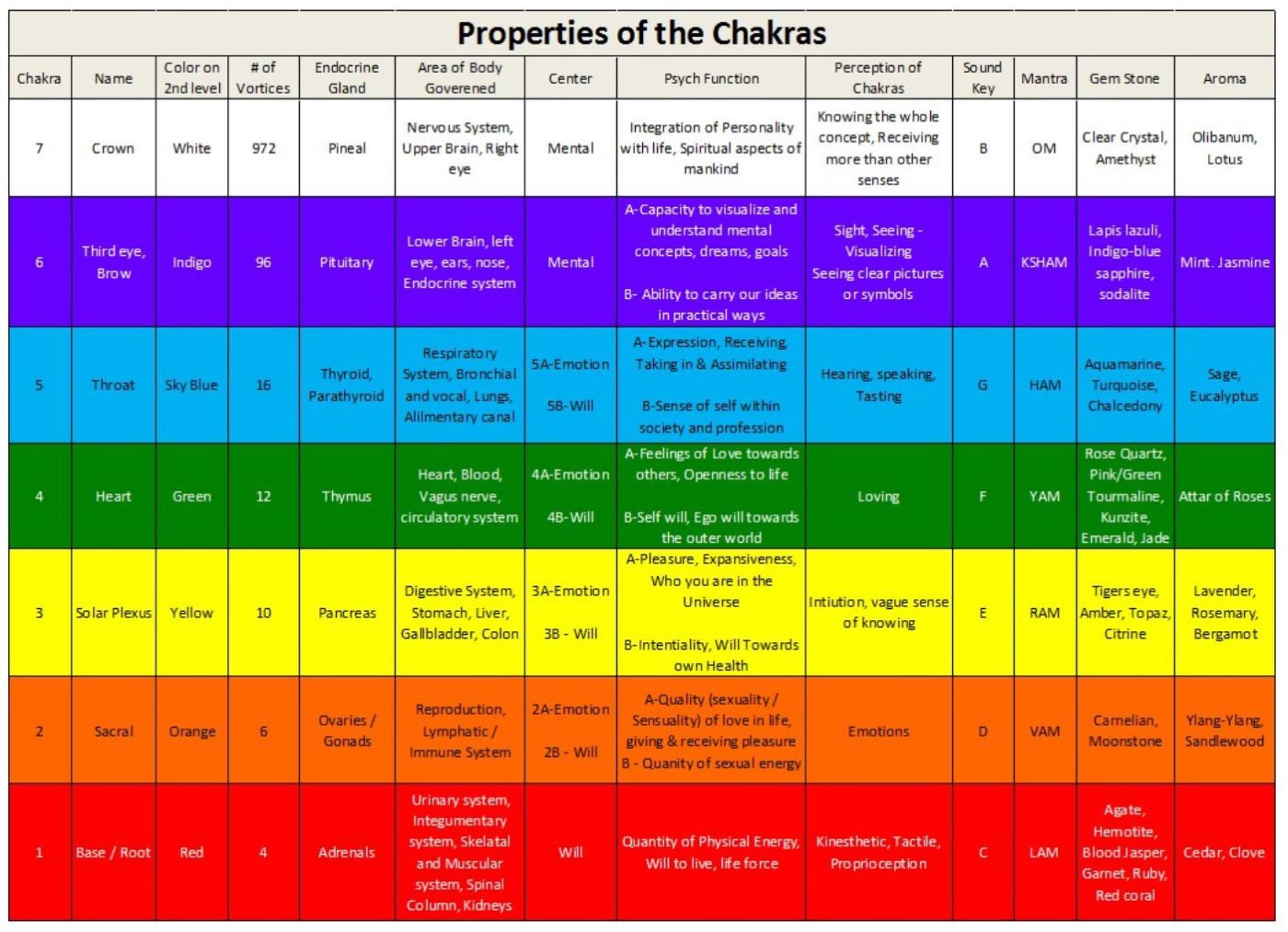
Brennan’s background as a physicist gave her work credibility among skeptics. She explained the human energy field (HEF) using concepts from physics, suggesting that the aura is a real, measurable phenomenon. She referenced scientific studies, such as those measuring the frequencies of the aura, and drew parallels between quantum physics and energy healing. Hands of Light is filled with case studies from Brennan’s practice, as well as vivid illustrations of auras, chakras, and healing techniques.
These visuals help demystify complex concepts and demonstrate the practical application of energy healing. Perhaps the book’s greatest legacy is its seamless integration of scientific and spiritual perspectives. Brennan observed that energy healing is not at odds with modern science, but rather an extension of it - suggesting that consciousness and energy are fundamental to understanding health and identifying disease - dis-ease - we are “living transformation systems,” capable of spiritualizing matter and healing ourselves and others through the conscious use of energy and light. Are we human or are we dancer? My sign is vital. My hands are cold, and I'm on my knees looking for the answer. Are we human, or are we dancer? Human. The Killers.
Albert Einstein: The Quantum Mandala of Genius
Born in Ulm, Germany, 1879. Albert Einstein was a child of curiosity and imagination. His early years were marked by a fascination with light, space, and the invisible forces that shape reality. The young Einstein’s mind was not content with rote learning; he questioned, he wandered, he dreamed. His family moved to Munich, where he attended the Luitpold Gymnasium; the rigid schooling system clashed with his free spirit. Einstein’s love for music - especially the violin - became a lifelong companion, nurturing his sense of harmony and pattern.
Scientific Revolution: The Birth of Relativity
Einstein’s journey led him to the Swiss Federal Polytechnic in Zurich, where he studied physics and mathematics. After graduation, he worked as a patent clerk in Bern - a humble position that gave him time to ponder the mysteries of the universe. During this time - his “Annus Mirabilis” 1905 - Einstein published four groundbreaking papers, including the theory of special relativity and the concept of the photon. These works shattered classical notions of space, time, and energy, revealing the quantum fabric of reality. Aged twenty-six, Einstein went from a relative unknown to superstar supernova genius scientist overnight; embodying and befitting his most famous mathematical equation like Buzz Lightyear says To Infinity and Beyond.
E=MC²: The Equation of Light Energy equals mass times the speed of light squared. This elegant formula encapsulates the unity of matter and energy, the dance of transformation at the heart of the cosmos. Einstein’s insight was not just mathematical - it was poetic, mystical, and revolutionary. He saw the universe as a symphony of frequencies, a field of interconnected waves, where every particle is a quantum of light.
Artistic & Poetic Vision: The Mysterious Source
Einstein’s genius was not confined to equations. He was a poet of the mysterious, a lover of beauty and paradox. “The most beautiful thing we can experience is the mysterious. It is the source of all true art and science.” For Einstein, science and art were twin-wings of the human spirit, both seeking to glimpse the infinite through the finite. And so he played the violin to solve multi-dimensional problems, letting music guide his intuition. His letters and essays reveal a mind attuned to the cosmic dance; wonder and awe. Logic can get you from A to B. Imagination can get you everywhere.
Einstein and Classical Music: A Lifelong Love
“If I were not a physicist, I would probably be a musician.” He played the violin from a young age and often turned to music for inspiration, relaxation, and problem-solving.
Einstein’s favorite composer was Wolfgang Amadeus Mozart. He revered Mozart’s music for its clarity, structure, and divine simplicity. Einstein felt a deep kinship with Mozart’s sense of order and beauty, often playing Mozart’s violin sonatas and chamber works. He described Mozart’s music as “so pure that it seemed to have been ever-present in the universe, waiting to be discovered by the master.” Einstein’s own approach to science - seeking elegant, simple, and universal laws - mirrored his appreciation for Mozart’s style. Genius-enlightening-genius. Light-animating-matter.
Einstein deeply admired Johann Sebastian Bach. He called Bach the greatest of all composers and found in Bach’s music a profound sense of mathematical order and spiritual depth. Bach’s fugues and counterpoint resonated with Einstein’s love of structure and complexity. He often played Bach’s solo violin works and was known to say, “Listen to Bach, and you will see a sky with more stars than the night sky.” Bach; the architect of light and harmony; composing the presence of God like Telsa conducting electricity. Genius lightning-bolt energy - eureka light-bulb moments - E=MC²
In his own self-practice; Einstein played the violin daily, often with friends or family. He participated in amateur chamber music groups and was known to lose himself in music and flow state; sometimes playing for hours when working through scientific problems. For Einstein, music and science were two expressions of the same search for harmony and meaning in the universe. CQ² - scientific and creative brainwave states - E=MC²
Philosophical Depth: Unity, Mystery, and God
“I believe in Spinoza’s God, who reveals Himself in the lawful harmony of the world, not in a God who concerns Himself with the fate and the doings of mankind...”
Einstein’s philosophy was shaped by Spinoza’s vision of a rational, unified cosmos. He sought a “unified field theory,” believing that the laws of nature are harmonious and intelligible. Yet, he rejected dogma and embraced mystery: “God does not play dice with the universe.” For Einstein, the divine was not a personal deity but the order and beauty and harmony of the cosmos itself; epitomized in the genius minds of Mozart and Bach and embodied in their classical compositions like cathedrals in the air.
He pondered the limits of knowledge, the role of the observer, and the paradoxes of quantum mechanics. His correspondence with Niels Bohr and other physicists became legendary debates about the nature of reality, consciousness, and measurement; his dialogue with Rabindranath Tagore on the nature of reality; Platonic. Do you believe in the divine isolated from the world? Not isolated. The infinite personality of man comprehends the universe. There cannot be anything that cannot be subsumed by the human personality, and this proves that the truth of the universe is human truth.4
Career & Legacy: From Relativity to Cosmic Consciousness
Einstein’s career spanned continents and revolutions. He became a professor in Zurich, Prague, and Berlin, and later emigrated to the United States to escape Nazi persecution. At Princeton, he continued his quest for unity, mentoring generations of scientists and thinkers. His legacy is vast: relativity, quantum theory, cosmology, philosophy, and humanitarianism. He spoke out for peace, civil rights, and the dignity of all beings. His image - wild hair, twinkling eyes - became a symbol of genius, curiosity, and compassion. Einstein is an archetypal “Quantum Human” - a being who embodies multiplicity, integration, and transformation. He is both scientist and mystic, observer-and-participant, wave-and-particle. His equation E=MC² becomes a mandala of awakening, a formula for the radiant field of being. Einstein’s journey mirrors the fourfold path of CQ²:
Vector: Mapping the dimensions of self - mind, heart, body, spirit.
Matrix: Harmonizing faculties - thought, feeling, intuition, action.
Differential: Evolving through wisdom and compassion.
Quantum Field: Becoming the field - presence, entanglement, unity.
Einstein’s Mandala
In the field of light - mind awakens -
frequencies vibrate equations -
the violins’ vibrato - the cosmos attuned.
Genius is a bridge of luminous wisdom -
Einstein and Tagore dance together -
question and answer - unity - indeterminate mystery.
Summary Table: Einstein’s Multidimensional Legacy
| Aspect | Einstein’s Contribution | Artistic/Philosophical Lens |
|---|---|---|
| Science | Relativity, Quantum Theory, E=MC² | Unity of matter and energy, cosmic dance |
| Art | Violin, poetry, metaphor | Beauty as truth, intuition as guide |
| Philosophy | Rationalism, Spinoza, cosmic mysticism | Mystery, unity, “God does not play dice” |
| Humanism | Peace, civil rights, compassion | Dignity, interconnectedness, empathy |
| Quantum Human | Integration, transformation, awakening | Mandala of becoming, field of presence |
Final Reflection
Albert Einstein is not just a scientist - he is a living mandala of genius, a bridge between worlds, a quantum human whose journey continues to inspire seekers, artists, and thinkers across the globe. His legacy is a field of infinite potential, where every question is an invitation to wonder, and every answer is a doorway to deeper mystery.
John Wheeler: The Architect of the Participatory Universe
John Archibald Wheeler was born in 1911 in Jacksonville, Florida. From an early age, he was captivated by the mysteries of the cosmos. His childhood was filled with questions about the stars, the nature of matter, and the invisible forces that shape reality. Wheeler’s intellectual journey began at Johns Hopkins University, where he earned his PhD at just 21. His early brilliance was matched by a restless curiosity - a drive to understand not just the “how” but the “why” of the universe. Meta-questioning.
Scientific Revolution: From Nuclear Physics to Black Holes
Wheeler’s career spanned the most transformative decades in modern physics. He worked with Niels Bohr on nuclear fission, contributing to the Manhattan Project during World War II. Wheeler’s true genius lay in his ability to leap across disciplines, connecting the quantum and the cosmic. Quantum Human pioneer - another way. CQ²
He coined the term “black hole,” transforming our understanding of gravity and the fate of stars. Wheeler’s work on general relativity, quantum mechanics, and nuclear physics made him a bridge between the giants of the early 20th century and the new generation of physicists.
Wheeler was not content with equations alone. He was a philosopher of physics, asking the deepest questions about existence. His most famous idea, the “participatory universe,” proposed that reality is not a fixed stage, but a dynamic process shaped by observation and participation. He explored not only “Why” but deeply enquired “How?”
“It-from-bit. Otherwise put, every ‘it’ - every particle, every field of force, even the spacetime continuum itself - derives its function, its meaning, its very existence… from the apparatus-elicited answers to yes-or-no questions, binary choices, bits.”
Wheeler’s “it-from-bit” concept anticipated the information age, suggesting that information - not matter - is the fundamental building block of reality. In his view, the universe is a grand question-and-answer process, where observers are not passive, but co-creators of existence. The universe is an a-participatory information exchange system. The universe is U-Shaped; evolution is the universe becoming more and more aware of itself - consciousness entwined to humans - the ability to reflect and be self-aware - aware-of-awareness-itself - echoing Amit Goswami’s Self-Aware Universe.
Is the universe one Big Bang existential question mark? Ask and ye shall receive.
Artistic & Poetic Lens: Participatory Universe - A Cosmic Storyteller
Wheeler’s language was as imaginative as his science. He spoke of “wormholes,” “quantum foam,” and “delayed-choice experiments,” painting the universe as a living, evolving tapestry. His diagrams and metaphors like the U-shaped “observer participatory” drawing - became icons of modern physics.
He saw the cosmos as a story - unfolding through the interplay of chance, choice, and consciousness. Wheeler’s lectures were legendary for their poetic sweep, blending rigorous mathematics with a sense of awe and wonder. He famously described the quantum behaviour of particles with the metaphor of the “great smoky dragon.” He wrote that a photon travelling from its source to a detector is like a dragon: “The mouth of the dragon is sharp, where it bites the counter. The tail of the dragon is sharp, where the photon starts. But the dragon itself is smoky - only the ends are sharp.”
Wheeler used this exquisite metaphor to illustrate the mystery of quantum mechanics; particularly the wave-particle duality and the delayed-choice experiment. The photon has definite reality at the beginning (emission) and at the end (detection), but in between, its existence is indeterminate - “smoky,” elusive, and not classically describable. This imagery captures the essence of quantum uncertainty: the particle’s path is not a well-defined trajectory but a cloud of possibilities until measurement collapses it. As metaphor; the dragon symbol suggests something powerful, mysterious, and difficult to grasp. The smoky middle represents the quantum superposition - the photon is neither fully a particle nor a wave, but a probabilistic entity. And the sharp ends: measurement points (emission and detection) where the quantum state becomes definite.
John Wheeler’s Participatory Universe (futurism.com) “In the final decades of his life, the question that intrigued Wheeler most was: “Are life and mind irrelevant to the structure of the universe, or are they central to it?” He suggested that the nature of reality was revealed by the bizarre laws of quantum mechanics. According to quantum theory, before observation is made, a subatomic particle exists in several states, called a superposition (or, as Wheeler called it, a 'smoky dragon'). Once the particle is observed, it instantaneously collapses into a single position. Wheeler suggested that reality is created by observers and that: “no phenomenon is a real phenomenon until it is an observed phenomenon.” He coined the term “Participatory Anthropic Principle” (PAP) from the Greek “anthropos”, or human. He went further to suggest that “we are participants in bringing into being not only the near and here, but the far away and long ago.” [Reference: Radio Interview With Martin Redfern]”
John Wheeler - Wheeler's drawing of the big U: concept of observer participancy (109/130) (youtube.com) “American physicist, John Wheeler (1911-2008), made seminal contributions to the theories of quantum gravity and nuclear fission, but is best known for coining the term 'black holes'. A keen teacher and mentor, he was also a key figure in the Manhattan Project.” Reality now is a participatory - a U-shaped cosmic macro-and-micro infinity-loop - a meta-universe becoming aware-of-awareness itself.
“John Wheeler Saw the Tear in Reality
Until his dying days, the giant of 20th-century physics obsessed over the underpinnings of space and time, and how we can all share the same version of them.
John Archibald Wheeler was a physicist’s physicist. He never won a Nobel Prize, never became a household name, but to those in the know, he was a legend. He broke ground in many areas of physics: particle, nuclear, gravitational, quantum. He studied under Niels Bohr, walked and talked with Albert Einstein. He was ambitious - to put it mildly - but it was never for personal gain. Wheeler wanted to solve the mysteries of the universe so that he could give answers back to his community. He had a motto:
“Nobody can be anybody without somebodies around.” He spread his insights widely, letting his students shine. Richard Feynman, Hugh Everett, Jacob Bekenstein, Kip Thorne - they, among others, became luminaries in his glow. When a Princeton University donor offered to dedicate a physics building in his honor, Wheeler declined, saying the building shouldn’t be “focused on one person. Physics isn’t done that way.”” John Wheeler Saw the Tear in Reality | Quanta Magazine Quantum Human - consider all the angles from which we might gain perspective on our amazing universe and the nature of existence. Consciousness-Quotient-Squared. TAT TVAM ASI. Know Thyself.
Microsoft Word - Wheeler_[archives].doc (arxiv.org) “Abstract: This paper investigates the role of human subjectivity and its delimiters in articulating the universe in physics and cosmology. As a case study, we reflect upon the complex of ideas of the so-called Participatory Universe by later J. A. Wheeler. The objective of the paper is to explicate the role of the human agency as a centre of disclosure and manifestation of the universe as well the as teleology of scientific representation of the world implied by the intrinsic purposiveness of human actions.”
Alexei V. Nesteruk Department of Mathematics, University of Portsmouth. A mind-bending exploration into the central role of human agency and the role of the observer-participant co-creating and bringing into being past-and-future in the ‘now’ present. A phenomenal paper exploring the depth of Wheeler’s sublime and beautiful mind.
“Wheeler, after a long intellectual evolution working in physics, attempted to approach physical reality not as something “out there”, which is passively described by observers, but to see it as a genesis through conscious dialogue between observers-participants and physical reality, so that the universe emerges as a special articulation of the relationship between human intelligence and physical reality (Wheeler 1994[1], p. 128).
This approach, challenging the natural scientific attitude, was not appreciated by physicists who found Wheeler’s ideas “unpalatable in view of its rather mystical overtones” (Carr 1998, p. 158), and hence has not received any further attention and development.
A skeptical reaction of physicists to Wheeler’s ideas can be understood because his ideas represent a metaphysical extension of physics which physicists do not consider as a part of their vocation and duty. However, seen historically, and in particular, in conjunction with philosophical developments in the 20th century, this was not an entirely arbitrary attempt for it manifested a certain inevitability of sliding towards a transcendental or phenomenological appropriation of physics; if the latter were to tackle the issue of its own foundation and its very facticity.
A simple question which must be posed by any physicist who is interested to know the truth would be this: why is physics possible at all? And here the question is not only about the intelligibility of the world, but rather of the very basic existential premises of physics related to humanity as its agent.
Physics, as a science and social activity, is a product and a certain accomplishment of human beings who are themselves part of the physical world. In this sense, the facticity of physics is related to a particular position of human beings in the world, such that this world allows them to produce its own explication and description.
On purely philosophical grounds, this explicability and description has an absolutely contingent character related, speaking in Heideggerian terms, to that fragment of the unconcealed being which is associated to a specific living presence, that is human persons.
Still, for physicists, prone to reductionism, there remains a question as to whether physics itself can explicate its own existence, or, in a slightly different parlance, can some simple initial rules of interaction with the world (which, in fact, presuppose the world’s explicability from the beginning) lead with necessity to that picture of the world which we have here and now.
In this sense the case of Wheeler’s thought (in spite of deviating from the established stream of physics) represents an example, in the history of scientific ideas, of how a naturalistic epistemology in science - in attempting to make a certain self-correction - through the search for its own facticity, leads to a transcendental problematic (remarkably with teleological overtones), that is to the view that the complete picture of physical reality must include the conditions of its explicability and constitution.” Alexei V. Nesteruk. Mind-blown like Luke using his lightsaber and the Force to destroy Phase 111 dark troopers. Luke Skywalker Saves Star Wars [4K HDR] - The Mandalorian
“The brain is small. The universe is large. In what way, if any, is it, the observed, affected by man, the observer? Is the universe deprived of all meaningful existence in the absence of mind? Is it governed in its structure by the requirement that it gives birth to life and consciousness? Or is man merely an unimportant speck of dust in a remote corner of space? In brief, are life and mind irrelevant to the structure of the universe - or are they central to it?” (Wheeler 1975, p. 270). ‘How’ and ‘why’ the universe?
Mentorship and Legacy: A Bridge Across Generations
Wheeler was a mentor to some of the most influential scientific and creative minds of the late 20th century, including Richard Feynman, Hugh Everett 111, whose Many Worlds Interpretation spawned an entire sub-genre in MWI movies and TV shows; Kip Thorne served as a scientific consultant and Executive producer on Interstellar with Christopher Nolan. Wheeler inspired generations to ask not just “what is the universe?” but “how do we participate in its unfolding?” His Princeton seminars were crucibles of creativity, where students were encouraged to challenge orthodoxy and imagine new worlds. CQ² - logic, creativity; questioning and enquiring how-and-why - E=MC²
Wheeler’s influence extended beyond physics. His ideas about information, observation, and participation have shaped fields from cosmology to philosophy, from computer science to consciousness studies. Quantum Human by another name.
Wheeler as Quantum Human: Integration and Wonder
Wheeler is “Quantum Human” - a being who embodies integration, transformation, and participatory awareness. He moved fluidly between the micro and the macro, the mathematical and the mystical, the known and the unknown. His “participatory universe” is a living mandala, where every observer is both a question-and-answer, both wave-and-particle, both creator-and-creation. Know Thyself. How and why.
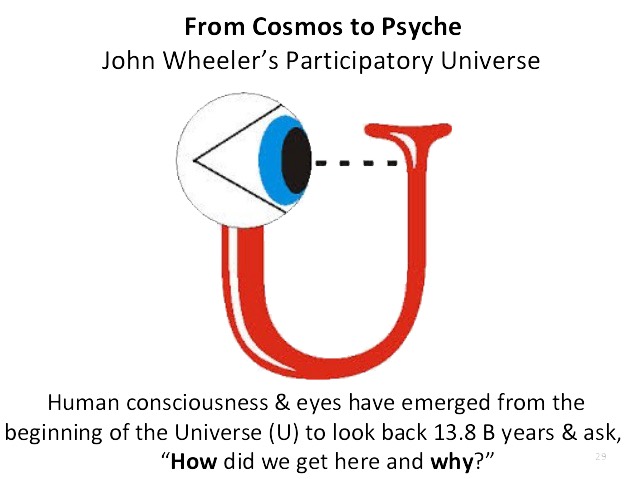
Wheeler’s Mandala
Bits become being, choice becomes star.
The universe listens, the observer replies -
It-from-Bit, the dance of the great smoky dragon.
Black holes whisper, wormholes entangle,
Wheeler’s vision: everything-is-everything.
A-participatory field, we are the question,
We are the yield - U-shaped - ‘how’ and ‘why.’
Murky quantum foam - a question arises
One-electron universe - Know Thyself.
Summary Table: Wheeler’s Multidimensional Legacy
| Aspect | Wheeler’s Contribution | Artistic/Philosophical Lens |
|---|---|---|
| Science | Black holes, nuclear physics, relativity | Naming, conceptual innovation, integration |
| Philosophy | Participatory universe, “it from bit” | Reality as process, observer as creator |
| Art | Metaphor, diagram, poetic language | Universe as story, science as art |
| Mentorship | Feynman, Thorne, generations of physicists | Bridge-builder, inspirer, Socratic guide |
| Quantum Human | Integration, transformation, wonder | Mandala of participation, field of meaning |
Altar
after Octavio Paz
Kitty Ferguson - The Fire in the Equations
Kitty Ferguson is an independent scholar and lecturer; an extra-ordinary science writer who explores the intersection of science and spirituality. In The Fire in the Equations, Ferguson investigates the mystery of the universe and the limits of human knowledge.
“The fire in the equations is the fire of the mind, the fire of the spirit, the fire of the universe itself.” Her work encourages readers to embrace wonder and humility in the face of cosmic mystery.
The title of the book is inspired by a famous Stephen Hawking’s quote, who states on the front cover: “A clear account of the ultimate question.” Turning to the back cover, John Polkinghorne, Queen’s College, Cambridge; elucidates: “Ferguson weaves together science, philosophy, and theology with verve and clarity.” CQ²
“Most absorbing and vivacious. Ferguson has a gift for explaining abstruse scientific ideas with homely analogies.” First Things.
John. A. Wheeler, Princeton University; elaborates: “A delightful, up-to-date, and accurate account of the most active frontiers of physical science in language equally pleasant to read at age thirteen or eight-three, laced with puzzles, poems, people, and science and with much of the delicious accompaniment that goes on in the search.” And the proof is in the pudding. This book is indeed delicious and serves up insight and illumination in equal measure. An exceedingly delicious book. E=MC²
The Fire in the Equations: God, Mathematics, and the Mystery of Mind
“Beauty in physics similarly has to do with a falling-into-place that appears little short of miraculous. It implies simplicity, elegance, and mathematical consistency and creativity. These are the qualities that make such theories as superstring theory and wormhole theory appealing and convincing, not the fact that anyone has ever observed a superstring or wormhole or that anyone hopes to...” Almost Objective, page 61.
The Fire in the Equations: Science, Religion, and the Search for God - an acclaimed yet hidden masterpiece - exploring the relationship between scientific discovery and the enduring human quest for meaning. Ferguson is known for her accessible writing and ability to bridge complex ideas for lay readers, embarking on a journey through physics, cosmology, chaos theory, and philosophy - asking whether science and belief in God are truly irreconcilable - or whether they might, in fact; illuminate each other.
The book’s title is inspired by Stephen Hawking’s famous question: “What is it that breathes fire into the equations and makes a universe for them to describe?” Ferguson uses this as a springboard to examine whether the laws of nature and the “unreasonable effectiveness of mathematics” point to a deeper reality - perhaps even to God - or whether they are sufficient in themselves. Her beautiful mind illuminates the fire in the equations - a Sherlockian quantum mind-palace. [kitty-ferguson.com]
The “Fire” in the Equations: Mathematics and Mystery
Ferguson’s central metaphor - the “fire” in the equations - captures the sense of awe and wonder that many scientists feel when confronted with the mathematical order of the universe. She explores how, despite the power of mathematical laws to describe the cosmos, there remains a profound mystery: Why do these laws exist at all? Why are they so effective? And what, if anything, breathes “fire” into them, making them more than abstract symbols - making them the living architecture of reality?
“Can we really find God in the equations, or a scientific theory that will erase the notion of God? Or does the ultimate answer lie beyond the reach of science, in imagination, poetry, metaphor, or evidence unavailable to scientific inquiry?” Ferguson, weaving the art of Socratic dialogue into her enquiry.
Ferguson explores the “unreasonable effectiveness of mathematics” and the search for a “Theory of Everything,” questioning whether mathematical laws are the ultimate reality or if they point to something beyond themselves.
“Scientists have begun to look for a single fundamental law or truth that underlies the universe’s origin and continued existence. But is the ultimate cause God, logical or mathematical consistency, or the universe itself?”
God, Neurons, and the Limits of Explanation
“God, though perhaps not ruled in, is certainly not ruled out.” Ferguson does not argue for a simplistic reconciliation between science and religion. Instead, she investigates the heart of the conflict, examining whether the search for ultimate truth - whether in mathematics, physics, or theology - can ever be complete.
She considers three contenders for the “First Cause” of the universe: God, logical or mathematical consistency, and the universe itself. Many scientists, she notes, see the laws of physics as the ultimate cause; Ferguson questions whether this is sufficient, or whether it simply shifts the mystery one step further back.
In discussing mind and consciousness, Ferguson touches upon the idea that the firing of neurons - the physical substrate of thought - may not be the whole story. She asks whether there is something about consciousness, imagination, or even the divine that “breathes fire” into the equations of the brain, just as Hawking wondered about the universe. Is there a “God in the math,” or is the mind itself a window into something transcendent? Curiouser-and-curiouser - Kitty going down the quantum rabbit w-hole.
Quantum Style and Approach
Ferguson’s approach is notable for its humility and openness. She does not claim to have definitive answers, nor does she pit science against religion in a zero-sum contest. Instead, she invites readers to join her in an adventure through science, philosophy, theology, and personal belief, encouraging each reader to draw their own conclusions from the evidence and arguments she presents.
“Never attempts to define God. Ferguson is at her best when describing the complex ideas of such scientists as Stephen Hawking or Richard Feynman in terms that a non-specialist can understand and enjoy.” Karen Armstrong, The Sunday Times Books.
Her writing is praised for its clarity, analogies, and ability to make complex scientific ideas accessible without over-simplification. Not an easy task; made immeasurably more difficult by using a triple-lens - weaving together science, philosophy, and theology - nigh-on Mission Impossible. Quantum Human by another name.
Key Themes and Takeaways
The “fire in the equations” is a metaphor for the mystery that animates the universe - whether one calls it God, consciousness, or the unknown source of order and meaning - Prāṇa, Chi, Ki by another name - and this is what the ancients knew - Universal lifeforce energy - a unified-field animating and permeating the entire universe within-and-without. God-as-Light, and it is light which fires photons-to-electrons-to-ions-to-neurons, it is light which fires the equations. Light-animating-matter. And this is what the ancients knew.
Mathematics and the laws of nature are powerful, but their very existence and effectiveness raise questions that may never be fully answered by science alone. Ancient Greek philosophers distinguished between mythos and logos; both were vital - not in opposition - complementary aspects of the whole. CQ²
“The fire in the equations is the fire of the mind, the fire of the spirit, the fire of the universe itself.” The search for God, the search for ultimate truth, is not necessarily at odds with scientific inquiry; both can be seen as complementary paths in the human quest for understanding. Logic can get you from A to B, imagination can get you everywhere. Albert Einstein. E=MC²
What can any of us know, and what remains unexplained, perhaps unexplainable? Can we find God...or a scientific theory that will erase the notion of God? Can even human reason that goes far beyond present science ever hope to answer the ultimate questions, or must the answers lie partly in imagination, poetry and metaphor, or come from evidence unavailable to science?
I wrote The Fire in the Equations as a journey of exploration, not knowing where the journey would take me or where it would end. My present views on science-religion issues were not in place when I began the book. They were forged in the writing of it. If you are surprised at some of the twists in the line of argument, so was I. This was no attempt to discover or forge reconciliation between science and religion.
My exploration was not even based on the assumption that reconciliation is lacking or needed. I thought the best approach was to go determinedly to those areas where the heart of the conflict was reputed to lie, and find out for myself whether the reputation was correct. [kitty-ferguson.com]
The adventure is not to be missed. It is an adventure through science, philosophy, theology, and personal belief, encouraging readers to draw their own conclusions from the evidence and arguments. Ferguson encourages humility, wonder, and openness to mystery, suggesting that the answers to the deepest questions may lie at the intersection of reason, imagination, and faith. The journey is the path. Adventure, mystery, and paradox is the way. This is the way. And the journey is the way.
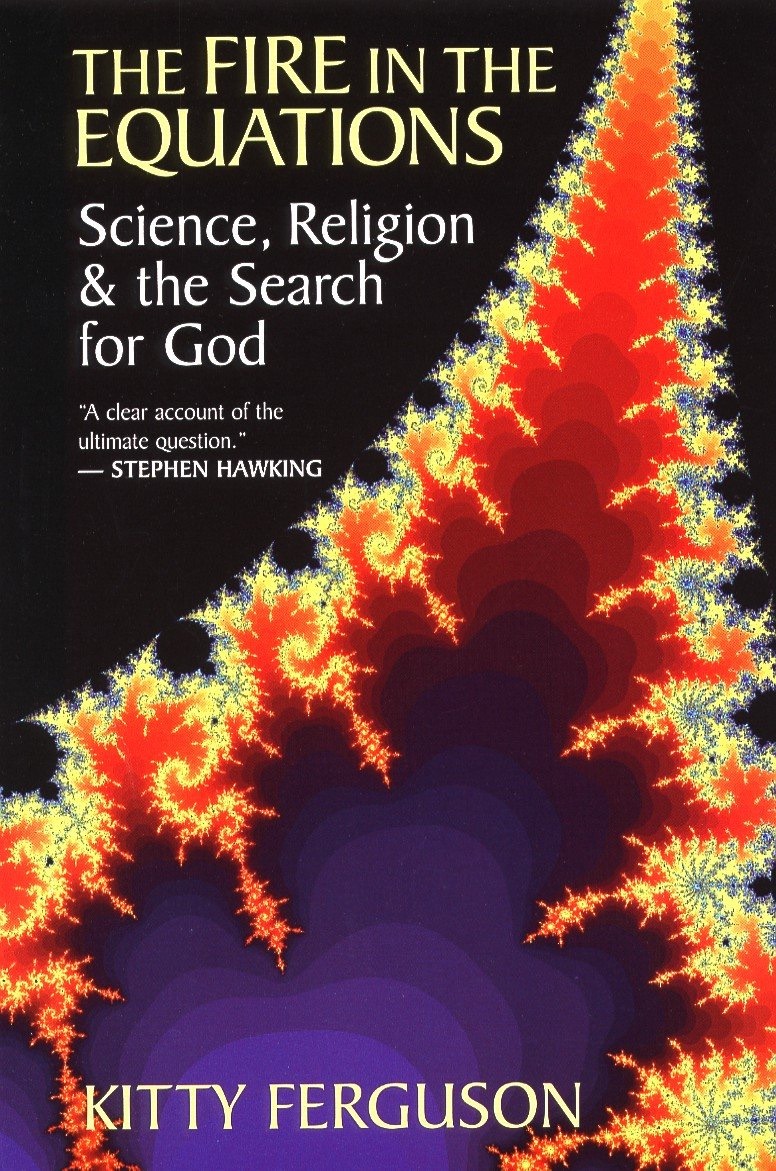
Mandala of the Fire in the Equations
for Kitty Ferguson
At the heart-bridge, a living spark -
fire that breathes life into equations,
numbers whirring in a cosmic dance.
Kitty Ferguson, seeker of adventure and mystery,
walks the spiral between science and wonder,
her questions kindling the universe’s spiritus.
Around her, the mandala spins:
logic and imagination,
mathematics and metaphor,
empirical rigour and poetic awe.
The fire in the equations is the fire of the mind,
the fire of the spirit,
the fire of the universe itself.
Each ring, a question:
What breathes fire into the laws of nature?
What sings in the silence between stars?
In the mandala’s embrace,
science and faith are not adversaries,
co-pilots seeking a Theory of Everything.
Reason seeks patterns in the starlit unknown,
faith listens for guidance in the hush of the void.
The journey is the path,
the path is the flame,
the flame illumed within.
In the dialogue between devotion and empiricism,
prayers and equations become double helix DNA -
entangled - unity - the mystery that binds-all-things.
Roger Penrose & Stuart Hameroff: Pioneers of Quantum Consciousness and the Orch OR Odyssey
Origins: Two Worlds Collide
The story of Orch OR begins at the intersection of two distinct disciplines: mathematical physics and anesthesiology. Roger Penrose, a renowned mathematical physicist and Nobel laureate, was captivated by the mysteries of consciousness and the limits of computation. Penrose’s early work, inspired by Gödel’s incompleteness theorems, led him to argue that human consciousness could not be explained by classical computation alone. He posited that some non-computable process - possibly rooted in quantum mechanics - must be at play in the brain. [speciesuniverse.com]
Meanwhile, Stuart Hameroff, an anesthesiologist, was fascinated by the enigma of how anesthetics could selectively erase consciousness while leaving other brain functions intact. His research into the cellular structures called microtubules - tiny protein lattices within neurons - suggested that these structures might be more than mere scaffolding; they could be information processors at the quantum level. [hameroff.arizona.edu]
Their paths converged in the early 1990s, when Hameroff encountered Penrose’s book The Emperor’s New Mind. Recognizing a potential biological substrate for Penrose’s quantum ideas, Hameroff reached out to Penrose. Penrose was struck by this eloquent missing piece, and together they formulated the Orchestrated Objective Reduction (Orch OR) theory: consciousness arises from quantum computations in microtubules, orchestrated and collapsed by the fundamental structure of spacetime itself.
The Theory: Quantum Computation in the Brain
Orch OR proposes that microtubules within neurons support quantum superpositions -states where particles exist in multiple possibilities simultaneously. These superpositions are orchestrated by biological processes and ultimately collapse (objective reduction) when they reach a threshold determined by the geometry of spacetime. Each collapse, Penrose and Hameroff argue, corresponds to a discrete moment of conscious experience. [puredhamma.net]
Penrose’s contribution was the idea of objective reduction (OR), a quantum gravity process that resolves the measurement problem in quantum mechanics. Hameroffs’ insight was that microtubules could be the biological site for such quantum events, providing a bridge between physics and subjective experience. CQ² E=MC²
Initial Reception: Controversy and Critique
From its inception in the early 90’s, Orch OR was met with skepticism and, at times, outright hostility from mainstream academia who be like Victor Meldrew “I DON’T BELIEVE IT!” One Foot in the Grave.5 Critics argued that the brain is “too warm, wet, and noisy” for delicate quantum states to survive; quantum coherence, they claimed, could not be sustained in such an environment. Others challenged Penrose’s use of Gödel’s theorem and the leap from non-computability to quantum consciousness.
Philosophers, mathematicians, and neuroscientists questioned whether microtubules could really support quantum computation, and whether such processes were necessary to explain consciousness at all. For decades, Orch OR was often relegated to the fringes of scientific discourse, cited as an example of bold but unproven speculation. [blankdimensions.com]
The Journey: Persistence and Evolution
Despite the criticism, Penrose and Hameroff persisted. They continued to refine their theory, engage with critics, and organize conferences that brought together physicists, neuroscientists, and philosophers. Hameroff, in particular, emphasized the anesthetic connection: most anesthetics act on microtubules, and their ability to erase consciousness could be evidence for the Orch OR model. [hameroff.arizona.edu]
Over years and decades - especially with advances in quantum biology - a shift in the academic landscape began. Discoveries of quantum coherence in photosynthesis, avian navigation, and olfaction suggest that quantum effects could indeed play a role in biological systems - even at physiological temperatures. [ithy.com]
Recent Experiments: Testing Orch OR
In the last decade, experimental work has begun to address the core predictions of Orch OR:
Quantum Coherence in Microtubules: Recent studies have detected quantum optical states and measurable coherence in microtubules under physiological conditions, challenging the assumption that the brain is too noisy for quantum effects.
“Research conducted at various high-profile laboratories has indicated that microtubules, integral components of a neuron's cytoskeleton, are capable of exhibiting quantum optical states under physiological conditions.” [ithy.com]
Anesthetic Effects: Experiments have shown that anesthetic molecules can disrupt quantum states in microtubules, consistent with Orch OR’s prediction that consciousness is linked to quantum processes in these structures. [templetonw...harity.org]
Entanglement and Brain Function: There is emerging evidence of macroscopic quantum entanglement in the living human brain, correlated with conscious states and working memory performance. [academic.oup.com]
While these findings do not constitute definitive proof, interest has revived in Orch OR and prompted more nuanced debate about the plausibility of quantum consciousness.
Orch-OR Presentation - The Art of Socratic Dialogue
“An intimate lecture with renowned mathematical physicist Sir Roger Penrose and anesthesiologist Dr. Stuart Hameroff, followed by a conversation with The Science Network co-founder Roger Bingham. Co-organized by The Penrose Institute and the UC San Diego Institute for Neural Computation, with the support of Intheon, Neocortex Ventures, and the Data Science Alliance.
Sir Roger Penrose and Dr. Stuart Hameroff discuss one of the leading theories of consciousness recently selected by the Templeton Foundation for study. Is the brain a sophisticated computer or an intuitive thinking device? Following on from their conference in Tucson which pitted Integrated Information Theory (IIT) against Orchestrated Objective Reduction (Orch-OR), Sir Roger Penrose OM and Stuart Hameroff discuss the current state of theories that might explain human consciousness.
Sir Roger Penrose gives examples of ‘non-computability’ in human consciousness, thoughts and actions such as the way we evaluate chess positions which cast doubt on ‘Turing’ computation as a complete explanation of brain function. As a source of non-computability, Roger discusses his ‘objective reduction’ (‘OR’) self-collapse of the quantum wavefunction, which is a potential resolution for the ‘measurement problem’ in quantum mechanics, and a mechanism for non-computable physics.
Dr. Stuart Hameroff reviews neuronal and biophysical aspects of Orch OR, in which ‘orchestrated’ quantum vibrations occur among entangled brain microtubules and evolve toward Orch OR threshold and consciousness. The nature, feasibility, decoherence times and evidence for quantum vibrations in microtubules, their role and correlation with consciousness, effects upon them of anesthetic gases and psychedelic drug molecules will be discussed, along with Orch OR criticisms and predictions of microtubule quantum vibrations as therapeutic targets for mental and cognitive disorders.”
In their ongoing Socratic dialogue - Penrose and Hameroff reflect upon their shared journey, the challenges, and the future of Orch OR:
“Consciousness is not algorithmic. There is something going on in our brains that transcends computation, and I believe quantum mechanics is the key.” Sir Roger Penrose.
“Microtubules are not just structural; they are information processors. Anesthetics erase consciousness by acting on microtubules, not just synapses. This is a clue to the quantum nature of mind.” Dr. Stuart Hameroff.
Sir Roger Penrose & Dr. Stuart Hameroff: CONSCIOUSNESS AND THE PHYSICS OF THE BRAIN - YouTube A mind-bending tour-de-force. Two eloquent and beautiful minds, Consciousness-Quotient-Squared, pioneers in Quantum Human self-enquiry.
After decades re-fining his theoretical research, Penrose observes: “If we’re right, there should be experimental signatures - quantum effects in microtubules, effects of anesthetics, and perhaps even retro-causal influences in conscious choice.”
Hameroff adds a quantum biological lens: “We’re seeing evidence that quantum coherence can survive in biological systems. The brain may be uniquely suited to orchestrate these effects.”
They also address skepticism:
“Science advances by challenging assumptions,” Penrose remarks towards the end.
“We welcome criticism, but we also welcome data. The next decade will be decisive.”
Meeting at the Socratic Intersection between science and spirituality, local and non-local effects, physics and metaphysics. Pioneers in Quantum Consciousness. CQ²
Legacy and Ongoing Impact
Today, Orch OR stands as one of the most ambitious and interdisciplinary theories of consciousness. It has inspired new lines of research in quantum biology, neuroscience, and philosophy. While still controversial, it is increasingly recognized as a testable and potentially falsifiable model - one that dares to bridge the gap between mind and matter. [tandfonline.com]
Penrose and Hameroff continue their collaboration, and the Orch OR journey exemplifies the spirit of scientific inquiry: bold, integrative, and open to the unknown.
To infinity and beyond like Buzz Lightyear says.
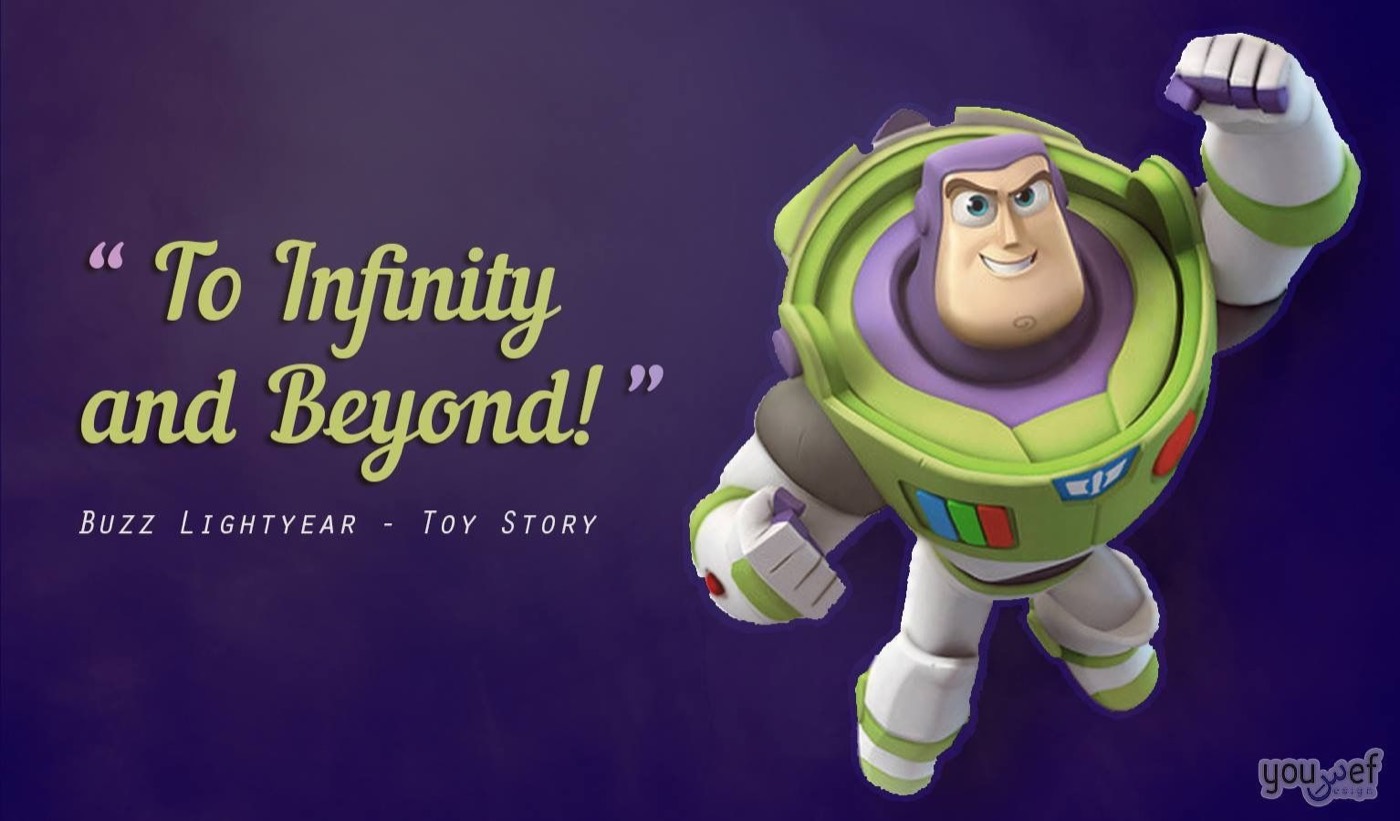
Mandala - Orch OR: The Quantum Odyssey
At the heart, a lattice - microtubules shimmer
entangled - biophotons radiate light - life itself.
Penrose, mathematically exploring beyond computation,
seeking a non-algorithmic spark - Gödel’s shadow falls.
Hameroff, listening to silence that anesthetics bring,
quantum indeterminacy, the body’s living architecture.
Orchestrated Objective Reduction, a superposition dance,
consciousness collapses the geometry of spacetime.
Around the mandala, quantum vibrations ripple,
anesthetics erase light - entanglement bridges
memory and self. Each collapse, a moment of awareness.
Mind is not a mere computation,
mind, a field of infinite potentiality,
mind, observer-and-observed
merging within quantum foam.
Penrose and Hameroff, co-pilots steering the quantum mind,
bridging physics and experience, theory and practice,
mathematics and medicine; simplicity, complexity, eloquence.
Their mandala spins non-computable insight,
quantum coherence, the pulse of consciousness,
the living brain. In the centre, a question:
What is the fire that breathes mind into matter?
What is the silence that awakens knowing?
Around the mandala, science and mystery entwine,
each answer - a doorway - each collapse - a birth.
To be quantum is to be the spiral of awakening;
embodying the pulse-of-being - lattice-of-light -
entangled within Indra’s Net of Precious Jewels.
Sri Ananda Ma, Keder Nath Swami, and The Philosophy of Absolute Cognition
Sri Ananda Ma (1896-1982) a renowned Indian mystic and spiritual teacher, often called “Anandamayi Ma” (“Joy-Permeated Mother”). Revered as a living embodiment of divine consciousness, her teachings emphasized direct experience of the Absolute, transcending dogma and ritual. She inspired seekers worldwide with her radiant presence and spontaneous wisdom, bridging the worlds of devotion (bhakti), knowledge (jnana), and action (karma). Many Paths. One Stream. CQ² E=MC²
Keder Nath Swami (Swami Kedarnath) was a close disciple of Sri Ananda Ma and a profound scholar-mystic. He authored The Philosophy of Absolute Cognition, a work that stands out for its rigorous analysis of consciousness, blending Eastern metaphysics with Western philosophical inquiry. Swami-ji’s approach is both devotional and analytical, making his work accessible to seekers from diverse backgrounds.
The Role of the Mystic and Swami-ji
In the tradition of Indian mysticism, the “mystic” is not merely a philosopher but a living experimenter - one who embodies the truths they teach. Sri Ananda Ma exemplified this; living in a state of continuous God-consciousness, her words and actions arising spontaneously from the Absolute. Swami-ji, as both disciple and scholar, serves as a bridge: interpreting, systematizing, and expanding upon the living experience of the mystic for a broader audience.
Swami-ji’s role is akin to that of Penrose and Hameroff in the West - he is both interpreter and innovator, decoding mystical revelation and translating the ineffable into philosophical language, and inviting dialogue between traditions. His illuminated mind be like an Indian Sherlockian mind palace.
The Philosophy of Absolute Cognition: Structure and Significance
This book is exceptional for several reasons: Swami-ji renders Sri Ma’s mystical supra-conceptual insight intelligible to philosophical inquiry. The work occupies a unique space between mysticism and systematic philosophy. It draws on the six schools of Indian philosophy, Advaita Vedanta, Sankhya, and Yoga, and also engages with Jungian psychology, Nāgārjuna and Śūnyatā in a comparative study, and even quantum physics as a reflective mirror. He seeks a “universal language” of consciousness, much as Penrose and Hameroff attempt to bridge physics and mind.
The text is not merely devotional; it is a systematic inquiry into the nature of cognition, self, and the Absolute. Swami-ji’s method is dialectical, moving from thesis to antithesis to synthesis, echoing Hegelian logic. Like Sri Ananda Ma, Swami-ji insists that ultimate knowledge is not conceptual but experiential - “absolute cognition” is direct realization.
The Nature of Absolute Cognition
The core of this work is an exposition of Sri Anandamayi Ma’s realization of Ultimate Reality as “Absolute Identity”, a state beyond dualistic knowing, conceptual thought, and ego‑centered consciousness. Swami Kedarnath emphasizes that Ma’s philosophy is not speculative metaphysics; it is the articulation of a lived realization.
The text defines absolute cognition as a mode of knowing in which knower, knowing, and known collapse into unity. This is expressed through the Bengali term “Ya Ta”, rendered in English as Absolute Cognition:
“Sri Anandamayi Ma has used the word ‘Ya Ta’ for the Absolute and its cognition… ‘Ya Ta’ can be translated as ‘Absolute Cognition’ in English.” Preface.
This cognition is not achieved through logical negation alone, but through direct realization in which consciousness returns to its own source. The author stresses that intellectual systems fail at this threshold, and that realization must be experiential: this cognition is not a conceptual or intellectual process. It is the vision of Truth where knower, knowing and known are not divided. It is direct realization, not mediated by the discursive intellect. Ultimate reality is “everything yet nothing, and nothing yet everything.” The mystics language is steeped in paradox; neither, nor, simultaneously both, and neither; a metaphysical foundation for what may be called quantum anthropology of consciousness where subject-object mutually arise; merge-in-union.
Absolute Cognition does not reject the world as illusion. It includes both transcendence and immanence within a single, indivisible unity like flipsides of the same coin. “According to Her, when they are seen exclusively, one excluding the other, they reveal only one half of the truth. They are not two realities, but the One, the Non-dual expressing itself to the limited mind in two ways. In the ultimate perception of Truth according to Ma, there is no “inside” or “outside”; no “within” and no “beyond.” In Her experience and teachings we find the “immanent” and the “transcendental” unified in One-Supreme-Self.” This is articulated as the “Immanent‑Transcendental Unity” of Reality (Chapter Two; Epistemological Considerations, p. 47).
Zen Observation: Swami-ji’s work is a rare example of a text that speaks to both Eastern and Western seekers, offering a rigorous, experiential, and integrative vision of consciousness. The book is not just about ideas, but about transformation - inviting the reader to become a participant, not just an observer. Indian philosophy is a living tradition, and Swami-ji’s engagement with Western philosophy, Jungian psychology, Tibetan Buddhism in the lens of Nāgārjuna; sheds light and immense clarity on the nature of consciousness; he enters into Socratic dialogue and Hegelian dialectic, exploring synthesis and ultimate truth as a measure; rather than mere intellectual comparison, realization rather than abstraction - dissolving the boundaries between mysticism, philosophy, and science. Absolute Cognition. Absolute Knowing. Ya Ta.
“We can summarise the whole matter in the words of Sri Anandamayi Ma as follows:
“THAT manifests Himself in an infinite diversity of ways, and also as the one-integral-whole. It is said that there is Being, there is Non-Being and yet neither being nor Non-Being. The same inexpressible Truth is expressed in two ways: as Self-luminous Silence, or as the eternal play of the One, Himself playing with Himself.” Page 158.
To know the Absolute is to be the Absolute. This is the final teaching of all mystics, East and West. For those interested, the full text is available online:
https://www.anandamayi.org/books/Absolutecognition.pdf. Sri Ma Anandamayi
Mandala of Absolute Cognition
In the centre - silence -
Petals unfold a lotus of light
Anāhata chakra - the unstruck cord.
Ananda Mai, joy-permeated mother,
Radiates the pulse of the Absolute.
Her presence, a living mantra,
Her gaze, the dawn of unity.
Swami-ji, a bridge of luminous wisdom,
Weaves East and West in golden threads,
A dialectic of devotional embroidery,
Hegelian thesis and entwined antithesis,
Synthesis - the breath in-between.
Around the mandala,
Thought dissolves into knowing,
Knowing dissolves into being,
Being dissolves - Sat-Chit-Ananda.
To know the Absolute is to be the Absolute,
No separation, only the play of consciousness.
The mystic and the philosopher,
Dancing in the field of one-taste,
Each petal, a question,
Each answer - a return to the centre.
Quantum Lotus: A Journey to the Summit of Tibetan Buddhism meets Quantum Physics
Matthieu Ricard Born in France, Matthieu Ricard earned a PhD in molecular genetics before becoming a Tibetan Buddhist monk and a close disciple of Dilgo Khyentse Rinpoche. He is a renowned author, translator, and photographer, known for books such as The Monk and the Philosopher and Happiness. Ricard is also a prominent advocate for altruism and humanitarian work. Ricard brings a unique blend of scientific rigour and contemplative insight, making him a bridge between Western science and Eastern wisdom.
“On a timeline that shows the 15 billion years of the universe as one year, the first human appears only at 10:30p on December 31 (about 3 million years ago). Stonehenge is built and Egyptian civilization arises at 11:50:54p (about 3,000 years ago). The Buddha appears on the timeline at 11:59:55p (2,500 years ago), and Christ shows up at 11:59:55p (2,000 years ago). The European Renaissance occurs at 11:59:59p (450 years ago), on the last day of the year.” Page 38.
Trinh Xuan Thuan Born in Vietnam, Trinh Xuan Thuan is a professor of astrophysics at the University of Virginia and a leading expert in galaxy formation and cosmology. He is the author of several acclaimed books on science and philosophy, including The Quantum and the Lotus (the English edition of Quantum Lotus), Chaos and Harmony, and The Secret Melody. Thuan is known for his ability to communicate complex scientific ideas to the public and for his interest in the philosophical implications of modern physics.
“The Buddhist notion of interdependence is synonymous with emptiness, which is in turn synonymous with impermanence. The world is like a vast stream of events and dynamic currents that are all interconnected and constantly interacting. This concept of perpetual, omnipresent change chimes with modern cosmology. Aristotle’s immutable heavens and Newton’s static universe are no more. Everything is moving, changing, and impermanent, from the tiniest atom to the entire universe. Including the galaxies, stars, and mankind.” Page 278.
Quantum Lotus is a unique and profound dialogue between two remarkable thinkers: Matthieu Ricard, a Buddhist monk and former molecular biologist, and Trinh Xuan Thuan, an astrophysicist and expert in cosmology. The book explores the deep connections and contrasts between Tibetan Buddhist philosophy and the discoveries of modern quantum physics, seeking common ground in their approaches to reality, consciousness, and the nature of existence. CQ² E=MC²
The book is structured as a Socratic dialogue; allowing both authors to present, question, and refine their perspectives in real time; as they walked in the French Alps, in the mountains near Chamonix which provided a natural setting and a peaceful and inspiring background for their mutually beneficial philosophical exchanges. Together, they explore how Tibetan Buddhism’s insights into the mind, perception, and emptiness resonate with - and sometimes challenge - the counterintuitive findings of quantum mechanics - such as non-locality, the observer effect, and the fundamental indeterminacy of matter.
Key topics of discussion act as recurring themes and le-motifs. The nature of reality: Is it objective, or does the observer play a constitutive role? The concept of emptiness (śūnyatā) in Buddhism and the void in quantum physics. The illusion of separateness and the interconnectedness of all phenomena; exploring the limits of language and conceptual thought in both science and contemplative practice. The role of consciousness: Is it a byproduct of matter, or a fundamental aspect of the universe?
“Einstein said: “A human being is part of a whole, called by us the ‘Universe,’ a part limited in time and space. He experiences himself, his thoughts and feelings, as something separated from the rest - a kind of optical delusion of his consciousness. This delusion is a kind of prison for us, restricting us to our personal desires and to affection for a few persons nearest us. Our task must be to free ourselves from this prison by widening our circles of compassion to embrace all living creatures and the whole of nature in its beauty.” Matthieu Ricard. Page 72.
This book is a landmark in cross-cultural dialogue, showing how ancient contemplative traditions and cutting-edge science can enrich each other. It makes complex scientific and philosophical ideas accessible to a broad audience, while also offering depth for specialists in either field. Both authors approach the dialogue with humility and curiosity, modelling how genuine inquiry can transcend disciplinary and cultural boundaries. The discussion is not merely theoretical; it examines ethics and explores the cultivation of compassion, and the pursuit of wisdom in a rapidly changing world.
Quantum Lotus stands as a luminous example of how dialogue between science and spirituality can illuminate the mysteries of existence. It encourages readers to question assumptions, embrace paradox, and seek wisdom in both the outer-universe and the inner-mind. The book’s enduring value lies in its invitation to see reality as a dynamic interplay of emptiness-and-form, uncertainty-and-clarity, science-and-contemplation.
Mandala of the Quantum Lotus
In the centre, a lotus -
petals of emptiness,
roots in the quantum field.
Ricard, a Tibetan Buddhist monk,
stillness of meditation, clarity of compassion,
mind attuned to the cadence of impermanence.
Thuan, astrophysicist, music of galaxies,
mathematics of stars, the dance of Lila;
mind illumed to the rhythm of probabilities.
Together they walk in the French Alps,
mountains echo - echoing their dialogue -
science and contemplation, form and void,
each step a question - each breath a bridge.
Around the mandala, the universe dissolves
Lord Siva’s dance of energy and probabilities,
Buddhist vision entwined with quantum fire.
Reality is not fixed - a dynamic interplay -
form and emptiness, uncertainty and clarity,
science and mystical awareness. I AM.
In the heart of the mandala,
observer-and-observed dissolve, the cosmos
awakens a field-of-compassion; unity-and-wonder.
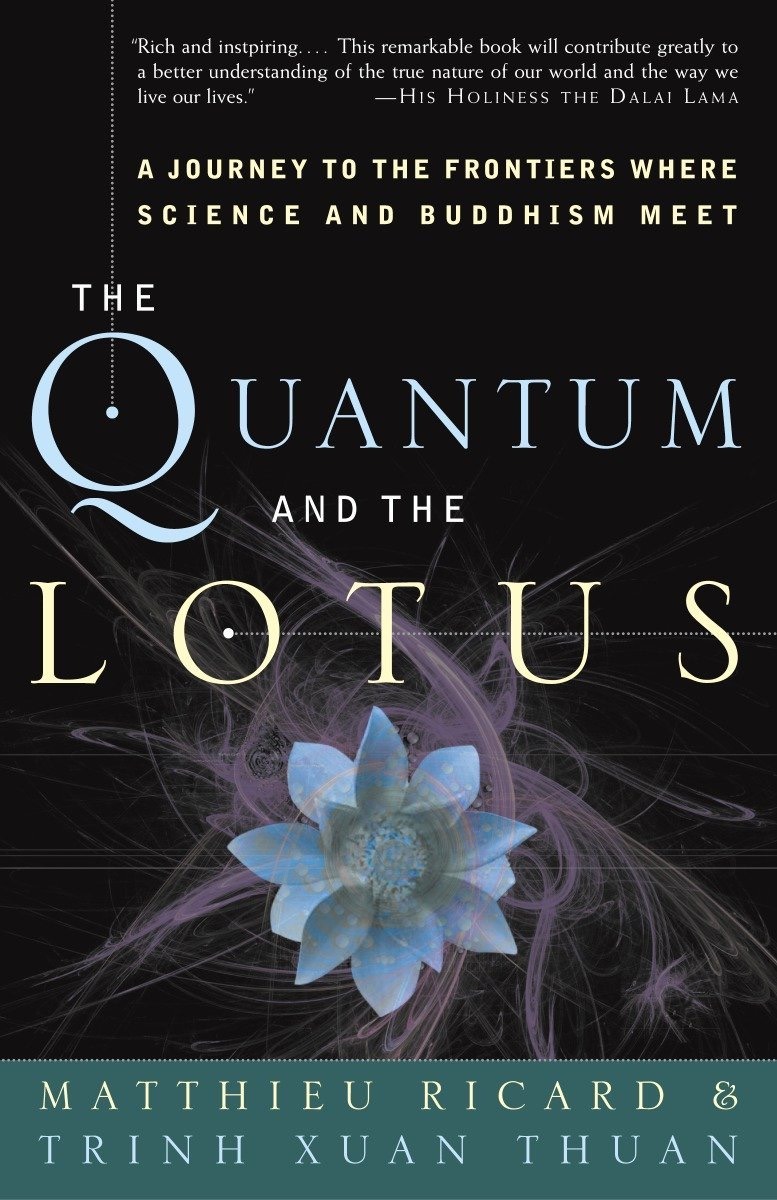
Quantum Mystics: Summary Table
| Name | Key Theme/Insight | Key Work / Book | Philosophical Stance | Philosophical Influences |
|---|---|---|---|---|
| Ken Wilber | Science-mysticism integration | Quantum Questions | Integral, perennial philosophy | Western rationalism, Eastern nondualism |
| Peter Russell | Primacy of consciousness | The Primacy of Consciousness | Panpsychism, non-duality | Advaita Vedanta, Eastern mysticism |
| David Bohm | Holism, implicate order | Wholeness and the Implicate Order | Holistic realism | Jiddu Krishnamurti, Plato, holism |
| Amit Goswami | Consciousness as ground of being | The Self-Aware Universe | Idealism, quantum activism | Vedanta, Eastern mysticism |
| Nick Herbert | Multiple quantum realities | Quantum Reality | Interpretive pluralism | Interpretive pluralism, mysticism |
| Michael Talbot | Holographic universe | The Holographic Universe | Holistic, consciousness-centric | Bohm, Pribram, holistic science |
| Itzhak Bentov / Monroe | Hemi-Sync, altered states | The Gateway Process | Experiential, pragmatic | Meditation, neuroscience |
| Barbara Ann Brennan | Human energy field, healing | Hands of Light | Science-spirituality integration | Physics, energy healing |
| Albert Einstein | Unity, cosmic consciousness | Ideas and Opinions | Mystical, scientific realism | Spinoza, cosmic mysticism |
| John Wheeler | Participatory universe, “it from bit” | At Home in the Universe | Information-centric, participatory | Plato (forms/information), process philosophy |
| Kitty Ferguson | Science and spirituality | The Fire in the Equations | Holistic, mystery-embracing | Mathematics, theology |
| Sri Ananda Ma / Swami-ji | Absolute cognition, unity; East-West synthesis | The Philosophy of Absolute Cognition | Non-dual, Advaita; integrative | Advaita Vedanta, Kant, Hegel |
| Matthieu Ricard / Trinh Xuan Thuan | Buddhism and quantum physics dialogue; emptiness and reality | Quantum Lotus: A Journey to the Summit of Tibetan Buddhism and Quantum Physics | Contemplative science, cross-cultural synthesis | Tibetan Buddhism, quantum physics |
Zen Hemi-Sync
The quantum mystic walks the bridge between worlds;
not clinging to matter, nor lost in mind.
The gap between observer-and-observed,
the universe awakens a conscious hologram.
Be the field, the wave, the witness, TAT TVAM ASI
Core Principles of Quantum Mysticism
Consciousness is Fundamental: Reality arises from consciousness, not the other way around - Amit Goswami’s Self-Aware Universe.
Holism & Interconnectedness: The universe is an undivided whole; separation is an illusion - Capra’s The Tao of Physics and Bohms’ wholeness and the implicate order.
Participatory Reality: Observation and intention shape reality - Wheelers’ participatory U-shaped information exchange Universe.
Information as Reality: At the deepest level, reality is made of information. Michael Talbots’ synthesis of Pribram and Bohm; The Holographic Universe.
Brainwave Synchronization: Techniques like Hemi-Sync can alter consciousness and access non-ordinary states. The Gateway Project, Itzhak Bentov, and Robert Monroe.
Integration of Science & Spirituality: Bridging empirical science and mystical experience. Everyone on this quantum mystic hemi-sync list.
Transformation & Healing: Consciousness can influence physical reality, including healing and personal transformation. Barbara Ann Brennan, Healing Hands of Light.
Experiential Verification: Direct experience (meditation, altered states) is vital, embodied theory. Sri Ananda Mai, Swami-ji; The Philosophy of Absolute Cognition.
Nonlocality & Nonduality: Quantum phenomena and mystical experience point to a reality beyond space, time, and separateness. Matthieu Ricard and Thrih Xian Thuan.
Key Insights and observations
Materialist quantum physicists focus on physical explanations, often dismissing the need for consciousness in quantum theory - peer through the looking glass.
Non-materialist quantum physicists see quantum mechanics as pointing to a deeper, possibly conscious or informational substrate of reality - beyond the looking glass.
Wheeler bridges the gap, proposing that information and observation are fundamental.
Penrose and Hameroff are leading figures in quantum consciousness research, proposing that quantum effects in the brain are central to consciousness.
Sri Ananda Mai and Swami-ji emphasize true knowledge is realized through direct experience; the Absolute, bridging Eastern and Western philosophies; a living inquiry.
Matthieu Ricard and Trinh Xuan Thuan’s Socratic dialogue demonstrate how Buddhist philosophy and quantum physics both reveal impermanence, and the interconnected nature-of-reality-as-it-is.
Form is emptiness. Emptiness is form. The Heart Sutra.6
End of chamber 24
Chambers 1 to 35: all 35 chambers open