Ring III · Integration · Chamber 18
The Poem and the Journey²
About 4 minutes to read
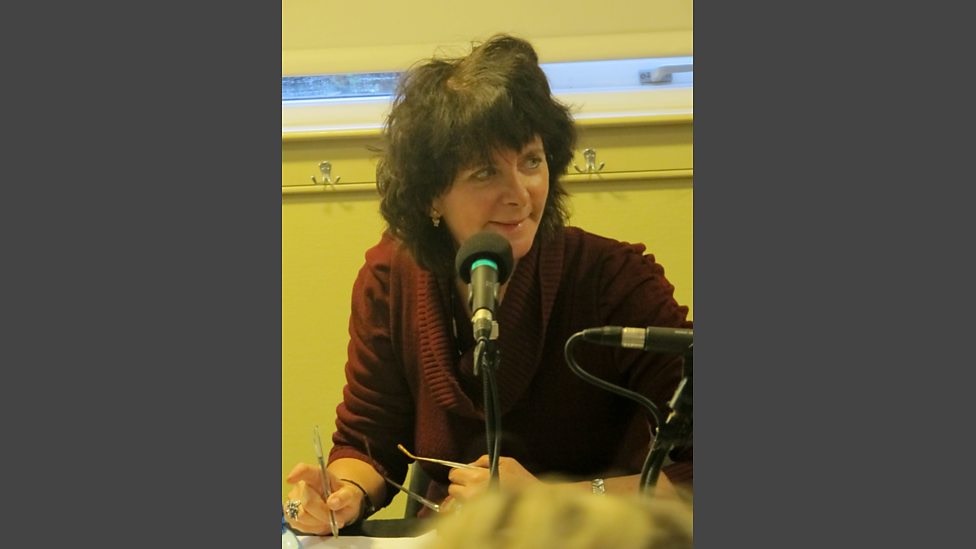
I attend Ruth Padel’s masterful workshop; The Poem and The Journey at Words By The Water, Keswick, 2009. An inspirational masterclass in every way. CQ² E=MC²
Ruth is an expert reader, making each poem come alive before the listeners' eyes; giving the audience eyes to see-feel-sense-taste-and-touch the exquisite beauty of the poems she reads to the mesmerized and electrified audience; stunned silence. And each poem, a pearl. And inside each pearl, a shimmering microcosmic multiverse.
At the end of the reading, Ruth asks questions from the audience. My inclination is to stay silent and witness-observe the teacher. In this moment, a burning question pops into my head like Ray in Ghostbusters says; “It just popped in there.”
“Any final question before we finish?”
“For a complete beginner, what advice can you give on the art of writing? Also, you mentioned the word craft, what do you mean by that?”
“I like to imagine a poem like making a paper airplane. First, you have to make it. Then you test it to see if it can fly. The craft of it is to make it again and again, and you know when it works; when it soars.” The Goddess hath spoken. And this, the single best advice I have ever heard on the art of creative writing and crafting a poem.
And I shall name those two hours, the perfection-of-the-finite-within-the-infinite.
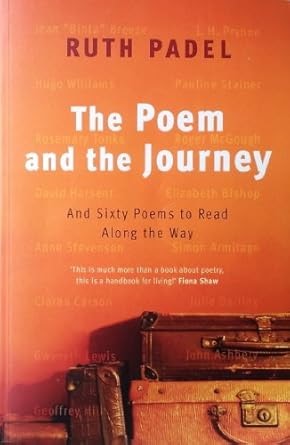
“Poetry’s effects are inward and personal. It is still what it has always been, a necessary art, enriching what goes on privately inside us through our lives. It fortifies our inwardness. And so it is the ideal thing to hang on to, in our very externally driven world of image and screen, surface and soundbite.” Preface. And so begins The Poem and the Journey and sixty poems to read along the way. Many Paths. One Stream. The Path is the Way. This is the way.
Over the years; reading and re-reading her selected poems and exquisite commentary - mirror neuron patterning master poets - glimpsing their art and craft - all the while, being guided by a master decoder of poets; Ruth; a phenomenal poet and generous and exacting - some say - ruthless teacher of being like a gardener and teaching the art of pruning; being simultaneously tender and ruthless with words and the use of space - all at the same time - Quantum Human by another name. And this is why you find, mystics and sages throughout the ages use poetry as their writing medium; since poetry is the journey of beauty, mystery and paradox; many ways of interpreting and awakening along The Poem and The Journey, and many ways to explore. E=MC²
Let Ruth guide you across a wide bandwidth of contemporary poets and an extra-ordinary and illuminating journey to explore poetry; an essential handbook for living. This outstanding collection of poems and expert dissection of each poem taught me more than any other book; the art and craft of writing like making a paper airplane.
“A thoughtful Introduction on how to ‘read’ poetry, followed by sixty examples of this process drawn from a wide range of contemporary poems. The overall structure follows the arc of a journey, not just any journey, but the ultimate: the journey of life, with these sixty poems to accompany us. So the poems move thematically from our first tentative steps - perhaps a dream which nudges a reluctant traveller in the right direction - to-that long-awaited rest at the end of our journey, otherwise known as death.
The Introduction is fascinating and highly quotable, awash with sound-bites on poetry and superbly apposite quotations from the great and good. I love some of her free-association moments in the Poems section, and those delicious revelations that close reading brings.
She admits that personal taste is a factor in this process:
‘There will always be poems you don’t like, however ‘good’ they are as poems.’ Padel tackles a broad swathe of poems in this selection with excellent sang-froid but her own tastes cannot be entirely concealed. Thus Padel on Geoffrey Hill’s ‘Mercian Hymns VI’: ‘The voice flings linguistic treasures down as if language itself were the gnarled mysterious landscape it describes.’ On Peter Reading: ‘His poems can look as rebarbative as a litter-strewn street.’ On free verse: ‘Structure is created, above all, by the poem’s movement.’ On bad poetry: ‘Words that do not mean are cellulite.’
She interestingly describes poems as ‘portable altars’, with all the spiritual associations that brings. This is to underline their intimacy and small-scale appeal, condensing ‘the whole world in a little space’. To me, it also suggests something hurriedly unfolded at the roadside, of practical as much as spiritual use, never intended to be worshipped at with great ceremony and an HB pencil. One major poet not represented here, Ted Hughes, wrote of ‘the magic baggage old men open/And find useless, at the great moment of need’ (‘Gaudete’).
If we look to a poem for explanations, we are sure to find nothing but our own inadequacy. Confident in her method, Ruth Padel insists ‘Good poems can light a dark moment, give you something to hang on to.’ Along this scenic but unpredictable journey through contemporary poetry, her book might achieve something similar.’ Jane Holland, Tower Poetry.” An exceedingly delightful commentary. The Poem and the Journey — Ruth Padel
Poem Goddess Journey Zen

End of chamber 18
Chambers 1 to 35: all 35 chambers open