Ring III · Integration · Chamber 13
Practice Foundation in M.I.A²
About 24 minutes to read
Bruce Lee built his foundation in martial arts by learning Win-Chun from his Sifu, Ip Man; so too, yoga and meditation form the firm foundation for Mixed Internal Arts² -since it is the breath which connects each and every internal art. In yoga, the art of breathing is called prāṇāyāma - breath regulation - which forms the central trunk to the Eight-Limbs of Aṣhṭāṅga Yoga; as described by Patañjali in his codified Yoga-Sūtras.
Atha Yoga Anuśāsanam. Y.S 1.1. Now begins the teaching of Yoga.
June 2014. I am in India to attend the inaugural two-week Introduction to Krishnamacharya Yoga Retreat at Dayananda Ashram in Rishikesh; the first retreat by Krishnamacharya Yoga Mandiram held outside Chennai within a group setting.
“Tradition is to start with prayer to Patañjali and Krishnamacharya. Vedic Tradition. Everything starts with mantra to create union and protection and ends with mantra.” Forty voices from around the world chant in union - firing neurons to the auditory cortex - forging a unified-field of supraliminal-awareness - light-animating-matter. CQ²
“Let this learning process give us energy. Teaching is a learning process. The ancient way of knowledge is known. More Tejas - energy. Shanti x 3; undisturbed peace. Beyond all disturbances.” Sri S. Sridharan. Senior Yoga Therapy Consultant, Trustee Krishnamacharya Yoga Mandiran (KYM).
"Is Yoga a philosophy, religion, art or science? It encompasses everything but is much more than that. It is ‘A WAY OF LIFE’ ‘A DISCIPLINED WAY OF LIFE.’
Yoga is concerned with the “Mind.” Looking at the word from any definition found in the ancient scriptures, it is clear that yoga is about Mind. Mind is the most useful instrument which helps in our perception/cognition and experience of this Universe.
It helps in the execution of all activities. Without Mind life would be impossible to live. Mind is one's best friend and worst enemy. It is the cause of happiness or sorrow in this world. It is the Mind which can bind oneself to this worldly life or liberate oneself from it. How I live. It becomes part of the way I live. Immersed in yoga. Disciple is the natural dharma. Natural way of sitting, breathing, living.” Sri S. Sridharan exploring and illuminating the meaning of what is yoga? Yoga is a state of mind, and Samadhi is complete absorption - pure awareness - abiding in the true self; spine firm yet flexible like bamboo, mind like a still lake, body soft like water. And in the Krishnamacharya tradition, Patañjali’s Yoga Sutras is considered the most authoritative text on yoga.
“Traditionally get by heart, one-by-one, break into part words. Four chapters together takes years. Takes 2-3 rounds, again and again. Desikachar did twelve times. New meanings each time.
The message of the Yoga Sutra’s can be summarized as under:
Mind is a powerful instrument which exists and serves the purpose of enjoying worldly pleasure, which is inconsistent and limited, or for reaching a state of eternal bliss. Practice of Yoga will take the Mind from a habitually distracted state to a habitually attentive state. The path of Yoga will remove the impurities of the Mind and make one realize the true nature of Self.” Sri S. Sridharan, long-term student of T. K. V. Desikachar - who was the son of Krishnamacharya - and yoga is a living tradition.
Yoga is a Sanskrit word, and Sanskrit is a compound language. Each word can have multiple meanings, and so each sentence is multi-layered like a Rubik’s Cube.
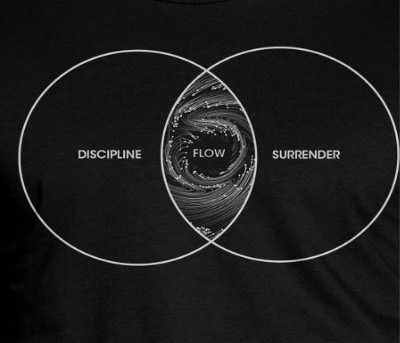
“Root meaning, ‘Yujir’ - union, joining, yoke, ‘Yuj’ - ‘Samadhi’ a state of mind of total integration with the object of meditation. Word meaning ‘Dhyanam’ - Meditation.” Yoga is training the mind through taming the wild-tiger like nature of mind; harnessing the mind’s energy through single-pointed concentration upon the object like a laser beam. Mental focus - discipline-and-surrender - cultivate optimal performance and being in the zone and experiencing flow state. Concentration and clarity of mind are vital in every aspect of life. In this way, yoga is a way of life. CQ² - E=MC²
Consciousness-Quotient-Squared. Cognitive awareness, Emotional intelligence, Somatic presence, Ethical discernment, Aesthetic sensitivity, Metaphysical intuition, Interpersonal resonance, Temporal awareness. CQ² - flow state - merge discipline and surrender - and at the still point of the turning world - Samadhi - complete absorption between the finite-and-the-in-finite - beyond all disturbances. And there the dance is.
To experience the benefits of chanting mantra and the power of setting intention for practice; let V. Srinivasan, Executive Technical Director KYM, expertly guide you through this beginner-to-intermediate 30-minute yoga practice covering mantra, asana, pranayama, relaxation and meditation; the eight-limbs of Patañjali entwined together, The Tree of Yoga. Yoga in the Tradition of Krishnamacharya
“The Yoga Sutras is a brief text which has had an immense influence on the spiritual traditions of India as well as on Sufism and perhaps on early Christianity. It is the earliest known systematic statement of the philosophical insights and practical psychology that define yoga. It is dated by scholars at some time between the third century BCE and the third century CE.” Ravi Ravinda, The Wisdom of Patanjali’s Yoga Sutras.1 Ravinda is my go-to commentary illuminating Patañjali’s wisdom.
Patañjali’s genius is to define the entire human condition in less than 2000 words - encapsulated within 195/6 sutras - a thread of terse statements with a view to facilitating memorization - transforming body-mind-and-soul - leading to highest knowledge of the self and removal of root ignorance; knowing the True Self as undivided-whole - complete absorption upon the in-finite - Samadhi - a state of mind - everything ordered-and-unified - acting-as-one like a Bose-Einstein condensate.
Each sutra is like a zip-file containing lots of condensed information and so a qualified teacher and commentary are required to unpack each thread and weave together 195/6 sutras into a unified-whole; shaping and forming Patañjali’s tapestry of yogic wisdom. Ravinda is an exceptional teacher who uses many interrelated lenses from ancient and modern sources to shed light and illuminating insights into this foundational text on understanding what yoga is; the nature-of-Self-and-Ishvara.
“Ishvara Pranidhana - ईश्वर प्रणिधान - is the last of the five Niyamas given by Patanjali in the Yoga Sutras. The word "pranidhana" means total surrender or letting go of the individual ego in favor of a higher Self. The word Ishwara has been defined by Patanjali in sutra 1.24 as "Isvara is the supreme Purusha, unaffected by any afflictions, actions, fruits of actions or by any inner impressions of desires." When loosely translated, Ishwara means God. However, we need to constantly keep Patanjali’s definition in mind while we are discussing the sutras related to Ishwara Pranidhana.”
Ishvara Pranidhana; eternal-being-and-becoming, love-after-love.
“Ishvara Pranidhana in our Yoga practice. We start every class with the chant of OM (or AUM); similarly, we conclude each class with the OM chant. In sutra 1.27 Patanjali states that Aum (or Pranava) is the representative sound for Ishvara. Thus, by chanting OM at the beginning and end of each yoga session, we are invoking the spirit of Ishvara Pranidhana in our practice.” A-U-M aligns the true self to Ishvara. CQ² - Patañjali’s Eight-Limbs of Aṣhṭāṅga Yoga - E=MC²
“It is setting an intention that the yoga practice that we are about to undertake is a dedication to Ishvara. Which also means that we are not going to allow our ego to interfere with our practice. If during the practice of an asana, a specific muscle feels tight, we need to "accept" it as a grace of Ishvara and take a step back, so we don’t end up hurting ourselves. Similarly, when we practice pranayama (breathing practices), we accept each incoming breath as a gift from God and each outgoing breath as an offering back to God. At all times we maintain a sense of surrender and gratitude toward Ishvara.” Ishvara Pranidhana - Surrender to God (Ishvara) | Yoga With Subhash An exquisite commentary on the nature of Ishvara - sublimating the mind and senses and letting go of the ego - turning inward, tuning-in - inner-lit-pathways-back-to-the-stars a-lighting Samadhi - complete absorption - mutual-symbiosis-with-Ishvara.
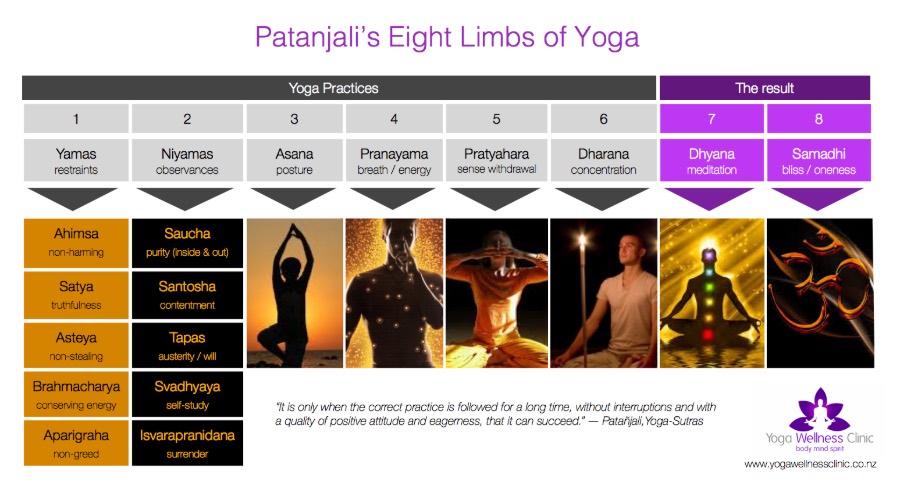
Yoga is single-pointed concentration upon the object; starting with the body, which is the most tangible through the five senses, shifting to the breath, which is more subtle, and observing nature of mind; which is the most subtle. Once the body is comfortable and the mind is stabilized through asana-and-prāṇāyāma, body-and-mind are now ready to explore the three inner-limbs of Patañjali’s Eight-Limbs of Aṣhṭāṅga Yoga; starting with concentration, merging into meditation, and complete absorption between subject-and-object. And the ultimate object of awareness is Ishvara; the light-of-ones-mind in complete absorption upon the in-finite, non-dual awareness, not-two.
Yoga is training the mind through paying attention with kindness; shifting the mind from a habitually distracted tendency to a habitually attentive state, and cultivating beneficial patterns, and letting go of afflictive habits through purification of the mind and senses. Various branches of science are verifying the many physical, emotional, mental, physiological and psychological benefits of practicing yoga and meditation.2
“Whether you practice the dynamic series of Pattabhi Jois, the refined alignments of B.K.S. Iyengar, the classical postures of Indra Devi, or the customized vinyasa of Viniyoga, your practice stems from one source: a five-foot, two-inch Brahmin born more than one hundred years ago in a small South Indian village.” Krishnamacharya's Legacy: Modern Yoga's Inventor | History of Yoga (yogajournal.com) A well-researched and beautifully written article covering the legacy and lineage of Krishnamacharya and some of the students he taught.
“On occasions he demonstrated the great potentials of Yoga in different areas of health and self-control over his body. The most prominent among them was being able to stop his heartbeat from being detected for more than two minutes, using Yoga techniques.
“A Yogi is never surprised.”
– T Krishnamacharya
Even with his vast learning in Yoga as well as other systems of Indian Philosophy, he not only emphasized the practice of Yoga, but that it must be adapted to the individual and not the individual to Yoga. This deep-held view was one of his most significant contributions to the field of health and healing through Yoga.
“In recommending Yoga practices,
teachers should always consider an individual’s particular circumstances.
Just as other activities and practices must be adapted
to the changes in one’s life, such as ageing,
so too Yoga practices need to be adapted as the practitioner changes”
– T Krishnamacharya’s commentary to Yoga Sūtra Chapter One verse 34
Some of his early students, all now deceased, such as Pattabhi Jois, BKS Iyengar and Indra Devi, became renowned teachers themselves.” Śrī T Krishnamacharya - The Source (1888 to 1989) | Centre for Yoga Studies Paul Harvey, long-term student of Desikachar. Yoga is a living lineage and oral tradition of ancient teachings passed down between teacher and student throughout the ages; an ancient living tree a-lighting-within-and-without and Samadhi - a state of mind - an Avatar-lit world.
And Krishnamacharya like Sir Issac Newton; internally refracting electromagnetic waves through the prism of prāṇāyāma - alchemically transmuting and embodying the lightness-of-being - zooming-in on the breath interacting with the diaphragm.
“During the years of tutoring his son, Krishnamacharya continued to refine the Viniyoga approach, tailoring yoga methods for the sick, pregnant women, young children - and, of course, those seeking spiritual enlightenment. He came to divide yoga practice into three stages representing youth, middle, and old age: First, develop muscular power and flexibility; second, maintain health during the years of working and raising a family; finally, go beyond the physical practice to focus on God.
Desikachar observed that, as students progressed, Krishnamacharya began stressing not just more advanced asanas but also the spiritual aspects of yoga. Desikachar realized that his father felt that every action should be an act of devotion, that every asana should lead toward inner calm. Similarly, Krishnamacharya’s emphasis on the breath was meant to convey spiritual implications along with physiological benefits.” Fernando Pages Ruiz’ exquisite observation. Yoga Journal.
“Inhale, and God approaches you. Hold after inhalation and God remains with you. Exhale, and you approach God. Hold after exhalation and surrender to God.” Krishnamacharya; the art of breathing, God-as-light-and-prāṇā - everything entwined-together - acting-as-one like a Bose-Einstein condensate.
The Eight-Limbs of Patañjali can be adapted to suit the individual body-and-mind temperament. Krishnamacharya used the metaphor of the sun; the youth of sunrise and practicing strong, vigorous and energetic asana like Aṣhṭāṅga yoga. Middle-age and midday focusing more on gentle and calming asana and practicing prāṇāyāma and meditation. Retirement and old age like sunset; yoga with less asana focus and more prāṇāyāma and meditation; contemplating the spiritual aspects of life.
Krishnamacharya adapted yoga to the individual’s temperament and adjusted practice to meet the variety of yoga aspects or angas - tailoring the roadmap of Patañjali to meet the changing aims and requirements during the three stages of life.
The foundation for health and wellbeing is paying attention with kindness to the body-breath-and-mind-continuum over the span-of-a-lifetime. Be the still point within the whirlwind; stilling the mind, sit comfortably, spine firm yet flexible like bamboo, mind like a still lake, body soft like water; calmly abiding in a state of tranquil peace.
Yoga Sutra 2.46 Stirah-sukham-asanam.3 In this sutra, Patañjali gives the litmus test of what is yoga practice - balancing-the-opposites of steadiness of body and alertness of mind; alongside being filled with comfort in the body and being at ease in the mind - balancing the body-breath-and-mind-continuum - yoga now is a multi-dimensional practice within the same timeframe - and yoga means union.
“Life is full of experience of pairs of opposites, one usually more dominant than the other. Sukha and duhkha (pleasure and pain), dharma and adharma (right and wrong), satya and anruta (truth and untruth), ekagrata and vikshepa (focused and distracted), raga and dvesha (likes and dislikes), nyaya and anyaya (just and unjust) and others. Is there anything that is opposite of all these pairs of opposites? It is the yogic state of nirodha - a state of unblemished flow of peace (prasanta ) - a state of no pain no pleasure/excitement.” Ramaswami Srivatsa. One of a handful of long-term students of Krishnamacharya who is considered the father of modern postural yoga. Yoga is the practice of balancing-the-opposites and moving beyond all dualistic distinctions; beyond pleasure and pain, becoming whole, not-two. Beyond all disturbances.
Ramaswami teaching tadasana and Vajrasana sequences - YouTube Ramaswami’s recording is quite old and so the audio and visual quality is not the best. What you do get in Grimmy’s playlist is Ramaswami’s full Vinyasa krama grouped into ten major sequences. Ramaswami’s clarity of verbal instruction focuses on cuing the breath synced to movement and his masterful vinyasa krama sequences are calm, slow, smooth and fluid like DJ Sasha is to electronic music. Ramaswami begins with a prayer to pay homage and set intention and bhāvanā feeling tone; a flawless master of gradual sequencing and paying attention with kindness to the body-breath-and-mind-continuum, which is a hallmark of vinyasa krama. I like to close my eyes and listen to instruction whilst imagining being tele-portalled to India and use the honking car sounds not as distraction but as Thich Nhat Hanh advises; a bell of mindfulness.
For a comprehensive commentary on Krishnamacharya’s way of teaching yoga, this article is an outstanding overview into the heart of yoga practice; which is practicing with awareness to unravel the body-breath-and-mind-conundrum. An exemplary article for long-term students and teachers and those passionate about learning yoga history and philosophy. 05_NR6-Srivatsa.indd (vinyasakrama.com) Undisturbed peace.
“SO WHAT ARE THE ESSENTIALS OF VINYÄSA Krama that I teach, based on the teachings of my guru? 1. Do ásanas with a number of vinyásas, or variations, in succession. It is the art form of yoga practice. Vinyása means art, and it involves aesthetic variations within the specified parameters. 2. The basic parameters used in Vinyása Krama are steadiness of the posture, a calm mind, synchronizing the breath with slow movements of the limbs, and, while in the postures, having the mind closely following the breath.” Ramaswami Srivatsa, page 22.
“The Sanskrit syllables for vinyasa krama are defined in this way: vi - variation, nyasa - within prescribed parameters, and krama - sequence. There are four parameters in vinyasa krama: sthira (steadiness), suhka (comfort), prayatna (effort of life, which is breathing), and saithilya (smooth and long breathing). They are set out in these two yoga sutras: II-46 “steadiness and comfort characterize the yogic posture (asana)”; and II-47 “by making the breath smooth (and long), and focusing the mind on the breath, the perfection of the posture is obtained.” Ramaswami points out that Krishnamacharya interpreted sutra II-47 as focusing the mind on the breath and not on the asana or posture as some teachers might suggest. This entwines the third-limb of asana with the fourth-limb of prāṇāyāma making yoga a multidimensional practice within the same timeframe - union of body-breath-and-mind - and yoga means to yoke and balance-the-opposites; embodied presence, a unified-field-of-awareness.
“The six koshas/bags/internal organs: Sri Krishnamacharya would impress upon his students about the need to take care of the six internal organs and systems they support. These are also known as koshas or sacs and perform unique functions.
What are the procedures in yoga that help with these organs or koasas, viz, hridaya kosa or heart and the circulatory (rakta sanchara) system, svasa kosa or the lungs and the respiratory (prana sanchara) system, annakosa or stomach and the digestive system, mala kosa or the excretory system, mutra kosa or the bladder/kidney and urinary system, and garbha kosa or the uterus and reproductive system.” Ramaswami Srivatsa commentary on one of Sri Krishnamacharya’s core teachings; zooming-in on the six internal organs and the systems they support and feeling a comfortable stretch in all six koshas - embodied-wholeness - feeling solid and stable like a mountain. And Ramaswami’s commentary illuminates his Tadasana sequence like Penn and Teller showing you a magic trick and then showing you how they did it.4
Theory and practice illuminate each other - left-and-right hemi-sync - theory-and- embodied-practice synthesized. And this is how the brain optimally learns. E=MC²
Krishnamacharya's Yoga Tadasana Basic Standing Sequence class - YouTube Rebel Buddha, Zach Wagner. This is a high quality black-and-white recording of Ramaswami’s Tadasana sequence, which is the single-best standing yoga sequence I have come across; vinyasa krama, the art of asana and synchronizing breath with movement; let the breath envelope the movement; single-pointed concentration on the breath, paying attention with kindness, leaving you feeling Tony the Tiger GREAT!
Srivatsa Ramaswami: The Art of Vinyasa Yoga - YouTube A wide-ranging conversation between Medicine Path Podcast and Ramaswami who has an encyclopedic knowledge of yoga; including covering teachings of Krishnamacharya, the true purpose of yoga, meditation according to Patañjali, what is vinyasa, role of mantra, kundalini and the chakras, and the importance of conceptual understanding.
“By integrating the functions of mind, body, and breath in the same time frame, a practitioner will experience the real joy of yoga, that of union of mental peace by integrating mind and body through breath.” Ramaswami Srivatsa. Yoga-is-union.
“FOR ANYONE unsure about TKV Desikachar's profound influence on the Yoga we practice daily........
T.K.V. Desikachar, the son of T. Krishnamacharya, made significant contributions to Yoga through his unique approach and teachings. Here are some key ways he influenced modern yoga.
VINIYOGA: Desikachar developed and popularized a personalized approach to yoga that emphasizes adapting the practice to suit the individual’s needs, abilities, and life circumstances. This method respects the practitioner’s age, health, and personal goals, making yoga accessible to a wider audience.
THERAPEUTIC YOGA: Desikachar was a pioneer in using yoga as a therapeutic tool. He emphasized the use of asanas, pranayama, and meditation as a means to promote physical and mental health. His work in yoga therapy has been influential in the development of modern yoga therapy practices.
INTEGRATION OF YOGA PHILOSOPHY: Desikachar stressed the importance of integrating yoga philosophy into the practice. He believed that yoga was not just a physical exercise but a holistic system for personal development and spiritual growth. This approach has influenced many modern yoga teachers and practitioners to incorporate the philosophical aspects of yoga into their teaching and practice.
EDUCATIONAL CONTRIBUTIONS: Desikachar wrote several influential books on yoga, including “The Heart of Yoga: Developing a Personal Practice.” This book is considered a seminal work in the field and has been widely used in yoga teacher training programs. It provides a comprehensive guide to the principles and practice of yoga, making Krishnamacharya’s teachings accessible to a global audience.
TEACHER TRAINING: Desikachar established the Krishnamacharya Yoga Mandiram (KYM) in Chennai, India, which became a leading center for yoga education and research. Through KYM, he trained numerous yoga teachers and therapists who have spread his teachings worldwide.
EMPHASIS ON BREATH AND MOVEMENT: Desikachar placed a strong emphasis on the coordination of breath with movement, a principle central to the practice of Viniyoga. This focus on the breath has influenced many contemporary yoga styles and practices.
PERSONALIZATION AND ADAPTABILITY: His insistence on the adaptability of yoga to meet individual needs has shaped modern yoga's emphasis on personalized practice. This principle is now a cornerstone in many yoga therapy programs and teacher training courses.
PROMOTION OF YOGA AS A HOLISTIC PRACTICE: Desikachar’s approach emphasized the holistic nature of yoga, incorporating asana (posture), pranayama (breath control), meditation, and ethical guidelines (Yamas and Niyamas). This comprehensive view has influenced the way yoga is taught and practiced globally.
Desikachar's contributions have been instrumental in shaping the modern understanding and practice of yoga, emphasizing personalization, therapeutic applications, and the integration of yoga philosophy into daily life.” Robert Birnberg. Yoga Therapist Trainer at Loyola Marymount University. And yoga is a living tradition, a living tree; purifying the mind-and-senses, the true self, an Avatar-lit world.
Prāṇāyāma and coherent breath regulation cultivates a virtuous circle of high vagal and cardiac tone5, which is a good indicator of how well the heart and parasympathetic nervous system are working together. Consciously regulating the breath and modulating the CNS optimises health and wellbeing; balancing sympathetic and parasympathetic response like a back-and-forth Siva-Shakti dance; returning to baseline and maintaining homeostasis with steadiness, comfort and ease, and everything in coherent resonance. Tat Tvam Asi. I AM THAT. Know Thyself. CQ²
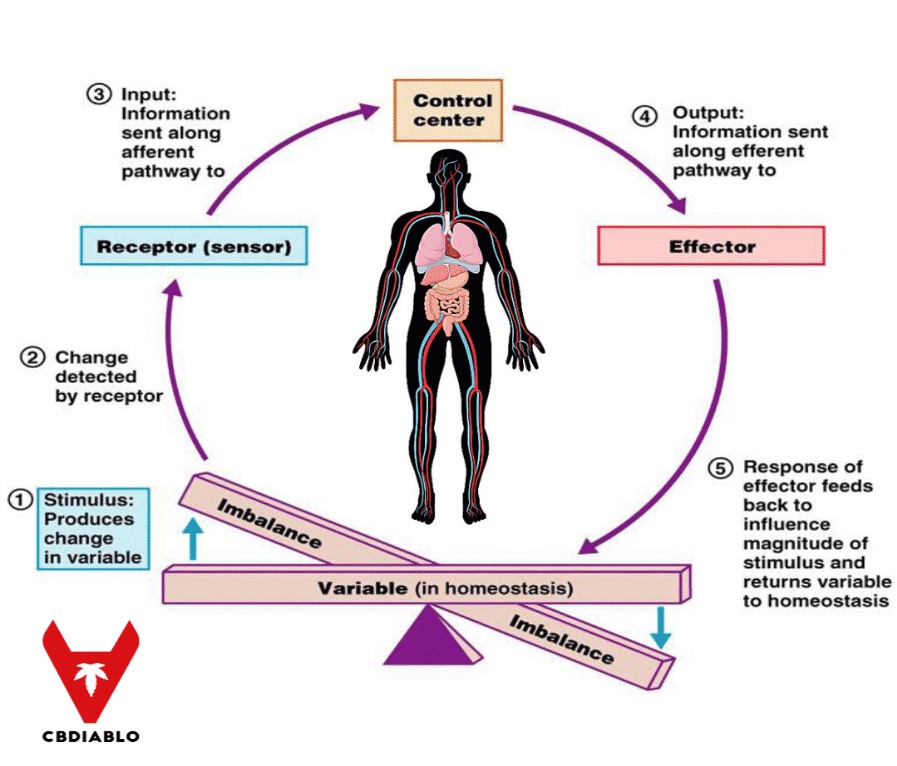
“One of the main homeostatic functions of the respiratory system is the gas exchange that occurs in the alveoli in the lungs. As blood passes through the tiny capillaries in the alveolar sacs, changing pressure gradients allow oxygen and carbon dioxide to diffuse in and out of the blood.
Gas exchange in the lungs also helps maintain acid-base balance in the body. If the pH of the blood becomes too acidic, the breathing rate increases. This reduces the amount of carbon dioxide in the blood, so the pH increases toward normal. Blood that is too alkaline will trigger slowing of the breathing to increase the amount of carbon dioxide (and thus, carbonic acid) and lower the pH.
Ventilation, or breathing, is controlled by the sympathetic and parasympathetic portions of the autonomic nervous system. The sympathetic nervous system causes bronchodilation like what happens during exercise. Conversely, parasympathetic stimulation results in bronchoconstriction.” How Does the Respiratory System Maintain Homeostasis | Biology Dictionary Love your CNS and respiratory system.
The yogi like an alchemist and inner magician says regulate the breath - simultaneously gain self-mastery of the CNS - what was automatic and autonomic can now be measured and self-regulated through prāṇāyāma - gas exchange - body-breath-and-mind like a multidimensional Countdown Tik-Tok conundrum.
Y.S. 1.1. Atha Yoga Anuśhāsanam. Now begins the teaching of yoga.
“Atha: a term indicating auspicious beginning. It implies that there has been preparation for an auspicious and fruitful journey. In the science of mantra, "atha" represents the complete range of all sounds and phonemes. In tantra and kundalini yoga, "atha" is the short form of "a," "ka," and "tha," the three letters that are the building blocks of the guru chakra - the center that lies between the sixth and seventh chakras.
Yoga means "union, balance, and a harmonious state of mind; bridging the different aspects of life; connecting the individual consciousness with supreme consciousness; the union of the two - the lover and the beloved, the seeker and God, Shiva and Shakti, ida and pingala, the sun and moon, active and passive.”
Anuśhāsanam = Anu + śhāsanam Anu means "that follows; that which is accompanied by; along with; in accordance to; in conformity with." Śhāsanam; means "discipline; administering; execution; bringing into practice; following law and order; being systematic." Yoga Sutra 1.1 (yogainternational.com) An insightful and illuminating commentary on YS 1.1 by Pandit Rajmani Tigunait.
This begs the question, how to adapt ancient yoga teachings to meet this present moment? With a world facing so many concurrent crises: pandemic crises, climate crises, financial crises, war and famine crises, biblical proportion crises, existential crises - a meta-crisis of no meaning and no purpose - if you were to ask me, what is yoga, I would say, at the very least, yoga is a multidimensional placebo, and placebo is none other than nature-of-mind, and mind is none other than the unlimited bandwidth of potentiality, and this potentiality is mind's ability to harness the energy of prāṇā and neurons to cultivate beneficial sensations-to-mind-states within this electric universe -
an a-participatory and self-aware universe returning inherent meaning and purpose -and it is the breath and CNS which interconnects everything-to-everything-else and not-one-thing-in-the-universe-is-separate-from-another like Indra’s Net of Precious Jewels - reality is non-local - past-present-future collapse depending upon perspective - wave-particles - light-wavicles - Everything-Everywhere-All-At-Once.
The Placebo Effect is a well-documented phenomenon in which a person experiences real, measurable improvements in health or well-being after receiving a treatment that is inert or has no therapeutic value - such as a sugar pill or saline injection. The key driver is the person's belief or expectation that the treatment will work. This effect is not limited to subjective symptoms; it can also produce objective physiological changes, such as altered brain activity, hormone levels, and immune responses.
The Harvard book The Placebo Effect: An Interdisciplinary Exploration (edited by Anne Harrington, Harvard University Press, 1999) is a fascinating text that explores the placebo effect from medical, psychological, and philosophical perspectives. The placebo effect demonstrates the power of expectation, meaning, and context in healing. When patients believe a treatment will help, their brains and bodies often respond as if they had received an active intervention. Research shows that placebos can trigger the release of endorphins and other neurotransmitters, modulate pain pathways, and even affect immune function. The quality of interaction, trust, and communication between practitioner and patient can amplify the placebo effect. The opposite of the placebo effect is the nocebo effect; where negative expectations or beliefs can worsen symptoms or create new ones. For more information, see the publisher’s page: https://www.hup.harvard.edu/books/9780674669864
From a Quantum Human lens, the placebo effect is a striking example of how consciousness, belief, and expectation can shape physical reality. Just as quantum theory suggests that the observer plays a role in collapsing possibilities into a single outcome, the placebo effect shows that what we believe is possible for us can directly influence our biology and experience. The mind’s belief in healing acts as an “observer,” collapsing potential outcomes into actual physiological change. The placebo effect is a real-world demonstration of how expectation and perception can create new realities in the body. Recognizing the placebo effect empowers individuals to harness the power of belief, intention, and mindset in their own healing journey.
The placebo effect is not “just in your head.” It is a powerful, measurable phenomenon with real biological consequences. It highlights the importance of belief, expectation, and the healing context. The effect is amplified by trust, ritual, and the meaning we assign to treatments. The placebo effect is a bridge between mind-and-body, and a core example of the Quantum Human principle: consciousness shapes reality. CQ²
More than two decades have passed since The Placebo Effect was published and during this time, many scientific papers have been published and peer reviewed; empirically mapping and documenting the many scientific benefits of yoga and meditation and other holistic approaches. What was once considered placebo and/or “woo-woo” by mainstream science is now well-established orthodox science; most notably in the field of contemplative neuroscience where Western scientifically trained minds have measured the brainwave states of beginner minds, intermediate practitioners, and ‘Olympic’ level Tibetan Buddhist meditators like Mingyur Rinpoche; who showed never before recorded stable “gamma oscillations in the brain...they last for the entire time the meditation session lasted in progress...
...We can see that a person who meditates for even just two weeks, thirty minutes a day shows a different pattern of brain activity than when they started two weeks before. And that is really important because it suggests that the brain really is plastic; that we really can make these changes and that it doesn’t take that much, total of seven hours of practice was sufficient to change the brain in very objective, measurable ways. Well-being and warm-heartedness can be cultivated. We can think of them almost as skills which can be enhanced through certain kinds of practices.” Meditation's Impact on the Brain | Documentary Clip (youtube.com)
The “Pygmalion Effect” or “Rosenthal Effect.” In 1968, Robert Rosenthal and Lenore Jacobson published Pygmalion in the Classroom, showing that when teachers were told certain students were “intellectual bloomers” (randomly chosen), those students’ academic performance improved significantly over the year; even though the label was arbitrary. This effect is attributed to changes in teacher expectations and behaviour, which influenced student confidence and achievement. Rosenthal’s classic research showed that when people are labelled as “gifted,” their confidence and performance can measurably increase - even if the label is random. Later studies with adults found that simply being told you possess a “hidden mental ability” can accelerate problem solving, not by changing intelligence; by shifting self-perception. https://en.wikipedia.org/wiki/Pygmalion_effect
This demonstrates a core Quantum Human principle: our actions are not limited by our objective abilities, but by what we believe is possible for us. When the mind accepts a new possibility, the body and brain begin to act as if that future already exists.
However, the same mechanism can work in reverse. Negative labels - “broken,” “difficult,” “failure”- can slow brain function and reinforce limitation, much like a quantum system collapsing into a less desirable state. Flipsides of the same coin like placebo and nocebo - balance the twin-opposites - by another name.
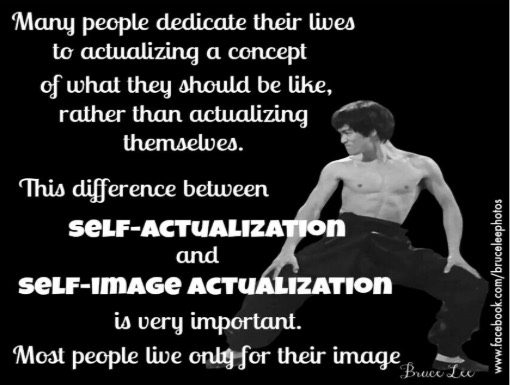
As one Harvard psychologist put it: “We become who others believe we are, unless we realize in time that this voice isn’t ours.”6 To be Quantum Human, one learns to recognize and rewrite these scripts, consciously choosing which possibilities to embody like Neo exploring beyond the minds’ Matrix of limitation; limited self-belief.
Both the nature of the placebo effect and the Pygmalion effect demonstrate the power of mind over body and outcomes, and both are central to the Quantum Human concept - consciousness and belief and cognitive intelligence shape reality. Harnessing minds’ energy in yoga and meditation is the ultimate superpower. Be like water, my friend.
"If you always put limits on everything you do, physical or anything else, it will spread into your work and into your life. There are no limits. There are only plateaus, and you must not stay there; you must go beyond them." Sifu Bruce. Quantum Human pioneer.
Yoga means to balance the opposites. Imagine all the people in this present moment in time and space. Beyond name. Beyond form. Beyond love and hate. Beyond all dualistic distinctions. Beyond all suffering. Imagine all the people...John Lennon.7
Quantum Human. Interconnected. Interdependent. A unified-whole. A unified-field of awareness. I remember Sri Sridharan’s words; yoga is a way of life...mind is one’s best friend and worst enemy...undisturbed peace. Beyond all disturbances.
Zen Lee
End of chamber 13
Chambers 1 to 35: all 35 chambers open